Weather.com and the Iowa snowplow that brought a buried pickup back into view

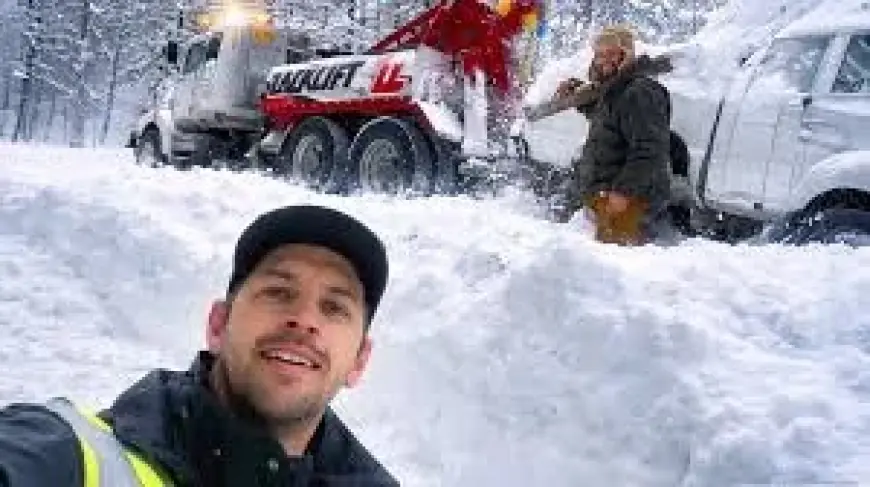
On a stretch of Iowa’s State Highway 141, a snow plow revealed something that had effectively vanished: an entire pickup truck hidden deep in the snow. The moment, recalled in a photo shared by the Iowa Department of Transportation, captures the strange winter reality that weather. com audiences recognize instinctively—what looks like an ordinary roadside can become a blank white surface that swallows the evidence of everyday life.
What happened on Iowa’s State Highway 141?
On March 10, 2025, a snow plow on Iowa’s State Highway 141 exposed a pickup truck that had been buried in a drift after a blizzard. The truck had been abandoned by its owner, and it remained hidden until the plow’s work brought it back into view.
The discovery came five days after Winter Storm Lola. While the storm’s snowfall totals were modest by local standards—4 inches recorded in Denison, Iowa, near where the truck was found—wind did much of the transforming. Gusts up to 63 mph pushed snow into large drifts, especially in outlying areas, building a cover thick enough to conceal a full-size vehicle.
How did Winter Storm Lola bury a truck with only 4 inches of snow?
The episode is a reminder that snowfall alone does not tell the full story of what ends up on the ground. In this case, 4 inches of snowfall was recorded in Denison, but wind gusts up to 63 mph reshaped that snow into deep, localized drifts. Those drifts—rather than the measured snowfall total—created the conditions that allowed a pickup truck to disappear from sight.
The scene also echoes a lived lesson from time spent in Iowa: when a blizzard hits, small objects around a home can vanish entirely into white drifts—a hand trowel in a garden, an ashtray on a porch. Once buried, it becomes easy to forget the item was ever there. The truck was the largest version of that same winter phenomenon: a familiar object rendered invisible by wind-driven snow.
Why does the buried pickup resonate as spring approaches?
There is a seasonal rhythm embedded in the image. Winter takes, covering up the tools, the forgotten items, and sometimes the larger things left behind. Spring gives back, revealing what was lost when the snow melts and the landscape returns to detail.
That sense of return is part of why the photo struck people so strongly. It was framed with a line from Bruce Springsteen’s 1982 album Nebraska: “Everything dies, baby, that’s a fact / But maybe everything that dies someday comes back. ” The reflection is not literal, but it fits the moment: the truck, absent from view, “came back” when the snow plow exposed it—proof that winter can temporarily erase even what seems too big to lose.
What does weather. com’s audience take from a moment like this?
It is easy to treat a blizzard as a simple headline—snow, wind, cleanup, repeat. But the buried pickup on Highway 141 narrows the focus to something more personal: disappearance and rediscovery. A storm does not just slow traffic or rearrange travel plans; it changes what people can see, what they can remember, and what they assume is still there.
For many readers who follow storms closely, this is the detail that sticks: the way a landscape can become so uniform that it hides the contours of ordinary life. The truck’s reappearance, five days after Winter Storm Lola, shows how quickly winter can turn a human object into part of the terrain—and how abruptly it can be returned when a blade meets a drift.
As the season shifts, more items will re-emerge for people who misplaced them in heavy snows. The photo invites a familiar question—what is the largest object someone has found buried in winter snow?—but it also holds a quieter prompt: what else is out there, waiting for a thaw or a plow to bring it back?
In the end, weather. com doesn’t need the moment to be extraordinary to make it meaningful. A snowplow, a highway, a drift, and a truck that “comes back” are enough to show how winter can erase the obvious—and how spring, or simple persistence, can reveal it again.