Nytimes Wordle #1725: 4 clues that make March 10’s puzzle feel tougher than usual

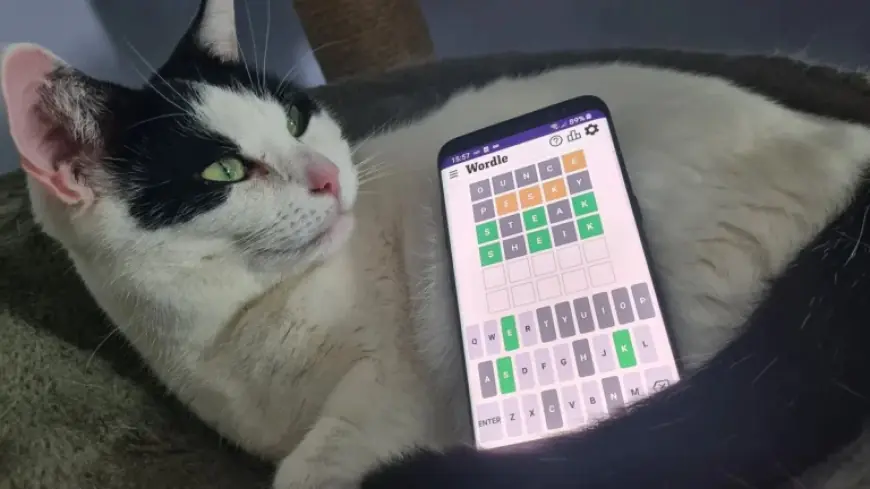
In nytimes wordle #1725, the toughest part may not be the grid—it’s the vocabulary gap the hints quietly suggest. For March 10, the guidance signals a five-letter answer that starts with “S, ” contains two vowels, uses no repeated letters, and can mean a sandbank or sandbar that makes water shallow. That combination, paired with the note that the word is not commonly used, sets up a different kind of challenge than many daily players expect.
Nytimes Wordle hints for March 10 (#1725) point to rarity, not trickery
Four specific properties shape the day’s solving landscape: no repeated letters, exactly two vowels, a starting “S, ” and a meaning tied to a sandbank or sandbar that makes water shallow. None of those cues relies on misdirection; instead, they narrow the field toward a term that many players may rarely encounter in everyday conversation.
That matters because difficulty in nytimes wordle often isn’t only about letter placement—it’s about whether the remaining candidate words sit inside a player’s working vocabulary. When the hints lean on definition rather than common usage patterns, solvers who typically depend on familiar word families can feel suddenly unmoored. The day’s framing also acknowledges this explicitly, describing the puzzle as “a tough one” and suggesting that some players might not know the word at all.
From an editorial perspective, this is a notable shift in the usual rhythm: the constraints are clean and the semantic clue is precise, but the likely answer space may still feel opaque. In other words, the puzzle’s friction is linguistic rather than mechanical.
What #1724 “HASTY” reveals about expectations going into #1725
Yesterday’s answer—March 9, puzzle No. 1, 724—was HASTY. That’s a familiar word with a straightforward meaning: acting too quickly, sometimes to one’s detriment. It’s also made of five unique letters, which can train players to anticipate similarly common vocabulary even when the letter-logic remains approachable.
Placed side by side, #1724 and #1725 illustrate how quickly the daily feel can change without changing the rules. Players coming off a recognizable solution may approach the next day expecting another broadly used term, then collide with a definition-driven target tied to geography and waterways. This contrast can intensify the sensation of difficulty, even if the clue set is fair.
In practical terms, it nudges players toward a different solving posture: less reliance on “I’ve seen this word everywhere, ” more reliance on systematically testing letters and honoring the definition. It also makes the day’s strategic tips more consequential than usual.
Strategy signals inside the advice: letters, reuse, and avoiding wasted guesses
The published tips around the puzzle emphasize three distinct habits:
- Start from letter frequency: suggested starters include TRAIN, STERN, and AUDIO, paired with guidance to consider which letters show up most often in English words.
- Remember letters can repeat: a general reminder that prevents overly rigid assumptions in other puzzles, even though today’s answer has no repeated letters.
- Avoid near-duplicate guesses: if stuck with a pattern like STA_E, don’t burn multiple tries on STARE, STATE, STALE; use a contrasting probe such as TWIRL to test new letters.
The second and third points are where the subtext is most revealing. When a puzzle is described as tough and uncommon, the penalty for “pretty close” guesses increases. You can be near the right shape and still learn very little if your guesses recycle the same letter set. The example pattern underscores an efficiency mindset: treat each guess as information-gathering, not just a shot at the solution.
This is where nytimes wordle becomes a daily exercise in resource management. With only six attempts, the fastest way to lose ground is to chase aesthetically similar words that don’t expand your knowledge of the remaining letters. The advice implicitly invites players to separate two goals: confirming a suspected pattern versus discovering new constraints. On days featuring less common vocabulary, the second goal tends to matter more.
The March 10 puzzle’s definition clue shifts the game from spelling to meaning
The most concrete hint for #1725 isn’t about letters—it’s about what the word refers to: a sandbank or sandbar that makes water shallow. That kind of semantic anchor changes who benefits most from the clue set. A player with strong letter-play instincts but no familiarity with the term may still struggle; a player who recognizes the geographic concept may jump ahead quickly even with minimal grid feedback.
It also highlights a quiet truth about puzzle design: a five-letter format can still test domain-adjacent knowledge. When the word sits outside daily conversation, the puzzle effectively measures how well a solver can translate a definition into candidate spellings—while respecting hard constraints like starting letter, vowel count, and repetition rules.
For March 10, the experience is likely to feel “hard but honest”: the hints are not cryptic, and the properties are explicit, yet the answer may remain elusive until the definition clicks.
Where this leaves players: a tougher day, or a different kind of fair?
At 9: 00 am ET, the conversation around puzzle difficulty often hinges on whether the word feels “common enough. ” The March 10 framing leans into the idea that fairness can come from clarity rather than familiarity: two vowels, no repeats, begins with S, and a precise definition. If that still feels punishing, it may say less about the grid and more about how much everyday vocabulary varies across the audience.
For now, nytimes wordle #1725 stands as a reminder that difficulty isn’t always about deceptive patterns. Sometimes it’s about confronting a word you rarely use—and deciding whether the day’s clean constraints are enough to bridge that gap before the sixth guess runs out.