Neil Gorsuch, a lone dissent, and the question of who decides freedom

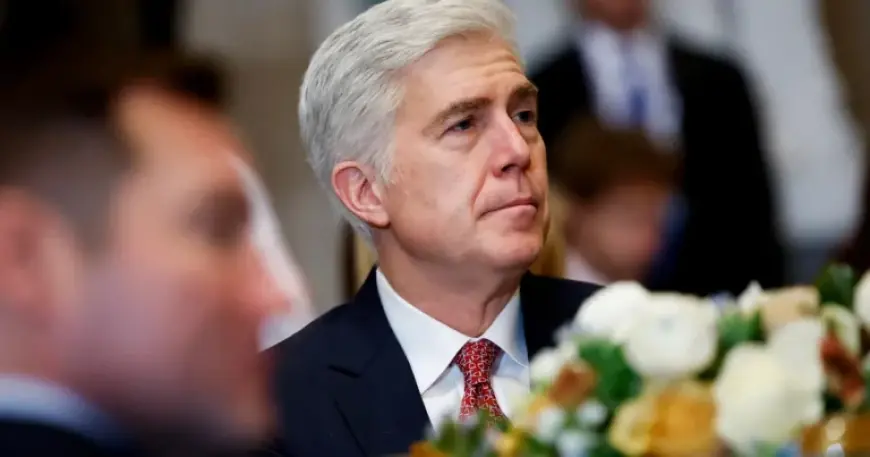
In a routine Supreme Court order list issued Monday, neil gorsuch stood apart, writing the only separate dissent as the justices declined to take up the case of Jaron Burnett. The moment was procedural on its surface—an unexplained denial among many—but it carried a sharp constitutional focus: when supervised release violations can extend a person’s total time in prison beyond the statutory maximum for the underlying conviction, who should decide the disputed facts, and by what standard?
Why did Neil Gorsuch dissent from the court’s refusal to take the case?
The court refused to consider Burnett’s petition, and it did not explain why. That silence is typical: the justices reject most of the thousands of appeals they receive each year, usually without comment. What made this denial unusual was that Justice Neil Gorsuch wrote separately—and alone—calling the court’s decision not to address the issue “unfortunate. ”
Gorsuch framed the dispute as a narrow request rather than a sweeping challenge to the supervised release system. In his writing, he emphasized that Burnett did not object in general to being returned to custody for release violations or to the use of a lower evidentiary standard in that context. Instead, Gorsuch highlighted a specific scenario: when a court seeks to impose a sentence that would push a defendant’s total time in prison beyond the statutory maximum Congress authorized for the original conviction, the defendant argued contested facts should be found by a jury under the “beyond a reasonable doubt” standard.
Gorsuch wrote that the defense “does not ask for much, ” and summarized the claim this way: “All Mr. Burnett claims is the right to have a jury decide any contested facts under the reasonable doubt standard where, as here, a court seeks to impose a sentence that will cause a defendant’s total time in prison to exceed the statutory maximum Congress has authorized for his underlying conviction. ”
What happened in Jaron Burnett’s supervised release case?
Burnett pleaded guilty in New Jersey federal court to transporting a person interstate commerce to engage in prostitution. He was sentenced to 105 months of imprisonment followed by 15 years of supervised release. The maximum term he faced at sentencing was 120 months.
After supervised release violations, a judge found the violations using the lower “preponderance of the evidence” standard and ordered additional custody. Burnett ultimately served 132 months—more than the 120-month statutory maximum he faced at the time of sentencing for the underlying conviction.
Burnett’s lawyers petitioned the Supreme Court arguing that the Constitution provides jury rights when a supervised release violation could lead to a prison term longer than the maximum time a person initially faced at sentencing. When the original maximum is exceeded, the lawyers argued, “it is effectively a new penalty implicating the jury right. ”
What is the constitutional question raised by supervised release violations?
The issue sits at the intersection of sentencing mechanics and the Sixth Amendment’s jury protections. The context described in the case materials is that a convicted defendant can be returned to prison for violating supervised release terms without a jury, under a lower evidentiary standard. The sharper conflict arises when that return-to-custody time—added on top of the original imprisonment—pushes the total time behind bars beyond the maximum that could have been imposed at initial sentencing.
Gorsuch’s dissent did not dispute that supervised release violations can lead to incarceration under current practice. His focus was the point at which additional incarceration changes the character of the punishment—when it exceeds what Congress authorized as the statutory maximum for the underlying conviction—raising the question of whether a jury must find the contested facts beyond a reasonable doubt.
In closing, Gorsuch expressed hope that the court “will take up another case like his soon—and that, in the meantime, lower courts will more carefully consider the Sixth Amendment’s application in this context. ”
How did the Justice Department respond to the request for Supreme Court review?
Opposing Supreme Court review, the U. S. Department of Justice argued that the defense’s framing misunderstood the punishment imposed at the initial sentence. The Justice Department’s position, as described in the case summary, was that supervised release is an independent part of the sentence and is not restricted by the maximum prison time initially imposed.
That disagreement—whether post-release incarceration that extends total custody beyond an original maximum should be treated as effectively a new penalty triggering jury protections—sits at the heart of the petition the court declined to hear.
What happens next after the court’s denial?
The Supreme Court’s refusal to take the case leaves the underlying constitutional issue unresolved at the national level, at least for now. The justices offered no explanation for the denial, and no other justice joined or answered Gorsuch’s dissent. Still, the dissent does something practical: it signals an issue one justice believes lower courts should “more carefully consider, ” and it invites future litigants to bring similar questions back to the court in another case.
For Burnett, the numbers in the record show the lived stakes of a technical argument: 105 months imposed, 120 months the maximum he faced at sentencing, and 132 months ultimately served after release violations. In that gap, neil gorsuch located a problem of decision-making power—whether liberty can be taken for disputed facts without a jury when the punishment reaches beyond the statutory ceiling tied to the underlying conviction.
Image caption (alt text): neil gorsuch dissent focuses on jury rights in supervised release violations