Large Tortoiseshell butterfly no longer extinct in UK, but its comeback raises new uncertainties

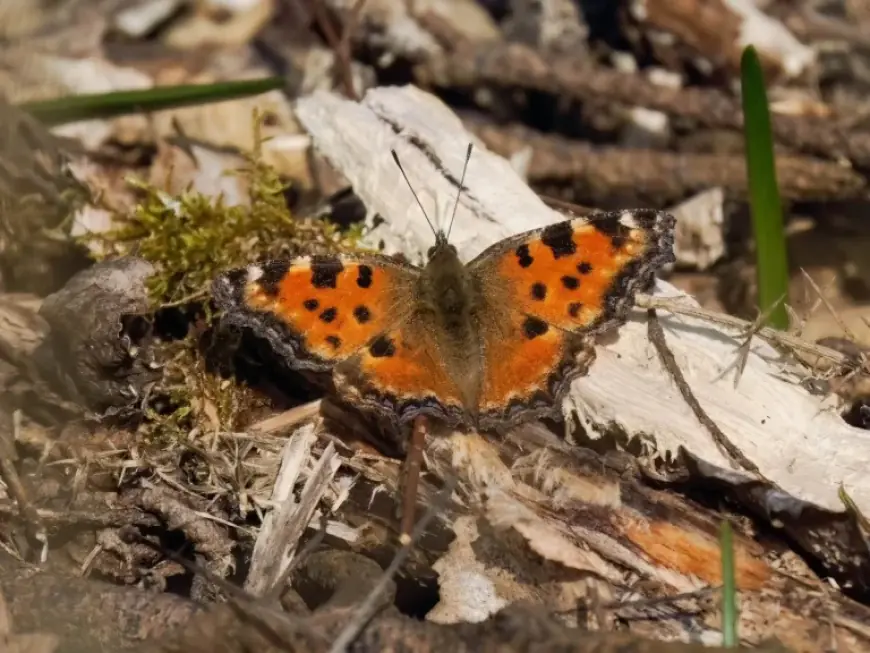
Early spring sightings confirm the large tortoiseshell has re-established as a resident species in parts of southern England, challenging decades of extinction listings and forcing conservationists to weigh celebration against caution.
Large Tortoiseshell: what changed?
Butterfly Conservation has added the Large Tortoiseshell (Nymphalis polychloros) to its list of resident species after observers recorded adults emerging from hibernation in woodlands across Kent, Sussex, Hampshire, Dorset, Cornwall and the Isle of Wight. Richard Fox, head of science for Butterfly Conservation, framed the development as cautiously optimistic: “The signs are really positive, which is lovely. ” He noted that, while the designation moves the insect from migratory status to resident in the charity’s records, the population is not yet demonstrably secure: “It’s not well-established enough yet to say it’s definitely back for good and will be widespread across multiple landscapes – we’re still in that zone of uncertainty at the moment, but there are exciting signs. ”
Evidence of breeding underpins the change. Caterpillars have been found feeding on trees in the wild since 2020, first in Dorset and now more widely, providing direct confirmation that reproduction is occurring in Britain. The species overwinters as an adult and emerges in spring to mate and lay eggs; a successful generation this year could expand numbers later in the season.
How reliable are the sightings and what explains the return?
The record has several complicating strands. Historical decline in Britain has been linked to the loss of elms during the spread of Dutch elm disease across Europe, and the Large Tortoiseshell last flourished in Britain during a run of fine summers in the 1940s. Lepidopterists now believe Britain may have been at the northerly edge of the species’ natural range, and that recent warmer conditions—described in conservation notes as global heating—have aided movement from continental populations.
Population increases in the Netherlands and France have coincided with growing numbers recorded crossing the North Sea and the Channel. The Large Tortoiseshell first reappeared in significant numbers on the south coast in 2006–07, but a history of unauthorised releases by butterfly breeders has complicated interpretation of isolated sightings. That history means that only repeated, independently verifiable breeding records can transform hopeful reports into a demonstrably self-sustaining population.
What must happen now: monitoring, assessment and accountability
Butterfly Conservation has taken immediate administrative steps by adding the species to its First Sightings page and by positioning the Large Tortoiseshell for formal assessment in future Red List work. Professor Richard Fox, head of science for Butterfly Conservation, has indicated the charity will need to determine whether the species merits conservation support and how any assistance should be targeted. The current GB Butterfly Red List still classifies the insect as regionally extinct, with the report noting that possible recent colonisation in southern England was not included and would be reconsidered at the next assessment.
Practical next steps are grounded in evidence already noted by experts: continued, geographically explicit monitoring; verification of breeding across multiple landscapes; and distinction between naturally colonising individuals and those released by breeders. These actions would clarify whether the Large Tortoiseshell is on a trajectory to rejoin Britain’s more widespread species or remains confined to local, vulnerable pockets.
Verified facts in the public record are limited to recent spring emergences in specific southern counties, breeding evidence from caterpillar finds since 2020, and the policy positions and public statements of Butterfly Conservation and Richard Fox, head of science for Butterfly Conservation. Where uncertainty persists, it is explicitly acknowledged by those same institutional voices and by ecological evidence.
The return of the large tortoiseshell is a conservation development that invites both guarded optimism and a demand for rigorous, transparent monitoring to ensure today’s sightings become tomorrow’s stable populations.