Rs Reveal: India’s third white-ball trophy win in a row proves rest of world need to catch up

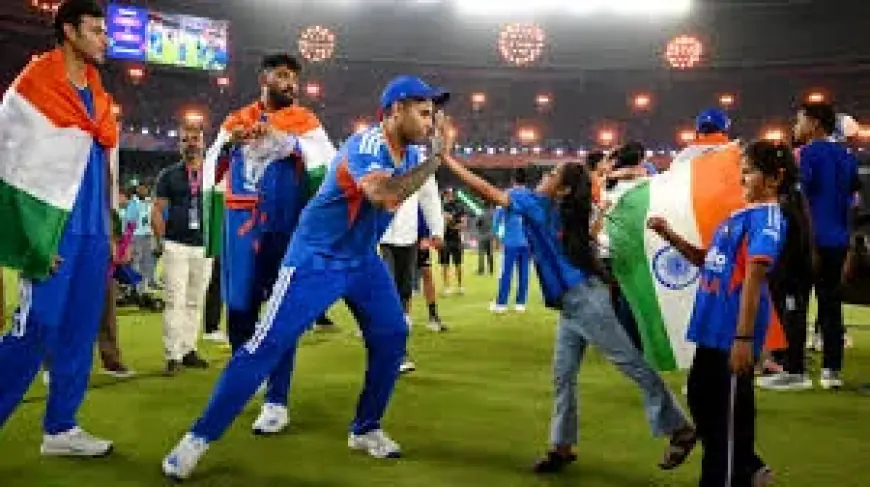
India retained the T20 World Cup in a commanding final against New Zealand — a performance that underscores why critics now say the rest must close a growing gap. The word rs has become shorthand in boardrooms and dressing rooms for margins that look unbridgeable after India’s latest triumph, played in front of 100, 000 spectators and an estimated billion viewers at home.
Background and context
The victory completes a sequence: India had broken a trophy drought with wins first in Barbados in 2024 and then in Dubai last year, and now have added another title on home soil. The city that had once delivered pain delivered joy this time, with special measures in place — extra trains left Mumbai at 4: 00 am ET as thousands of fans travelled into Ahmedabad. The final followed a painful loss in the 50-over World Cup final against Australia, a defeat that hung over the team until this tournament.
India’s tournament was not without stumbles: they wobbled in their opening match against the United States and were beaten by South Africa. After that defeat, however, the team’s trajectory shifted. Since that loss they effectively faced four knockout matches en route to the title, and under pressure produced innings that repeatedly crossed the 250 mark: more than 250 three times, specifically against Zimbabwe, England and New Zealand — a feat previously achieved at most twice in past tournaments.
Deep analysis: what underpins the dominance
The pattern of results in the knockout phase reveals a team that can absorb disruption and elevate its scoring ceiling in critical moments. Hitting 250-plus on three separate occasions suggests a repeatable tactical and execution advantage rather than a single outlier performance. That consistency in high scoring — achieved against different opponents and in tight phases of the competition — is a measurable indicator of superiority.
India’s pathway through the tournament shows a combination of recovery from early setbacks and peak performance in do-or-die games. The sequence from an initial wobble to steady dominance implies structural depth: the ability to replace or reinforce roles when form dips, then to capitalise collectively in later rounds. The crowd environment — a packed final in front of 100, 000 — and the wider national attention intensified the stakes; translating that pressure into a title on home soil distinguishes this campaign from previous efforts where similar moments produced flinching rather than finishing.
That finishing ability raises the central strategic question for other teams: can rivals replicate the conditions that produced repeated 250-plus totals, or will India’s model set a new performance baseline for elite T20 cricket? The contextual evidence in this tournament suggests the latter is possible, but not inevitable; opponents must address both tactical choices and execution under knockout pressure.
Expert perspectives and on-field voices
Suryakumar Yadav, captain of India, framed the turnaround succinctly: “That’s over, sir, ” he said when asked about past setbacks, and added, “It’s been three years, sir. Now T20 is here. ” His comments capture the psychological reset that accompanied the team’s on-field adjustments. Those remarks, offered after the final, were cited by team leadership as emblematic of a unit that has closed a chapter of frustration and opened one of consistent success.
Match narratives inside the tournament highlighted individual contributions that pushed India to sustained high totals. Coverage from the competition singled out a powerful display by Samson that put India on course for a huge score in one key match, reinforcing the argument that individual bursts of power, combined with collective depth, produced the repeated 250-plus innings that proved decisive.
Rs: regional and global impact
India’s sequence of white-ball trophies — Barbados in 2024, Dubai last year, and now this home final — raises immediate regional and global questions about competitive balance. If rivals cannot match the scoring frequency and the ability to thrive under knockout pressure, international tournaments may increasingly see predictable outcomes. That prospect has implications for tournament formats, preparation cycles and talent development across cricketing nations.
For teams outside India, the tournament provides a clear scoreboard of the gap: early losses to heavy-scoring innings and an inability to consistently chase or set beyond 250 are tactical shortcomings that must be rectified. Whether other nations can adapt quickly enough to challenge India’s recent supremacy remains an open question; the evidence from this World Cup signals opportunity and urgency in equal measure.
Will the rest of the world close the gap, or will India’s model of recovery, depth and explosive scoring become the new standard that others struggle to match?