Weather Storms Tornadoes: East Texas Braces for Late Tuesday Night Line of Severe Thunderstorms

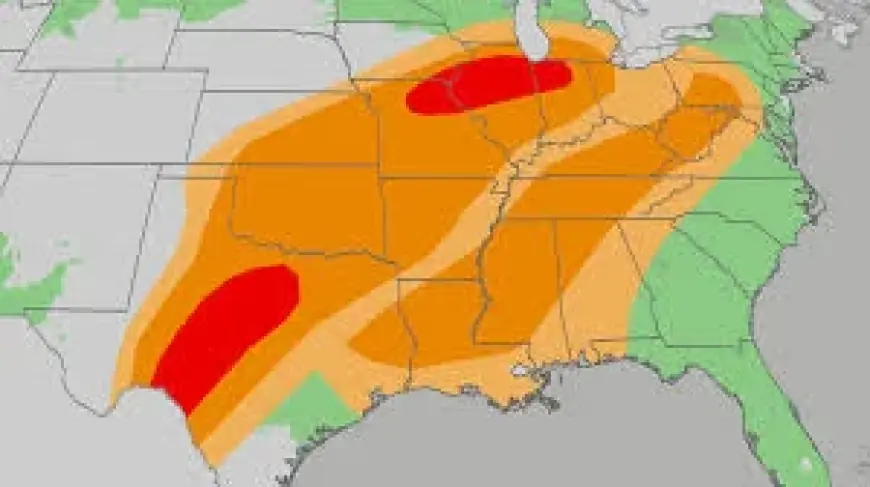
East Texas is entering a closely watched window for weather storms tornadoes as a storm system approaches from the west, raising the chance for severe thunderstorms from late Tuesday into Wednesday. Tuesday evening through Wednesday are designated First Alert Weather Days, with the main threat expected to arrive later Tuesday and into the night. Forecasters caution that multiple hazards are possible, and the timing matters: what begins as scattered afternoon development could evolve into a more organized, higher-impact overnight line.
First Alert Weather Days: What’s expected from Tuesday afternoon into Wednesday
Conditions are expected to shift gradually as the system nears. Moisture is forecast to increase across the region, supporting scattered thunderstorm development during Tuesday afternoon hours, especially across North Texas and into the I-30 corridor. While an isolated severe storm cannot be ruled out Tuesday afternoon, the more significant severe weather risk is expected later in the day and into the night.
The primary concern is a line of strong to severe thunderstorms expected to develop over West Texas and move into East Texas. That line is projected to reach the area by late Tuesday night and continue into early Wednesday morning. For residents tracking weather storms tornadoes, the overnight timeframe is important because the potential hazards are not limited to a single threat type.
All severe weather hazards are on the table, including damaging wind, large hail, and isolated tornadoes. The storm mode may change with time: storms may initially form as individual strong cells before organizing into a more linear pattern as they move across East Texas.
Why the overnight line matters: wind, hail, and isolated tornado risk
The outlook underscores a familiar but high-stakes progression. Early development can be more scattered, but as storms organize into a line, the nature of impacts can change—especially when damaging wind becomes the dominant hazard within stronger segments. The forecast discussion also highlights large hail and isolated tornadoes as possibilities, reinforcing that the risk cannot be reduced to a single headline hazard.
From an operational standpoint, timing is central to how people experience weather storms tornadoes. A late-night arrival can compress decision-making, with less daylight and fewer visual cues. The forecast notes that storms could arrive late Tuesday night, then persist into early Wednesday morning, extending the period of concern beyond a brief passage and into the start of Wednesday.
Thunderstorms are expected to continue through Wednesday morning as the system pushes through. Into Wednesday afternoon, there is also the possibility that storms could intensify again before the system exits the area. Any remaining storms are expected to leave by evening, followed by improving conditions overnight.
Flooding concern rises if storms slow or stall Wednesday morning
Beyond severe wind and hail, the forecast points to a second, potentially compounding risk: heavy rainfall and flooding. There is a possibility that storms could slow or temporarily stall over East Texas on Wednesday morning. If that occurs, rainfall could become more concentrated over the same locations for longer periods, increasing the chance of flooding in some areas.
Rainfall amounts of 1 to 3 inches are expected across much of East Texas, with higher amounts possible if storms slow down or stall. That scenario could elevate flash flooding concerns, particularly in areas with poor drainage or where storms remain stationary for extended periods. For communities dealing with weather storms tornadoes, this matters because flooding impacts can linger even after the most intense thunderstorm activity moves on.
The forecast also allows for storms to intensify again Wednesday afternoon before the system exits. That means the region may not simply transition from “severe” to “done” in a straight line; rather, there may be multiple rounds or phases of storms before conditions finally improve Wednesday night.
As East Texas moves through the First Alert Weather Days, the key message is that risk is tied to both timing and storm evolution: scattered afternoon storms, a stronger overnight line, and a potential Wednesday morning flooding angle if storms stall. With all hazards possible—damaging wind, large hail, and isolated tornadoes—monitoring the late Tuesday night through Wednesday period remains essential.