Gofundme Sparks Family Rift: Inside the Billing Dispute Between Rick and Corey Harrison

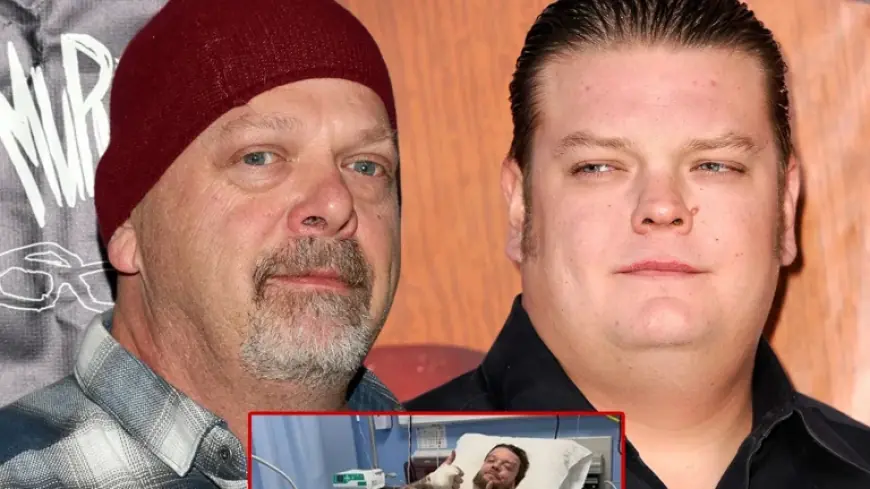
The dispute over a gofundme launched after Corey Harrison’s near-fatal motorcycle crash has laid bare a rare public disagreement between the reality TV father-son pair. Corey says mounting medical bills, lost income and depleted savings forced friends to start a fundraiser; Rick Harrison counters that he paid the medical bills in full before the campaign began. The contradiction has turned a private recovery into a very public accounting debate.
Background and context: how a foreign hospital stay turned into a fundraising appeal
Corey Harrison was severely injured in a motorcycle collision that resulted in multiple surgeries and extended hospital stays in Mexico. He suffered internal bleeding that required surgeons to drain nearly three liters of blood and endured broken ribs and a punctured lung. He checked out of an initial hospital as bills escalated and later experienced dangerously low oxygen levels that required on-site medical care. A friend established a gofundme to assist with outstanding medical bills, rent, medications, therapy and to repay money Corey said he had borrowed from family and friends who helped cover hospital costs.
The fundraiser’s public description framed the campaign as emergency relief: it listed surgery and follow-up care costs, ongoing medication needs, and lost income during recovery. At the time cited in available statements, the campaign had raised $9, 605 toward an $18, 000 goal. Separate descriptions tied to the ordeal also referenced six-figure medical costs and detailed an extended hospitalization that included multiple surgeries and weeks away from work.
Gofundme and the accounting: what the contrasting statements reveal
The central contradiction is straightforward: Rick Harrison has said he paid Corey’s medical bills in full before the fundraiser went live, while Corey has described his father as having covered roughly half of a six-figure hospital tab and characterized those payments as loans he intended to repay. That divergence matters because the fundraiser’s stated needs go beyond a single hospital invoice.
Medical billing in multiple facilities — transfers between clinics, out-of-pocket costs for surgeries, and follow-up outpatient care — can produce separate invoices and gaps that a single payment may not erase. The campaign description points to ancillary costs that are routinely excluded from an initial hospital settlement: rent arrears that accumulated while Corey was incapacitated, medication and therapy expenses, and weeks or months of lost earnings while recovering. The fundraiser also described the need to repay friends who covered immediate care.
Public figures are often judged both for what they disclose and what they omit. Here, the discrepancy between a claim that “all” medical bills were paid and a campaign asking for assistance invites a narrower arithmetic question: did the payments Rick describes satisfy every outstanding creditor and indirect loss listed by supporters, or do unpaid obligations remain that justify the fundraiser’s goals? The available statements leave that arithmetic unresolved.
Expert perspectives and public fallout
Rick Harrison, ‘Pawn Stars’ star, framed the matter as one of personal responsibility and family bookkeeping: “He is a grown man in his 40s and is responsible for how he handles his finances, ” he said, adding that any repayment expectation was not formalized with a schedule. Corey Harrison, Pawn Stars alum, described a very different experience in recovery and financial strain, saying he drained his savings and faced being unable to pay caregivers at one point; he also affirmed his affection for his father while expressing skepticism that a familial loan had been forgiven.
Aron Chambers, friend and fundraiser organizer, presented the fundraiser as a lifeline for rent, ongoing care and replacement of lost income while Corey heals. Chambers’ campaign text outlined serious clinical interventions, repeated hospital stays, and follow-up needs that extend beyond a single settled invoice.
The public response has been twofold: some fans treated the fundraiser as a direct aid mechanism for a friend in crisis, while others questioned why a visible family member would be publicly fundraising if medical bills had been covered. That split underscores how quickly personal financial disputes involving public figures become matters of public judgment.
The stakes are both financial and reputational. For Corey, the campaign represents a bridge to recovery and the ability to meet living expenses while incapacitated. For Rick, asserting that he paid the bills is an effort to define the record and set expectations about familial responsibility. For supporters, the outcome will shape whether future charitable appeals for high-profile individuals are met with trust or increased scrutiny.
What happens next depends on clarifying documents and reconciled ledgers: a clear accounting of paid invoices, remaining balances, and precisely which expenses the fundraiser is meant to address. Without that, public interpretation will continue to be driven by the divergent personal statements already on record.
As the family navigates recovery and reconciliation, one practical question remains for donors and observers alike: does the fundraiser reflect unresolved medical obligations and lost income, or is it an overlapping effort launched before family payments were fully tallied, and how should future charitable impulses respond when private accounts become public?
Will this episode change how fans respond to similar appeals in the future, and can the family settle both the medical and emotional ledgers in a way that restores private trust?
gofundme