Wonder Man’s Free First Episode Is a Streaming Signal: 3 Shifts Inside Marvel’s TV Reset

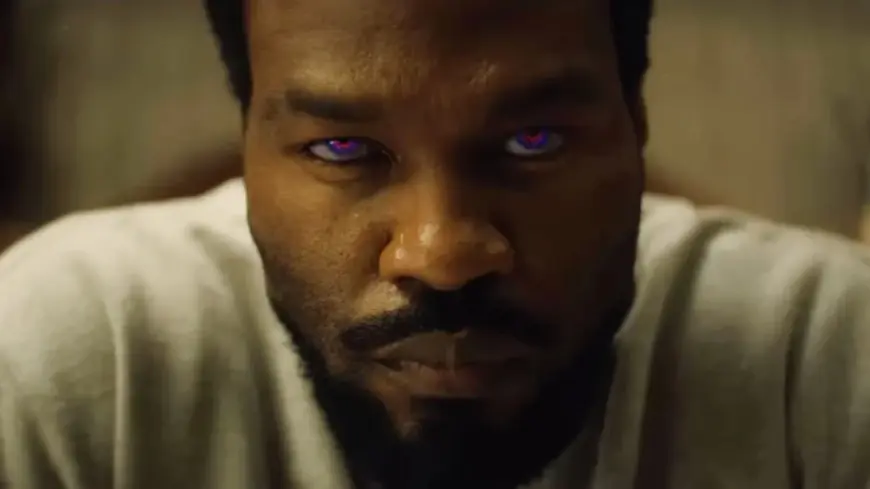
Making a flagship premiere free is not just a gift to fans; it’s a calibration move. With wonder man now offering its first episode at no cost on YouTube, Marvel Television is testing how far a series can travel beyond the subscription wall while still feeding the Disney+ funnel. The experiment lands at a moment when Marvel’s approach to streaming series is openly in flux—and when a show built around acting, image, and industry pressure is unusually well-positioned to benefit from broader sampling.
Why the free release matters right now
The newly available first episode introduces Simon Williams, played by Yahya Abdul-Mateen II, as an aspiring actor trying to make his mark in Hollywood while hiding a secret that could end his career before it begins. The premise itself is about access: who gets seen, who gets believed, and what must be concealed to keep working. That makes the decision to put the opener on YouTube feel less like standard promotion and more like a thematic extension of the series’ core tension—visibility as both opportunity and risk.
Within the episode’s setup, Simon crosses paths with fellow actor Trevor Slattery (Ben Kingsley). The two form an unlikely friendship while pursuing life-changing roles, especially after Simon learns that director Von Kovak (Zlatko Burić) is remaking his favorite childhood film, the 1980s Super Hero cult classic “Wonder Man. ”
Factually, what’s new is the distribution: the first episode is free. Analytically, the timing implies confidence that the show’s tone can hook casual viewers quickly—particularly those fatigued by bigger, noisier franchise mechanics.
Under the hood: a grounded series that survived confusion and a near-cancel
wonder man arrives with a complicated internal narrative that’s unusually visible for a franchise title: the show was nearly canceled before ultimately becoming one of Marvel’s best-reviewed shows. Andrew Guest, the showrunner, described a period when the project was “taken off their board for a moment, ” and said producers fought hard to keep it alive. He also said test audiences were left “confused” by the first two episodes, but Marvel’s response wasn’t a request for major reworks; it was a decision to market the show differently.
That detail is crucial because it reframes what the free-first-episode choice might be optimizing for. If early confusion was a known hurdle, giving viewers a no-risk entry point can reduce friction and widen the sample size—especially for a series that is described as self-reflexive and grounded, more character study than spectacle. In that sense, “free” becomes a practical correction: let the show explain itself in its own language, rather than relying on assumptions about what an MCU series must be.
At the story level, the show’s meta-Hollywood structure is not window dressing. It hinges on the relationship between two actors at different career stages—Simon as a striving newcomer, Trevor as a veteran with a long, strange career—and on their shared respect for the craft. Abdul-Mateen II highlighted the “friendship between two guys on completely different sides of their career, ” noting they have “two completely different philosophies on life” but bond over acting.
At the strategy level, the show’s survival through uncertainty suggests it has become a proof point: a project that didn’t fit the smoothest mold, briefly dangled over the chopping block, then emerged as a critical success. That arc makes it a logical candidate for broader exposure, because it signals that the platform’s most distinctive titles may need a larger on-ramp than the usual subscriber-only launch can provide.
What viewers are actually being asked to buy into
In its own storytelling terms, the series places “street-level” emotional stakes over world-ending stakes. The eight-episode miniseries format, released on Disney+ in January 2026, centers on Simon’s auditions for a remake of the 1980s “Wonder Man, ” his performance anxiety, and his relationships—especially with Trevor. Simon’s superhuman abilities exist, but he contains them, believing exposure would cost him his dream. Trevor, meanwhile, is framed as charismatic and shunned by studios after portraying the Mandarin, and his role is described as more than comedic relief: a figure associated with redemption and the attempt to escape an imposed image.
The free first episode therefore functions as a clarity test. It asks viewers to accept that the hook is not multiverse escalation but an industry mirror: casting politics, reputation management, personal reinvention, and the pressure of performing under scrutiny. For audiences burned out on dimensional travel and overpowered conflict, the series positions itself as a “refreshingly grounded addition” to Marvel’s catalogue.
Destin Daniel Cretton, credited as the creator alongside Guest, has expressed hope that wonder man brings “excitement, surprise, and inspiration” as a love letter to the art of filmmaking. Zlatko Burić, who plays director Von Kovak, described acting as a movie director inside a television show as a “huge playground you can use. ” These creative statements reinforce the idea that the show’s stakes are partly about making art inside a machine built to commercialize it.
From an editorial standpoint, that tension may be the real bet behind the YouTube release: once the first episode establishes tone, the series can be evaluated on craft—performances, character dynamics, and satire—rather than on whether it tees up the next giant crossover.
Regional and global implications: a cross-platform on-ramp for franchise TV
While the free episode is a single distribution choice, it points to a broader consequence: franchise television no longer competes only with other franchise television. It competes with the frictionless habits of online viewing. Making episode one free on YouTube invites a wider set of audiences into the series’ conversation—casual superhero viewers, comedy viewers drawn to Hollywood satire, and even those who treat streaming subscriptions as rotating expenses rather than permanent commitments.
The show’s self-reflexive angle—described as a peek behind the curtain of the MCU, filtered through the lens of the MCU itself—could travel well across markets precisely because it leans on universal entertainment-industry anxieties: being typecast, being discarded, being misunderstood at first impression, and trying again anyway. That thematic portability matters for a title whose early reception reportedly included confusion; global reach often depends on immediate comprehension, and a free sampler increases the odds that curious viewers will give it that second beat of attention.
The open question is whether this becomes a repeatable model or a one-off exception reserved for the most unconventional projects. If the free-first-episode approach becomes normalized, it could reshape how future series signal their identity—less reliant on franchise momentum, more reliant on letting the work speak in full scenes and performances.
For now, the move turns wonder man into something rare in modern franchise TV: a series that invites a mass audience to try the first chapter with no commitment. If the show is truly a break from multiverse mania, will this kind of open-door release become the new way Marvel proves it?