Unc at Cameron: 5 sensory moments that explain why the rivalry still overwhelms the game

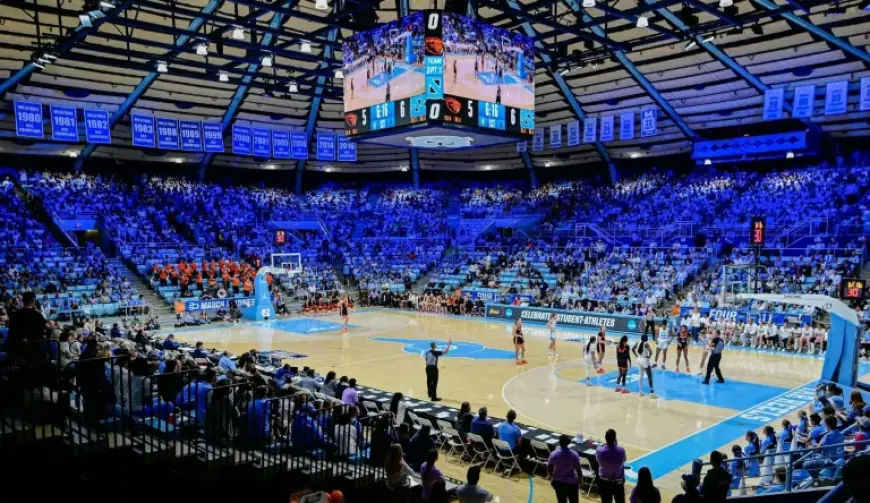
unc was not just a visiting team at Cameron Indoor Stadium on Saturday; it was the trigger for a full-body experience that spilled beyond the court. From mystery liquid splashing onto a courtside keyboard to the near-impossibility of hearing whistles, the environment around Duke’s 76-61 win over North Carolina turned routine game mechanics into a physical test. Even a 23-point second-half margin sounded identical to a one-point game in the first, underscoring how the building’s intensity can flatten the scoreboard into pure noise.
Unc night at Cameron: where access is earned, then compressed
The defining feature of the evening was proximity—unfiltered, unavoidable, and intentionally engineered. Line monitors who oversee a six-week campout for students seeking access to the UNC game described a deliberate effort to pack as many students as possible into Section 17. The result was density that became its own weather system: by the second half, a cloud of body odor hung in the air, while euphoria rose with a Duke performance that was “hardly in doubt for much of the evening. ”
On press row in front of the student section, the game became a contact sport even for the people typing. Blue body paint showed up not only on fans but across sinks in the tiny bathrooms on the concourse, and it brushed onto those seated close enough to be in range. The evening’s “mysterious liquid” incidents—head, arm, table, and a particularly concerning landing on a keyboard—captured how the boundary between spectacle and workspace can disappear when the crowd is inches away.
The building itself turns a rivalry into a physical phenomenon
Cameron Indoor Stadium’s architecture is not neutral; it amplifies and concentrates emotion. The venue’s interior creates a stacked closeness: a wood-panel wall separates just nine rows on the lower level from 14 rows above, topped by a thick brass railing that adds to a distinct, almost regal atmosphere. The space has been mostly untouched for eight decades since opening, with air conditioning only arriving in the last two of those decades. The goals hang from the ceiling rather than resting on ground stanchions, reinforcing the sense that this is a place built around tradition rather than modular modernity.
That tradition shows up in what is absent as much as in what is present. Coach K Court—named for former coach Mike Krzyzewski—remains free of sponsorship logos “for now, ” a small detail with outsized meaning in an era where arenas increasingly sell naming rights, signage, and premium experiences. Many campuses would have bulldozed a building like Cameron to chase capacity and revenue. Duke, notably, did not. The price of that choice is smaller scale; the benefit is a cauldron where energy has nowhere to go but down onto the floor.
The intensity was so constant that the ear could not reliably distinguish between ordinary and extraordinary moments. Whistles were difficult to hear, and even a laptop screen seemed to vibrate. The reporting perspective from courtside—“a half step outside the white lines”—framed the environment as a nearly continuous roar, making it plausible to wonder how players can hear instructions from hoarse coaches at all.
What Duke’s win reveals about tradition versus monetization
The night also doubled as a live case study in what Cameron refuses to become. Across American stadiums, fans are often moved farther from the action while high-priced, well-catered boxes multiply, and sponsors pay six- and seven-digit checks for branding privileges. Cameron does not operate on that template. There are no luxury boxes described here, and the best seats go to students, not corporate clients. That decision shapes not only optics but acoustics, pressure, and the psychology of the game.
In that sense, unc serves as an annual stress test for a philosophy: leave money on the table to keep the experience raw. The crowd’s rituals—foam fingers waved to the beat of “All I Do Is Win, ” chanting students packed into Section 17, the visual residue of body paint in the concourse bathrooms—form an ecosystem that a sanitized premium model would likely dilute. The sensory overload is not a side effect; it is the product.
Even the celebrity presence sits differently in this environment. Instead of insulated suites, notable spectators cram into box seats beside the “unwashed masses, ” including Ken Jeong, NBA legend Chris Paul, and Los Angeles Rams coach Sean McVay. The message is subtle but clear: at Cameron, fame does not automatically buy distance from the crowd’s heat.
Why the rivalry’s theater can outshine the margin
For much of the evening, Duke controlled the game, culminating in a 76-61 victory. Yet the atmosphere was so uniformly intense that game state became secondary to sensory continuity—noise, motion, bodies, and proximity. A 23-point second-half game sounded like a one-point first half, an observation that matters because it suggests the venue’s signature is consistency rather than volatility. Many arenas spike only when the game tightens. Here, the environment stays elevated regardless of the margin.
That is why unc games at Cameron are described as “the sport’s signature rivalry” and “the biggest game of the day in college basketball” in this context: the contest is not only about possessions and shot-making but about a building designed to refuse emotional downshifts. It is also why sitting courtside can feel like being placed inside the machinery of the spectacle, where even typing can become a defensive act against spills and splashes.
In the end, the most provocative question is not what Cameron is, but what it will choose to become. If tradition still beats monetization here—if students still hold the best seats and sponsorship stays off the floor—how long can that model hold when the pressure to modernize keeps rising, especially on the one night a year when unc turns the entire place into a vibrating instrument?