Kit Harington and the Game of Thrones movie inflection point as Aegon’s Conquest heads to the big screen

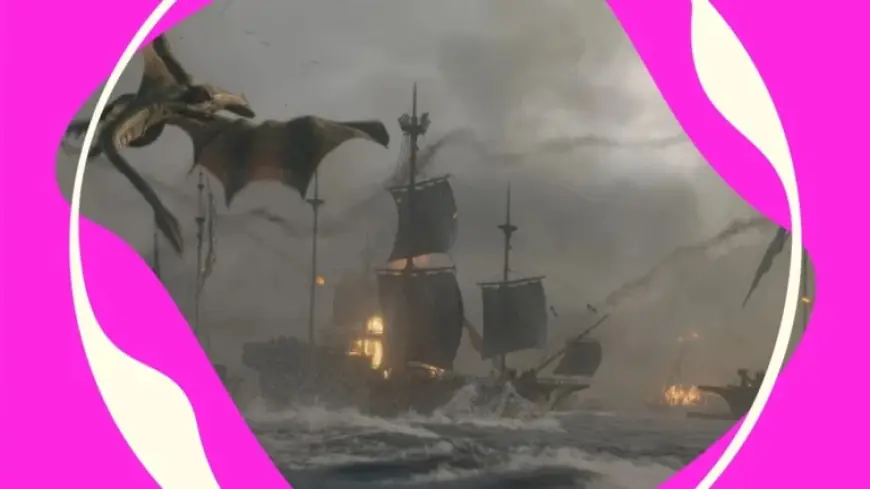
kit harington is back in the conversation around Westeros as Warner Bros. officially develops a Game of Thrones feature film built around Aegon I Targaryen’s conquest—an expansion that pushes the franchise toward a new, big-screen scale while a parallel version remains in early development as a series at HBO.
What Happens When Aegon’s Conquest becomes the next big-screen test for Westeros?
Warner Bros. is developing a movie set in George R. R. Martin’s fantasy world, with writer Beau Willimon attached. The project is framed around Aegon I Targaryen’s conquest of Westeros, a story also being developed in early form as a series at HBO. The creative and strategic tension is built into that setup: two versions of the same foundational event moving through development at the same time, with one positioned for theaters and one positioned for episodic depth.
The conquest story itself is inherently cinematic. In the lore outlined by Martin in The World of Ice & Fire and Fire & Blood, Aegon arrives from Dragonstone with three dragons—Balerion, Vhagar, and Meraxes—demands submission from the kings of Westeros, and burns castles and armies until resistance collapses. The premise offers spectacle, but it also creates an immediate narrative challenge: the central force driving the plot is overwhelming power rather than underdog survival.
That is the inflection point for the film: the story’s core action is an imperial takeover, and the Targaryens are presented in the underlying texts as autocrats rather than obvious heroes. Any movie seeking broad audience attachment has to solve that tonal puzzle without changing the essential events that make the conquest recognizable.
What If the film leans into the “baddies” problem instead of dodging it?
The earliest framing from the novels paints the Targaryens as tyrants, and the conquest is described as a rapid reordering of a continent once three colossal dragons enter the equation. The imbalance is the point: Aegon does not need to be a plucky underdog when he can impose surrender through flying weapons of mass destruction. That dynamic can either become a storytelling weakness—or the very engine of the movie’s identity.
A straightforward heroic framing risks feeling at odds with the lore’s blunt mechanics: resist, burn, surrender. A more confident approach is to foreground the moral friction and let the audience sit with the discomfort of rooting for victors who win through domination. That does not require inventing new events; it requires emphasis—what the film chooses to linger on, what it treats as triumph, and what it treats as cost.
At the same time, the film has a parallel constraint. A TV series covering similar ground “in greater detail” is part of the landscape, which raises the pressure on the feature to differentiate itself through scale and focus. A series can sprawl across politics, personalities, and aftermath. A movie has to pick a clean arc. For Aegon’s Conquest, that arc is less about whether the conquest succeeds and more about how the story asks audiences to interpret the success.
What Happens When franchise planning collides with studio uncertainty—and where kit harington fits?
On the business side, the movie sits inside a shifting corporate picture. The studio’s slate is described as “a bit up in the air” given an expected sale to Paramount Skydance, a backdrop that can influence timelines and prioritization without changing the fact that the project is officially in development. In practical terms, that uncertainty makes franchise clarity more valuable: a theatrical film needs a sharper rationale for why it exists alongside multiple shows and additional projects under consideration.
Within the on-screen ecosystem, HBO currently has two Game of Thrones-based series in motion: House of the Dragon, returning for season three this summer, and A Knight of the Seven Kingdoms, currently working on a second season. A feature film about Aegon’s Conquest would jump further back in the timeline than those shows, reframing the franchise around origin-level mythology and the rise of the Targaryens.
That reframing is where kit harington becomes a useful marker for audiences, even when the film’s story is set centuries before the events associated with the most familiar faces. In the context provided, HBO itself has linked Jon Snow to the Targaryen naming lineage by describing him as a later “Aegon. ” That connection—name, legacy, and the idea that the conquest reverberates across generations—helps explain why conversation can snap back to kit harington whenever a project returns to the dynasty’s foundations.
| Track | Story focus | Built-in advantage | Built-in risk |
|---|---|---|---|
| Warner Bros. feature film | Aegon I Targaryen’s conquest of Westeros | “Mammoth” theatrical scale and clean event-story momentum | Harder to create emotional rooting interest for conquerors |
| HBO series (early development) | Also Aegon’s Conquest | Room for political and character detail over time | Overlap creates comparison pressure and audience confusion |
| Existing HBO shows | Targaryen-era stories adjacent to the conquest | Active audience pipeline and continuity of attention | Franchise fatigue risk if projects feel repetitive |
The immediate takeaway is not that one approach will “win, ” but that the franchise is now operating as a multi-format machine. Aegon’s Conquest is being positioned as the next major lever for expansion, and that choice forces creative teams to confront the conquest’s core truth: the spectacle is inseparable from coercion.
For readers tracking the next inflection point, the signal is simple and concrete: Warner Bros. is officially developing the film with Beau Willimon, and the conquest is simultaneously a live concept on the HBO side. The franchise’s future hinges on how confidently it can dramatize power without flattening it into uncomplicated heroism. kit harington