Indian Wells Open after Week One’s strangest moments: hindrance calls, missing balls, and an Australian surge

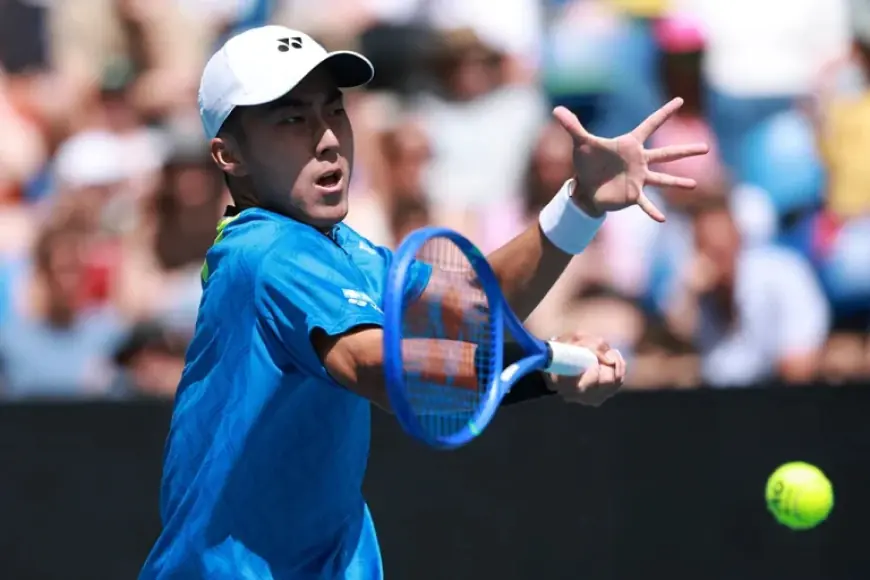
The indian wells open has delivered an early stretch defined by unusual interruptions, rule flashpoints, and a tightly timed Australian double that pushed two players into the third round within minutes.
What Happens When a “hindrance” call ends a match?
One of the week’s most debated moments came in the second round when an on-court sequence involving Luciano Darderi and Rinky Hijikata ended not with a clean winner, but with a ruling tied to interference and the limits of stopping play.
In the point described as among the strangest of 2026, Darderi — trailing 4-6, 6-2, 5-4, 40-15 against Hijikata — lifted a defensive lob as Hijikata moved forward. Before the ball dropped, Darderi pointed and play stopped after the chair umpire extended a hand. Audio captured a spectator exclaiming, “Oh my God, ” while Hijikata, preparing for what would have been a difficult baseline smash, appeared perplexed and approached the net.
Darderi told Hijikata that he had said, “Oh my God. ” Hijikata replied, “I didn’t say anything mate. ” The chair umpire then initiated video review, stating that players are not allowed to stop points simply because someone in the crowd shouts, even if it is distracting. After review, the umpire judged that Darderi had hindered Hijikata by stopping the point, ending the match on that decision.
The episode also fit a wider theme noted early in the season: “hindrance” has repeatedly surfaced as a decisive issue, with prior examples referenced from Aryna Sabalenka at the Australian Open and Daniel Altmaier at the Rio de Janeiro Open.
What If the basics fail: no new balls, a delayed match, and a net replacement?
Strangeness at the tournament was not limited to officiating. A second-round match between No. 17 seed Clara Tauson and Yulia Putintseva was temporarily suspended for a reason that had nothing to do with weather or spectator behavior: there were no new balls available at the scheduled changeover.
The stoppage occurred with Tauson leading 4-3 and preparing to serve. Tournament rules require a ball change after the warm-up and first seven games, followed by changes every nine games thereafter. Play resumed after about 15 minutes once new balls arrived, and Tauson went on to win 7-6, 6-2.
The incident landed amid ongoing chatter about the tournament’s ball switch from Penn to Dunlop, with multiple players saying the difference between new and old balls is more pronounced. Another operational disruption followed when the match between Mirra Andreeva and Solana Sierra was delayed Saturday because the net on their court required replacement.
Together, the disruptions created a week-one picture in which the rhythm of play has been repeatedly shaped by logistics and rule enforcement, not only shotmaking.
What Happens When two Australians advance within minutes at the Indian Wells Open?
Beyond the oddities, the indian wells open has also produced a tightly linked competitive milestone for Australia.
Rinky Hijikata, an Australian qualifier, reached the third round after upsetting 20th seed Luciano Darderi 4-6, 6-2, 6-4. The win marked Hijikata’s first appearance in the third round of an ATP Masters tournament and his first victory over a top-25 opponent. The match extended a four-match winning streak and set up a next-round meeting against the winner of the match between 10th seed Alexander Bublik and Czech lucky loser Vit Kopriva.
Minutes after Hijikata’s result, compatriot Alex de Minaur completed a come-from-behind win over Sebastian Korda to reach the last 32. With Talia Gibson and Ajla Tomljanovic also reaching the same stage of the women’s event, it marked the first time since 2004 that four Australians would feature in the third round at Indian Wells — a prior edition that included Lleyton Hewitt, Wayne Arthurs, Alicia Molik, and Sam Stosur.
Hijikata framed his progress as a performance-based step rather than a moment to overread, noting he was happy to reach the third round of a Masters for the first time and that the conditions suited him. He also emphasized that getting through tight matches helped with confidence. The run was described as his most notable big-tournament result since advancing to the fourth round of the 2023 US Open, which helped him reach a peak ranking of world No. 62. Listed as world No. 117 at present, his Indian Wells progress was described as lifting him to No. 106 in the ATP live rankings during the event.
Elsewhere in week one, Carlos Alcaraz was described as returning in fired-up form, dismantling Grigor Dimitrov. Fan engagement also stood out in practice sessions, where Alcaraz repeatedly interacted with fans, took selfies, signed autographs, and handed pre-signed balls to kids. Dimitrov, in turn, was noted as healthy and back in action, with Xavier Malisse and David Nalbandian in his coaching box, and he produced a three-set win over Terence Atmane. Another highlighted atmosphere moment featured Alexandra Eala defeating Dayana Yastremska 7-5, 4-6, 7-5 in a match lasting two hours, 47 minutes amid loud support from Filipino fans.
Week one has offered a clear snapshot: a tournament where unexpected disruptions, interpretive rulings, and fast-moving momentum shifts can define the daily storyline as much as marquee names do.