Judge Restricts Crowd Control Devices, Mandates Federal Officers Identify at Portland ICE

A federal judge in Oregon has limited the use of crowd control devices by federal law enforcement at the Immigration and Customs Enforcement (ICE) building in Portland. U.S. District Court Judge Michael Simon ruled on the need for accountability and transparency in law enforcement practices, particularly concerning the treatment of nonviolent protesters.
Judge’s Ruling on Crowd Control Devices at Portland ICE
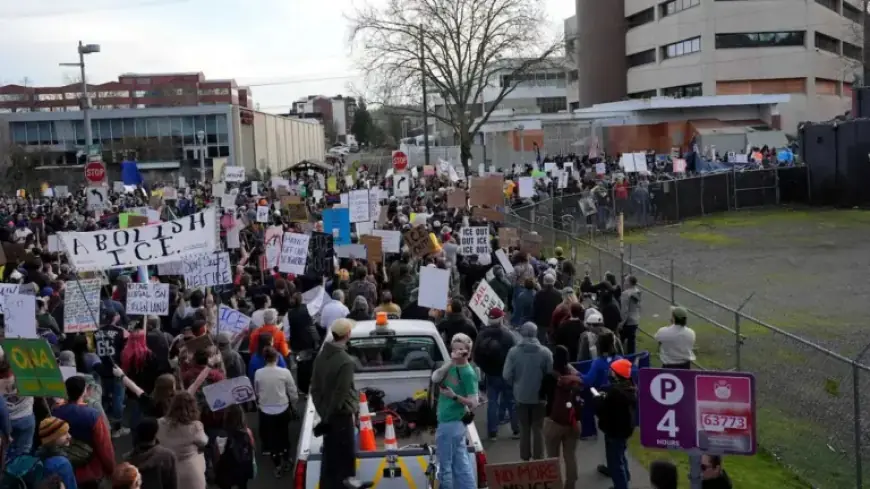
On January 31, 2026, protesters held a significant demonstration known as “Labor Against ICE,” starting from Elizabeth Caruthers Park and moving to the ICE facility. This ongoing demonstration reflects widespread dissent against the Trump administration’s immigration policies.
Findings of Forced Use on Nonviolent Protesters
- Judge Simon found that federal officers utilized excessive force against peaceful protesters.
- Crowd control devices, including tear gas and pepper balls, were misapplied against nonviolent individuals.
- The ruling allows the use of such devices only in scenarios where there is an imminent threat of physical harm.
During a three-day hearing, testimony from protesters detailed instances of being harmed while practicing passive resistance. Judge Simon emphasized the importance of protecting First Amendment rights, calling for a system where free speech and nonviolent protest are respected.
Details on the Preliminary Injunction
Simon’s ruling also grants preliminary class certification. This means that all nonviolent protesters and journalists at the Portland ICE building are protected under this injunction. He emphasized that a healthy democracy thrives on the tolerance of dissent.
As part of the ruling, Simon recommended that federal officers wear identifiable uniforms. This will ensure that officers can be easily recognized during protests without infringing on law enforcement activities. Accompanying this decision, he expressed concerns regarding the lack of training amongst officers regarding proper crowd control and First Amendment rights.
Concerns Over Accountability
Judge Simon highlighted troubling testimonies revealing a lack of understanding among federal officers about essential crowd control procedures and their agency’s own use of force policies. He noted the absence of reprimands or corrective measures for officers who violated these policies.
The ACLU of Oregon, leading the legal challenge, stated that the ruling serves as a crucial reminder of governmental accountability in its interactions with citizens during protests.
Next Steps and Potential Appeals
The Justice Department may appeal this ruling. Judge Simon urged the reviewing judges to consider video evidence documenting the use of force against peaceful protesters, describing the footage as “unambiguous and disturbing.”
In summary, the recent ruling in Portland reflects growing concerns around the excessive use of force by federal officers against protesters, emphasizing the need for change in policing strategies at demonstrations.