Sonay Kartal Edges to Deciding-Set Win at Indian Wells — Saved Match Point and Medical Timeout Expose Grit

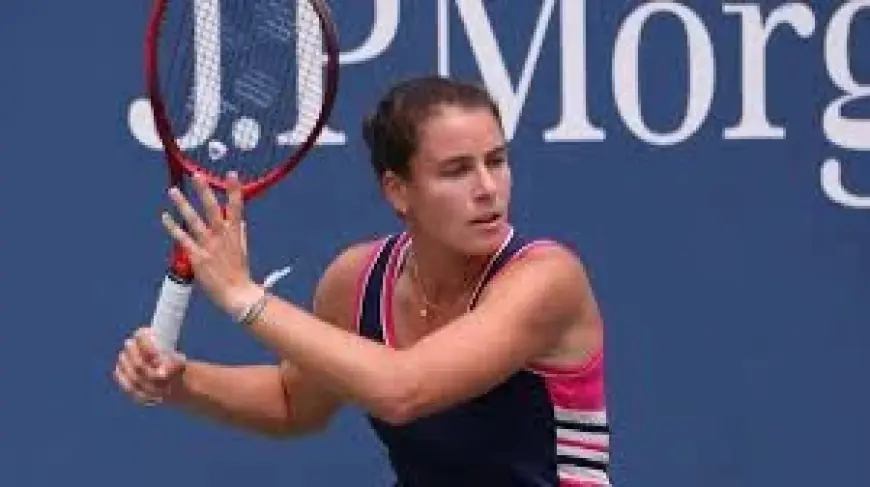
The British player kartal fought through a tense third-set tie-break to defeat Emma Navarro 6-1, 3-6, 7-6 (7-2) at Indian Wells, overcoming a medical timeout and saving a match point en route to round three. The victory, sealed after Navarro twice served for the match, sets up a clash with Madison Keys and raises immediate questions about recovery, momentum and whether kartal can carry this resilience deeper into the draw.
Kartal’s comeback and medical timeout: what happened on court
The match unfolded as a sequence of momentum swings. Kartal dominated the first set, then conceded the second after taking a medical timeout for what she described as “a bit of a twitch” in her back that affected serve power. In the final set, Navarro twice served for the match, but Kartal broke back, saved a match point and then controlled the tie-break, winning 7-2. The 24-year-old will face Madison Keys in the next round, a matchup that Kartal has signalled she will “do everything” to play in the last 32.
Background and context: rankings, form and tournament picture
Rankings and seeding underlined the upset potential in the contest: Kartal entered the match as world No 54 while Navarro was seeded and listed within the top 25. Kartal had already beaten Lanlana Tararudee in straight sets in the first round. The women’s draw has seen dominant results elsewhere, including a 6-0, 6-0 opening for the defending women’s champion and progress by multiple former titleholders, highlighting the high level of competition Kartal has navigated to reach round three.
Deep analysis: causes, implications and ripple effects
At the performance level, the medical timeout is central to understanding the match dynamics. Kartal described losing power after landing awkwardly on serve, which forced tactical adjustments to compensate for reduced shot depth and pace. Her ability to block out the scoreboard and focus point by point proved decisive when Navarro repeatedly found opportunities to close out the match. The immediate implication is twofold: physically, Kartal faces a recovery test before meeting Madison Keys; competitively, the comeback may deliver a psychological boost that affects both players’ trajectories in the tournament.
Strategically, Navarro’s failures to convert two opportunities to finish the match underscored fine margins. Kartal’s progress after saving match point and then dominating the tie-break suggests an uptick in short-term match toughness, while the medical timeout episode exposes a potential vulnerability that opponents could exploit if it persists. For tournament narratives, the result not only advances a rising British player but also contributes to an event where former champions and high seeds have continued to move through the draw.
Expert perspectives: voices from the court
Sonay Kartal, world No 54 on the WTA Tour, said: “I am just super proud of how I fought through that. It would have been easy to throw in the towel, but it is matches like that which make you super proud of yourself. “
Jack Draper, British men’s No 1 on the ATP Tour, reflected on his own tournament progress and the importance of match rhythm after a layoff: “It felt amazing. I have really felt good here. These wins are massive for me, especially on my return to the tour. ” His remarks speak to a broader theme of recovery and resilience running through the event.
Elena Rybakina, 2023 Indian Wells champion, commented on match difficulty and adaptation: “It was a really tough match today, but I’m super-happy with the win. She played really well. ” Mirra Andreeva, the defending women’s champion, described adjusting to challenging conditions: “The conditions were pretty tricky. The wind was changing directions every time. So I’m pretty happy with how I adjusted my game to these conditions. ” These perspectives highlight how environmental and physical factors are shaping outcomes at this tournament.
Regional and global impact: what this result means beyond one match
Kartal’s win is meaningful for British tennis narratives at a high-profile event, adding depth to a national contingent that includes a returning British men’s No 1. On the WTA Tour stage, an upset of a seeded former top-10 player reinforces the depth of competition and the volatility of early-round encounters. The match also shifts attention to the health and scheduling demands faced by players who progress through long three-set battles, with implications for the quality of play in later rounds and for how tournament recovery protocols are managed.
For the draw as a whole, Kartal’s advancement opens a fresh pairing against Madison Keys, while other established champions deepen the event’s competitive texture. The collective outcomes so far suggest a tournament where momentum and physical management may be as decisive as ranking differentials.
Conclusion
With a medical timeout, a saved match point and a tie-break that swung emphatically in her favour, kartal has delivered a performance that raises as many questions as it answers: can she recover fully to challenge Madison Keys, and will the resilience shown here translate into sustained progress at Indian Wells?