Mexico Vs Estados Unidos: 3 defining swings and one late surge that decided the Group B spotlight

In a matchup billed as the day’s main event, mexico vs estados unidos arrived with a simple promise: two unbeaten teams, one Group B lead, and a rivalry shaped by moments that linger. The game delivered a tight finish and a late push, but it ultimately ended with the United States holding on for a 5-3 result. Beyond the final score, the night’s texture was built from situational at-bats, late-inning damage, and the kind of pressure that has framed this pairing across multiple World Baseball Classic editions.
Mexico Vs Estados Unidos and the immediate stakes in Group B
Both national teams entered their third game of the tournament with two wins, each having beaten Great Britain and Brazil. Mexico’s route included a lopsided win over Brazil sealed by the Mercy Rule, a 16-0 result in the sixth inning. The United States also opened with two victories against the same opponents, setting up a direct contest with Group B positioning on the line.
That context matters because it turns every plate appearance into leverage. The live sequence reflected that: outs were recorded quickly at times, baserunners appeared through contact and free passes, and the margin for a mistake narrowed as the late innings arrived.
How the live game tilted: baserunners, strikeouts, and the eighth-inning jolt
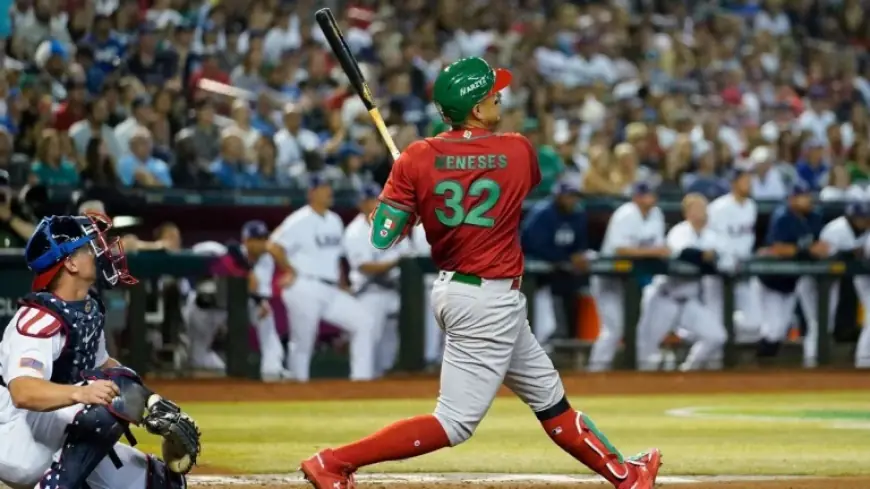
The play-by-play snapshots show a game that repeatedly flirted with momentum changes. Mexico put a runner aboard when Meneses drove the ball to the back of the park to reach first base, while the United States manufactured traffic with an automatic pass to Aaron Judge to put two men on base and then added a Bobby Witt Jr. single that advanced him to second.
Mexico also faced swing-and-miss pressure at critical points. Jonathan Aranda struck out for the first out of a Mexico sequence, and later Julián Ornelas went down on strikes as the United States sat one out from closing. Osuna struck out for the first out of the ninth, underscoring how fine the line became in the final frame.
The clearest jolt came in the eighth inning when Jarren Durán homered to cut into the deficit and bring Mexico closer. That late damage mattered because it changed the emotional temperature of the finish: a multi-run gap suddenly looked chaseable, and every subsequent out carried more weight.
Mexico’s defense also produced an important stopper in a key moment, turning a double play when Kirk hit a ball to second base. On the U. S. side, there were punchouts in high-leverage pockets as well, including Cal Raleigh striking out and Bryce Harper striking out looking without a swing in a later sequence. Still, the United States protected the lead through the final out, closing the game at 5-3.
In that narrow endgame, mexico vs estados unidos wasn’t decided by one single turning point but by a chain of small edges: baserunners created, rallies muted, and a late home run that forced the United States to finish cleanly.
Why this rivalry keeps producing “moments, ” not just results
Long before this latest meeting, Mexico’s tournament history against the United States had already been defined by standout performances under pressure. In the first edition of the World Baseball Classic, Mexico entered with little margin and leaned on Oliver Pérez, who threw three hitless innings and struck out Derek Jeter and Alex Rodríguez. Mexico scored just two runs, both driven in by Jorge Cantú, and won that game even though the team was ultimately eliminated from the tournament.
In 2013, Mexico again met the United States needing a win to stay alive. Yovani Gallardo kept the U. S. lineup in check for a little more than three innings, allowing only one earned run. The defining blow came from Adrián “Titán” González, who launched a massive home run off R. A. Dickey and finished with three runs batted in, powering a victory that ended up being Mexico’s lone win of that edition before another first-round exit.
The most emphatic Mexico win in this rivalry, as described in the historical recap, came in the last edition, again with Mexico facing elimination pressure. Joey Meneses hit two home runs at Chase Field—one a two-run shot in the first inning and another a three-run blast in the fourth—finishing with five RBIs. Randy Arozarena added three hits and two RBIs, while Patrick Sandoval allowed just one run to earn the win. That result carried group-lead implications for Mexico.
Placed next to those flashpoints, the latest 5-3 finish reads like a modern version of the same script: stress innings, selective damage, and a late push that tests the opponent’s ability to close. It is also why mexico vs estados unidos continues to be framed less as a routine group-stage date and more as a pressure laboratory where reputation is built on a handful of pitches.
What’s fact, what’s analysis, and the question left open
Fact: Both teams entered unbeaten in Group B, having defeated Great Britain and Brazil. Mexico’s win over Brazil ended 16-0 in the sixth inning under the Mercy Rule. The game ended Mexico 3-5 United States, and Durán’s eighth-inning home run brought Mexico closer late.
Analysis: The live sequence suggests the decisive separation came from execution in small moments—managing baserunners, converting outs, and avoiding an unraveling after late damage. The rivalry’s history in the tournament repeatedly highlights Mexico responding when “against the wall, ” which makes any late surge feel amplified in the public reading of the matchup.
With this result now on the board, the broader storyline remains: in mexico vs estados unidos, is the next defining moment going to be a starter’s dominance, another late-inning swing, or the kind of defensive sequence that ends a rally before it begins?