Brice Sensabaugh enters the Northwest Notes as Minnesota’s Gobert problem refuses to go away

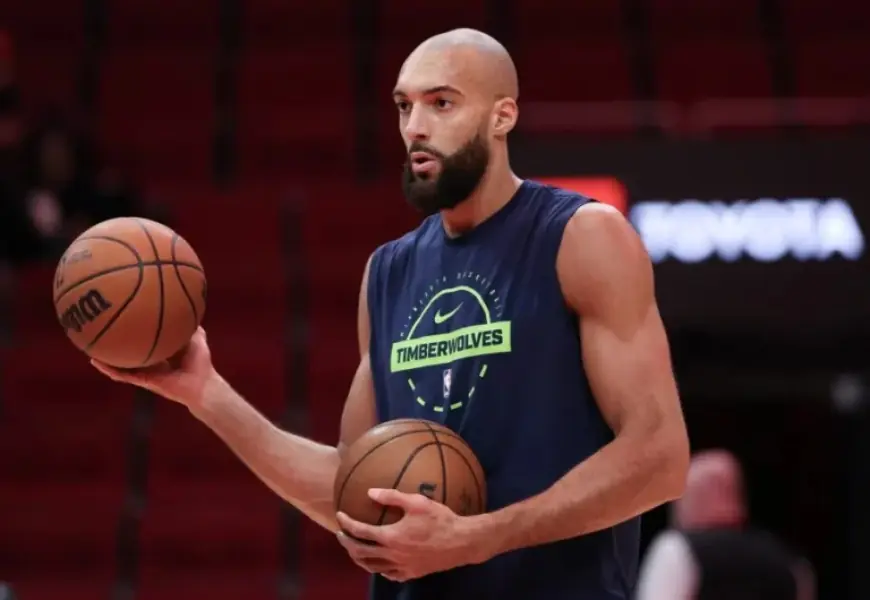
brice sensabaugh is slated to start Monday, a small but telling personnel note that lands in the same Northwest Division conversation now dominated by a much bigger, more stubborn reality: Minnesota’s defense has been drastically better with Rudy Gobert on the floor than without him.
What does the Northwest Notes item on Brice Sensabaugh actually signal?
The Northwest Division notebook that included Gobert and other names also carried a clear update: brice sensabaugh is expected to be in the starting lineup Monday. No additional parameters were provided in the available context—no minutes projection, no matchup detail, and no stated reason for the change—only the actionable bottom line that the lineup is shifting.
That matters because “starting” is not a cosmetic label. It changes who a player faces, how rotations are staggered, and what a coaching staff is prioritizing at the opening tip. With only the context at hand, the most responsible reading is narrow: the team is choosing to begin the game with brice sensabaugh on the floor, and that decision is now part of a broader set of Northwest Division storylines being tracked in parallel.
Why is Rudy Gobert’s case for Defensive Player of the Year colliding with betting skepticism?
Minnesota coach Chris Finch has made a direct, on-record argument that Gobert should win Defensive Player of the Year again. Finch’s reasoning is specific: he pointed to Gobert’s isolation defense as “top or near the top” throughout the season, described Gobert as the driver of Minnesota’s defense, and emphasized that the team’s on/off splits underline Gobert’s importance. Finch’s assessment was unambiguous, calling Gobert “far and away the leader” for the award.
That confidence exists alongside a different reality in the marketplace: the odds currently list Victor Wembanyama as the heavy favorite, with Chet Holmgren second. In other words, Finch’s internal evaluation and the external betting consensus are not aligned.
The tension isn’t just philosophical. It’s measurable in the way Minnesota performs when Gobert is on the court versus when he sits—an issue that has become a central part of how the Timberwolves are being evaluated heading toward higher-leverage games.
Is Minnesota’s “non-Gobert” defense a playoff vulnerability hiding in plain sight?
The sharpest indictment of Minnesota’s defensive structure is not about what happens with Gobert—it’s what happens without him. Over the course of the season, Minnesota has struggled in the non-Rudy Gobert minutes. One statistic crystallizes the scale of the problem: the Timberwolves’ defense is 13. 1 points per 100 possessions better with Gobert on the court, a figure that ranks in the 99th percentile.
Specific games have thrown gasoline on the concern. In Saturday’s loss to the Orlando Magic, Minnesota posted a 112. 3 defensive rating with Gobert on the floor and a 137 defensive rating without him. In that same blowout, Minnesota allowed 60 points in the paint. The pattern extends beyond a single night: in three of the past four games, Minnesota’s defense has been 20 or more points per 100 possessions better with Gobert playing than with him off the court.
Personnel explanations have been offered within the context: the lack of rim protection from Julius Randle and Naz Reid has been identified as a key factor in the non-Gobert downturn. While lineup tweaks can make the non-Gobert stretches look better in short bursts, the persistent issue is that Minnesota has not found consistent defensive performance with Gobert off the floor.
There is also a clear tactical implication: opposing teams are expected to attack whenever Gobert sits, using the “runway to the rim” effect described in the context as an invitation to put pressure on the paint. For a team that has built an identity around defense, that creates a contradiction—elite defensive ceilings paired with unstable defensive floors.
What can be verified from the available information is straightforward: Minnesota’s defensive quality swings dramatically with Gobert’s presence, and that swing has shown up repeatedly, including in a lopsided result where interior scoring piled up. What cannot be verified here is how Minnesota plans to solve it, whether by rotation changes, scheme changes, or roster decisions; those remedies are not specified in the context.