American Idol Top 20 as the competition tightens after the new ‘Ohana Round

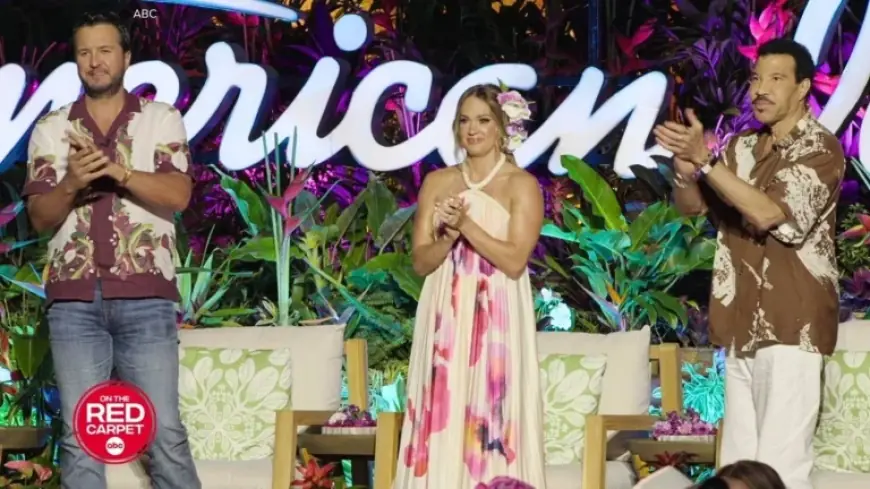
american idol top 20 is now the clear target as the season’s newly introduced ‘Ohana Round reshapes how the top 30 perform, connect, and advance. The inflection point comes as the show places contestants in a more intimate, supporter-filled setting and then makes a decisive cut: only 20 move forward once the round ends.
What Happens When the American Idol Top 20 emerges from the ‘Ohana Round?
This season introduces the ‘Ohana Round, a new stage of the competition filmed at Aulani, A Disney Resort & Spa. It is presented as part of a three-episode arc that follows Hollywood Week and is designed for the show’s top 30 hopefuls to perform in a setting framed as more intimate than the usual arena-style pressure.
The mechanics of the round are simple but consequential: contestants perform while family members and friends watch in person, alongside fellow hopefuls. The show also places industry influencers in the room—social media stars, choreographers, music creators, and others—creating an immediate feedback environment that differs from a standard audition-to-live-show pipeline. The combined social media reach of these influencers is described as nearly 149 million followers, a detail that signals the scale of exposure surrounding the performances even before the field is narrowed.
By the end of the ‘Ohana Round, the competition reduces the top 30 to 20. That transition into the american idol top 20 is positioned as the pivotal outcome of the tropical-location arc: the setting is not just scenery, but a structural device that compresses emotion, performance pressure, and visibility into a short run of episodes.
What If the ‘Ohana Round changes how contestants build momentum?
The ‘Ohana Round is built around proximity—supporters close enough to watch, peers close enough to compare, and influencers close enough to react in real time. That proximity can change what “momentum” looks like during a competition phase that traditionally centers on performance alone.
With influencers in the room—spanning social media personalities, choreographers, and music creators—the show is effectively staging performances in front of an audience that can amplify moments beyond the episode itself. The stated nearly 149 million combined follower reach suggests that visibility is not confined to the broadcast window, even if the show does not specify how those influencers will respond publicly. What is clear is the intent: to bring contestants “closer to their supporters and to each other, ” while layering in a modern visibility engine around the top 30 as they fight to become the american idol top 20.
The season’s broader theme of experimentation is reinforced by another change: the show has taken its stage to Belmont University in Nashville, Tennessee, debuting a ‘University Twist’ described as one of the ways the series is shaking things up. While the details of that twist are not outlined here, its mention in the same breath as the ‘Ohana Round underscores a season built around format refreshes rather than a single novelty.
What Happens When viewers try to follow the show across broadcast, next-day streaming, and live streaming?
For viewers tracking the competition week to week, scheduling and access are also evolving. The show airs Mondays at 10/9c on ABC and streams the next day on Disney+ and Hulu. A further shift begins March 30: “American Idol” will also stream live on Disney+. For audiences in Eastern Time, the broadcast slot translates to 10: 00 pm ET on Mondays, with next-day availability on the streaming services noted above and a live-stream option on Disney+ starting March 30.
This layered distribution approach matters because the ‘Ohana Round is part of a three-episode arc, meaning the viewing cadence can affect how quickly audiences see the performances that decide who advances. As the show narrows from top 30 to american idol top 20, access across platforms becomes part of the experience: some will watch in the linear time slot, others will arrive the next day, and—starting March 30—some will be able to watch live on Disney+ as the competition moves forward.
What remains constant through these shifts is the competitive endpoint of the tropical arc: the ‘Ohana Round ends with only 20 contestants moving on. With multiple format changes in play this season, that reduction is the fixed milestone—one that defines the stakes of every performance leading into the next phase.