Knicks Vs Clippers: 5 Storylines as Leonard and Los Angeles Test New York’s Depth

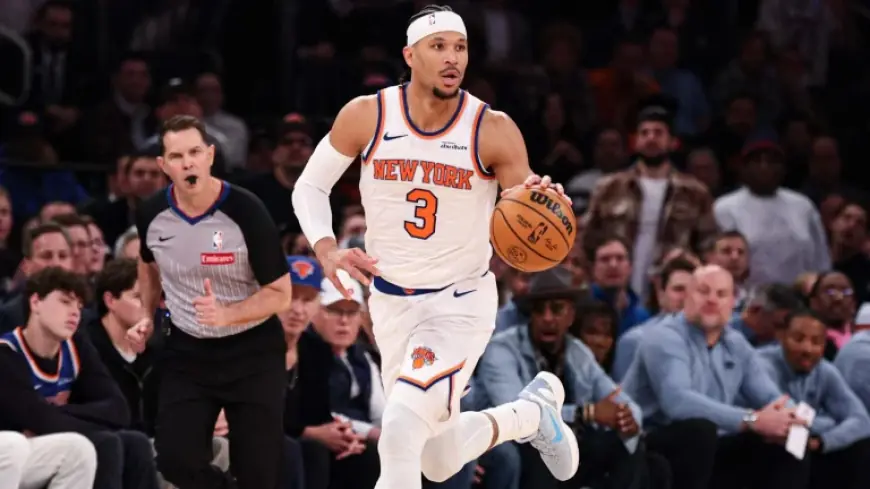
The knicks vs clippers meeting in Los Angeles arrives with more than a scoreboard at stake: New York’s road resilience and Los Angeles’s frontcourt depth will be probed at 10: 00 pm ET. This non-conference clash brings a rematch feel — the teams met earlier this season — and a compact set of performance indicators that could decide playoff positioning and rotation management for both clubs.
Background & Context: Records, recent form and the last meeting
The matchup pits the New York Knicks (41-24, third in the Eastern Conference) against the Los Angeles Clippers (31-32, ninth in the Western Conference) in a non-conference test on the Clippers’ home court. The Clippers are 16-13 at home while New York is 18-15 on the road. The teams’ previous encounter ended in a 123-111 Knicks victory, with Jalen Brunson contributing 26 points and Kawhi Leonard scoring 25 for Los Angeles in that game. Across recent stretches, both clubs enter with identical 6-4 records over their last 10 games, but distinct statistical profiles that frame the matchup.
Deep analysis and expert perspectives: Matchup edges, playing styles and personnel
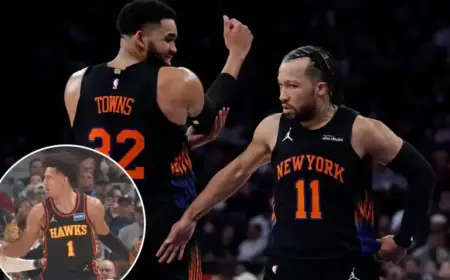
At a team level the Clippers shoot 48. 1% from the field this season; that number compares to the 45. 7% the Knicks have allowed opponents to average. New York’s perimeter output — 14. 6 made 3-pointers per game — sits above the 13. 5 triples per game Los Angeles permits, highlighting a two-way tug over spacing and interior access. Individual production shapes the tactical story: Kawhi Leonard is averaging 27. 9 points, 6. 4 rebounds, 3. 7 assists and two steals for the Clippers, while Karl-Anthony Towns leads New York with 11. 9 rebounds and 19. 8 points per game. Jalen Brunson’s recent 10-game scoring trend — 21. 8 points per game and 42. 9% shooting over that span — gives New York an established primary scorer to counter Leonard’s output.
Expert perspectives derived from roster roles and season stats include Kawhi Leonard, forward, Los Angeles Clippers; Karl-Anthony Towns, center, New York Knicks; Jalen Brunson, guard, New York Knicks; and Brook Lopez, center, Los Angeles Clippers. Their season averages and recent form provide the basis for tactical expectations: Leonard’s scoring and two-steal rate imply the Clippers will lean on isolation scoring and transition creation; Towns’ rebounding numbers underpin New York’s ability to control second-chance opportunities; Brunson’s efficiency over his last 10 games suggests the Knicks will prioritize his shot creation; and Lopez’s recent perimeter productivity offers Los Angeles an interior counterweight when Collins is unavailable. These observations are grounded in season-long and recent game figures rather than prognostication.
Knicks Vs Clippers: Injuries, lineups and regional impact
Availability is a central determinant. New York will be without Mitchell Robinson, who is on a load management schedule, and Miles McBride, who is sidelined following sports hernia surgery; otherwise the Knicks are listed as fully healthy. Los Angeles faces the absence of John Collins, who has missed consecutive games with a neck issue, while Yanic Konan Niederhauser has been ruled out for the season with a Lisfranc injury. Bradley Beal is also out for the season with a hip issue. Darius Garland is not on the injury report and logged 26 minutes in his first start for the Clippers during a recent game, signaling increasing availability at the point-of-attack for Los Angeles.
These personnel realities create immediate ripple effects regionally: the Clippers, amid a five-game home stretch, have an opportunity to climb toward. 500, and the Knicks’ performance on the road will influence their standing in a tightly contested Eastern Conference. Home-court production (Clippers 16-13) versus New York’s road resilience (18-15) sets the stage for an encounter where rotations, matchups and rebound battles could matter as much as raw scoring.
In short, the knicks vs clippers slate on the Clippers’ floor will be decided by how each team compensates for absences and leverages its statistical strengths — interior rebounding and 3-point volume for New York, efficient field-goal production and Leonard’s two-way impact for Los Angeles. Which side adapts better to personnel constraints and game flow over four quarters will determine whether this non-conference meeting merely echoes the prior result or reshapes momentum for either club.
As tip-off approaches at 10: 00 pm ET, will coaching adjustments and bench minutes swing the balance in what has become a tightly matched contest between two teams trending in opposite directions?