Keon Ellis and the Cavaliers’ De’Andre Hunter Trade: Why the Temperature Is Swinging Again

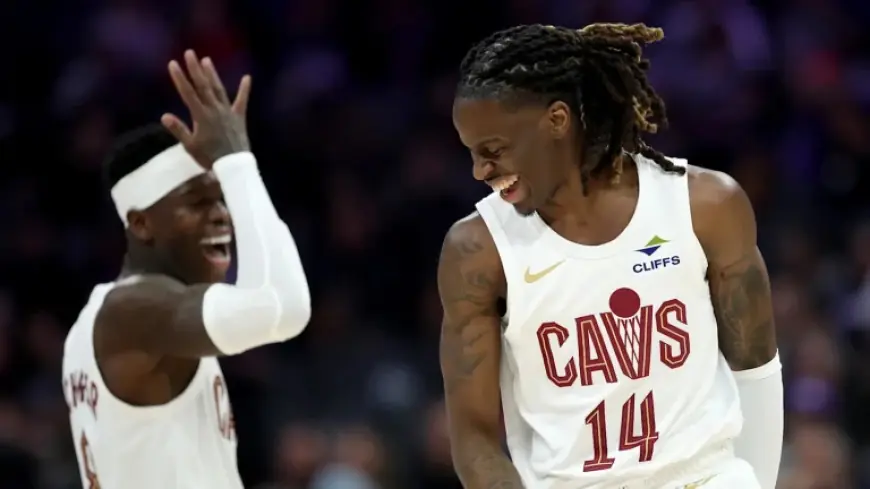
keon ellis enters a conversation that keeps resurfacing in Cleveland: the De’Andre Hunter trade and how dramatically its perception has shifted over the last year. What once looked like a straightforward, playoff-push upgrade has moved from praised to criticized and back again, with the current moment defined by Cleveland stacking wins and getting contributions from newcomers.
What Happens When the De’Andre Hunter Trade Gets Regraded in Real Time?
The clearest through-line in the De’Andre Hunter deal is volatility. The trade was initially celebrated because Cleveland opted for a basketball upgrade rather than “mere financial savings, ” targeting a player viewed as useful for a postseason run. The logic was clean: add forward size, defensive tools, and a willingness to shoot at high volume—traits that read as plug-and-play for a team trying to press its advantage.
That optimism eventually had a results-based foundation. Cleveland went on to finish with 64 wins and the No. 1 seed in the Eastern Conference. In that context, paying the price for Hunter looked like a rational bet on raising the team’s ceiling and sustaining elite regular-season performance.
But the evaluation didn’t stay stable. After a brief hot start in which Hunter hit every shot for a handful of games, the pendulum swung hard the other way. Injuries and ineffectiveness followed, and once the playoffs began, Hunter’s impact turned into a defining negative for a Cavaliers team that had lost players elsewhere in the lineup. In a moment when Cleveland needed a healthy, shot-making version of Hunter, it didn’t get it.
The next phase of the story was equally unforgiving. Early this season, Hunter struggled again—described as a “lead weight” in the lineups he played with—and he was soon passed by second-year wing Jaylon Tyson. As the Cavaliers stumbled to a shaky start, the decision to absorb Hunter’s contract began to look less like a bold move and more like a self-inflicted constraint, especially with the roster operating under the weight of the second apron.
What If Draft Capital Costs Matter More Than the Player Fit?
Beyond performance, the trade carried a structural risk: draft capital. A first-round swap can feel tolerable when a team expects to sit at the top of the standings, but the story changes when the team stumbles. Here, Cleveland’s wobble meant the swap would be triggered, leaving the Cavaliers with the San Antonio Spurs’ pick—tracking toward the bottom of the first round.
That detail matters because it shapes the way fans and decision-makers tally the total cost of the Hunter trades. When the player underperforms, the draft component becomes more painful. When the team wins, the draft hit can be rationalized as an acceptable price of contention. The “temperature” on the deal swings because both halves of the equation—on-court value and asset cost—keep changing in salience depending on where Cleveland is in the season and how the roster looks around Hunter.
In that sense, keon ellis becomes a useful marker for how quickly narratives can attach to roster decisions, even when the core facts remain the same. The trade is not a single moment; it is a series of re-evaluations triggered by performance spikes, injury stretches, postseason results, lineup reshuffles, and the pressure created by cap constraints.
What Happens Next If Cleveland Keeps Winning With Newcomer Contributions?
The latest swing back toward optimism is tied to momentum. With Cleveland “pulling off win after win” and getting contributions from a couple of newcomers, the Hunter trades are being framed as looking “better than ever. ” That doesn’t erase what came before: the hot start that faded, the injury-tinged downturn, the playoff disappointment, and the early-season struggles that saw Hunter lose ground in the rotation.
Instead, it highlights why these debates never fully settle. A winning stretch can reframe contracts as manageable and costs as justified. A stumble can turn the same commitments into vulnerabilities. For Cleveland, the present-day inflection point is not a single highlight or stat line—it is the collective effect of stacking wins while having new faces contribute enough to make the original bet feel coherent again.
Still, the uncertainty remains real and should be acknowledged plainly. The track record described here includes both promise and disappointment, and the narrative has already flipped multiple times. If the Cavaliers’ form holds, the trade will continue to be defended as an aggressive move that matched the team’s ambitions. If performance slips again—especially under the second apron’s constraints—the criticism will return just as quickly. For now, the most accurate description is the simplest one: the temperature on the De’Andre Hunter trade keeps changing, and the current moment is another upswing.