Benji Gil and Mexico’s WBC test: star power up front, uncertainty on the bridge to the ninth

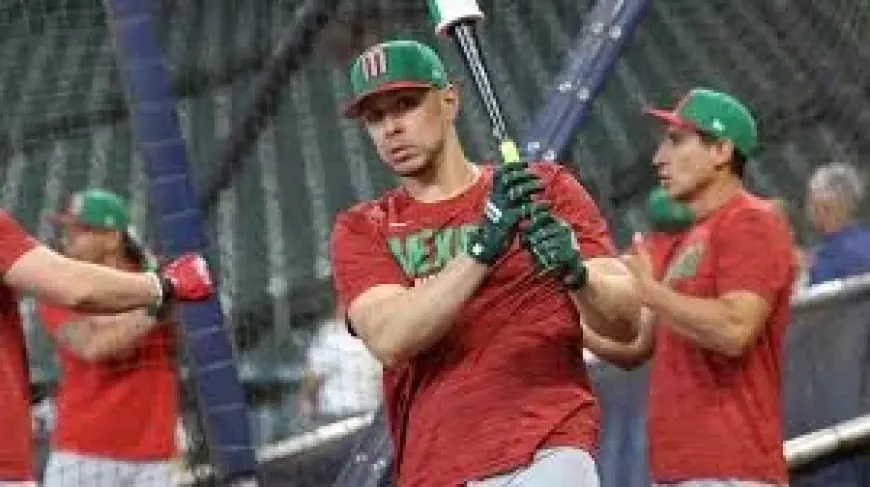
At 9: 00 am ET in a Houston ballpark corridor, the conversation around benji gil is less about slogans and more about sequence: can Mexico’s starters take the ball deep enough to hand a lead to its best relievers? The 2026 World Baseball Classic puts Mexico in Pool B, and the roster picture is defined by an outfield built to intimidate—and a pitching plan that could turn on a few fragile innings.
What is Benji Gil trying to solve for Mexico in Pool B?
The puzzle is clear in its shape: Mexico brings a “top-heavy lineup” with major league regulars expected throughout the starting group, plus a star-studded outfield in Pool B in Houston, Texas. The pressure point sits behind them. The roster includes three Major League starters—Javier Assad, Taijuan Walker, and Taj Bradley—paired with a back end featuring closer Andrés Muñoz and set-up options Victor Vodnik and Brennan Bernardino.
For benji gil, the question is not whether Mexico can threaten pitchers early; it is whether the team can avoid leaning too long on a bullpen described as having “tons of options, ” while also being “not made up of Major League pitchers” in bulk. That middle stretch—after the starter leaves and before Muñoz’s inning—can decide whether Mexico’s strengths ever get to matter in the late frames.
The management structure adds another layer of intention. The team is managed by Benji Gil, a former Angels’ infield coach who has been at the helm of the Mexican team since 2020 for both the Olympics and the WBC. Vinny Castilla serves as bench coach and previously managed the team in the 2009 tournament, with coaching experience throughout the Caribbean and Mexico.
Why Mexico’s lineup looks built for damage—and why it still may not be enough
Mexico’s projected position-player group reads like a plan to pressure opponents from the first inning. The outfield is led by Jarren Duran and Randy Arozarena, with Alek Thomas expected to start in center for defense and speed. Behind the plate, Alejandro Kirk is positioned as a central piece. Rowdy Tellez is pegged to figure as the designated hitter, while Jonathan Aranda is slated to start at first base. The infield mix includes Luis Urías, Ramón Urias, and Joey Ortiz.
Depth exists, too, though it comes with a different kind of uncertainty: the bench infield options listed include Nacho Alvarez Jr., Jared Serna, Nick Gonzales, and Joey Meneses. In the outfield, Alejandro Osuna and Julian Ornelas are named as reserves. In a short tournament, those names can become the story fast—either as stabilizers when a starter exits early or as pinch-hit decisions that define a single at-bat.
Still, a lineup capable of “legitimate damage” is only half the WBC equation. Mexico is portrayed as having a relatively easier path out of pool play, described as more than capable of advancing to the quarterfinals and figuring as the second-best team in Pool B behind the United States. But the same preview points to the quarterfinal alignment creating a chance to move on to the semi-finals. That pathway depends on turning runs into wins—and wins require covering nine innings cleanly, not just winning the first six.
Can Mexico’s pitching staff protect leads long enough for Muñoz?
The staff construction presents both clarity and risk. The clearest strength is the endgame: Andrés Muñoz is set to close, with Victor Vodnik and Brennan Bernardino described as reliable set-up men. The clearest vulnerability is the space before that trio takes over. If Mexico’s starting pitching “can deliver them straight” to those late-inning options, the path “might have a relatively easy” look. If not, the team could be forced into innings where “unproven arms” become the bridge.
That bridge is where tournament momentum flips. The preview warns that if starters falter, Mexico could find itself relying on those less-established options to get to its MLB-caliber back end—an exposure opponents may try to exploit. In the WBC’s compressed schedule, one night of short starts can ripple into the next game’s leverage innings, forcing managers into decisions they would prefer to avoid.
Even within that uncertainty, Mexico’s bullpen is not without recognizable professional pieces. Alex Carrillo, identified as a current Met, is expected to be available out of the bullpen and described as one of their better available relievers. Daniel Duarte, a Mets minor league offseason signee, is also listed in the pen. Those names matter not as guarantees but as levers—options that can change the manager’s calculus when the starter’s pitch count climbs and the next three batters loom.
Who is shaping the team’s approach behind the scenes?
Mexico’s staff includes multiple coaches at several positions, mixing current and former professional coaches across major and minor league experience. Bobby Magallanes is listed as hitting coach and is currently an assistant hitting coach with the Mariners. Pitching coach Horacio Ramirez is described as having coached in both the majors and minors. Jacob Cruz is listed as a hitting coach and currently serves as a minor league coach for the Brewers. Elmer Dessens, a former Mets reliever, is named as the team’s other pitching coach.
That constellation suggests an effort to match the roster’s major league-heavy lineup with professional preparation—game planning, situational hitting, and bullpen deployment. It also underscores why management matters in a tournament setting: roles can shift inning by inning, and a coaching staff’s shared language can help players adjust quickly when a plan meets real resistance.
What would count as progress—and what could end it fast?
The preview frames Mexico as capable of advancing from Pool B and even pushing further, yet it places a bright caution label on the same point: the “bulk” of the bullpen not being made up of Major League pitchers “could present a major issue. ” In that tension lies the measuring stick.
Progress looks like starters—Javier Assad, Taijuan Walker, and Taj Bradley—consistently covering enough innings to shorten games to the late trio. It looks like the Duran-Arozarena-Thomas outfield converting speed and defense into outs that keep pitch counts manageable. It looks like Kirk guiding sequences that prevent rallies before they form.
A quick exit, the preview suggests, arrives if opponents can exploit the gap between the starter and the back end. In that scenario, the same star-studded lineup becomes a chase mechanism—scoring to catch up rather than scoring to control.
Back in that corridor at 9: 00 am ET, the story is not a prediction; it is a season’s worth of decisions compressed into a few games. Mexico’s roster reads like a team built to strike first. Whether it lasts deep into the tournament may hinge on whether benji gil can keep the game intact long enough for his best arms to finish what the bats begin.