Kyle Allen vs. Detroit Lions: What his Bills deal reveals

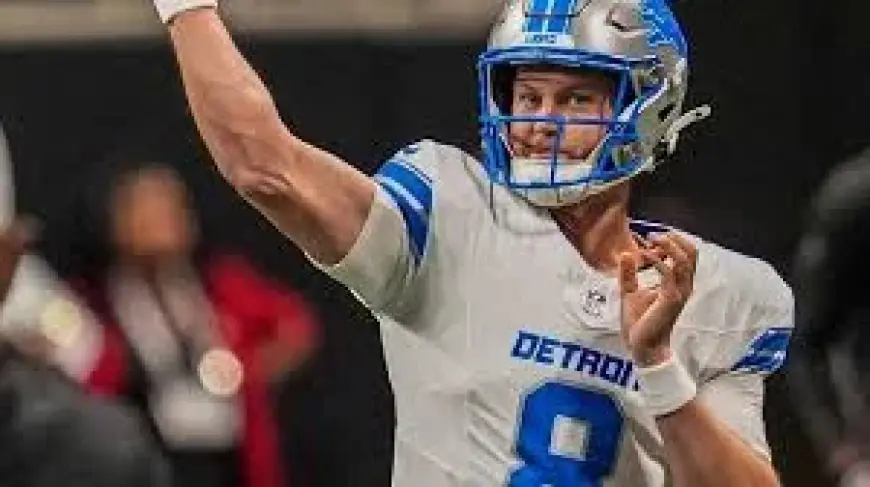
kyle allen is heading to Buffalo on a two-year, $4. 1 million contract, a move that forces the Detroit Lions to reset their backup quarterback plan behind Jared Goff in 2026. Put side by side, the question is simple: does this exit look more like a Buffalo continuity play, or a Detroit depth problem created by timing and roster math?
Kyle Allen’s Bills agreement: cost certainty and a familiar role
Kyle Allen has agreed to terms with the Buffalo Bills on a two-year, $4. 1 million deal that includes another $2 million in incentives, and a potential max value of $6. 1 million. The arrangement places a clear financial frame around a backup job, while also tying the move to familiarity: Allen will reunite with Josh Allen after spending the 2023 season as Josh Allen’s backup in Buffalo.
On-field usage adds another layer to how Buffalo is positioning the role. Last season with Detroit, Allen appeared in only three games and threw only two passes, because Goff stayed healthy and the Lions never had to rely on him in the regular season. Career-wide, Allen has appeared in 34 games with 19 starts, and he has not started a game since 2022 with the Texans. His career totals include a 62. 5 percent completion rate, 4, 753 passing yards, 26 touchdowns, and 21 interceptions.
Detroit Lions’ backup QB situation: a vacancy behind Jared Goff
Detroit’s side of the comparison begins with a direct consequence: the Lions will have a new quarterback backing up Jared Goff in 2026. Allen joined the Lions last year to compete with Hendon Hooker for the backup job, and after a strong training camp and preseason the Lions opted to keep the veteran and release Hooker. That decision made Allen the primary insurance policy behind Goff for the season that followed.
Yet the Lions’ quarterback room, as described in the current snapshot, now looks thin. The only other quarterback they carried on the roster last year was C. J. Beathard, who spent the year on the practice squad and is currently a free agent. With Allen agreeing to terms elsewhere, Detroit is pushed toward free agency to fill out the position group, with available names listed as Tyrod Taylor, Jimmy Garoppolo, Russell Wilson, and Geno Smith—among others.
Kyle Allen and the Lions: stability for Buffalo, churn for Detroit
The same move reads differently depending on which team you are evaluating. For Buffalo, bringing back a quarterback who has already served as Josh Allen’s backup in 2023 aligns with continuity: the contract length (two years) and defined financial range ($4. 1 million plus incentives) suggest a controlled approach to the backup slot. For Detroit, the identical transaction produces churn, because it turns last season’s resolved competition into a new search for 2026.
| Point of comparison | Bills side | Lions side |
|---|---|---|
| Roster impact | Fills a backup role tied to Josh Allen | Creates a new backup QB need behind Jared Goff in 2026 |
| Contract clarity | Two years, $4. 1 million; incentives up to $2 million; max $6. 1 million | No replacement identified; stated plan is to look to free agency |
| Recent usage signal | Reunites with a QB he backed up in 2023 | Allen appeared in three games with two pass attempts due to Goff’s health |
| Depth behind the starter | Adds Kyle Allen to the room | Only other 2025 roster QB noted was C. J. Beathard, now a free agent |
| Decision pressure | Backup spot addressed by agreement | Must evaluate remaining free agent backups listed (including Tyrod Taylor, Jimmy Garoppolo, Russell Wilson, Geno Smith) |
Analysis: the divergence is less about Kyle Allen’s on-field résumé—34 games, 19 starts, and a stat line of 4, 753 yards with 26 touchdowns and 21 interceptions—and more about each team’s immediate flexibility. Buffalo is using a familiar option to lock in a backup plan, while Detroit is reacting to a departure after previously choosing the veteran route by releasing Hooker. That earlier choice delivered short-term certainty, but it also meant Detroit did not carry a second clear in-house alternative into this moment.
The comparison establishes a straightforward finding: Buffalo gets continuity at a known price, while Detroit absorbs the roster-management cost of losing a veteran it had just selected over another option. The next test of that finding will be Detroit’s free-agency decision to fill out its quarterback room; if Detroit maintains the same preference for a veteran backup behind Jared Goff, the comparison suggests the team will prioritize proven availability over developmental competition.