Rooster Cast review vs. creator pitch: what Steve Carell’s series prioritizes

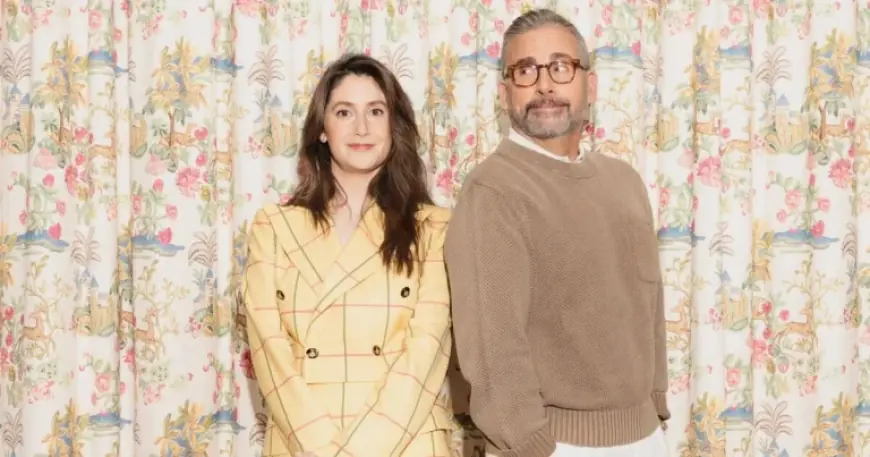
The rooster cast is being introduced to audiences through two complementary lenses: a critic’s close read of the show’s tone and character beats, and the creators’ and actors’ account of how the project took shape. Put side by side, those perspectives answer a specific question: is “Rooster” driven more by its heightened campus comedy and cringe, or by the father-daughter emotional engine it was built to serve?
Steve Carell’s Greg Russo anchors “Rooster” in parenting and repair
In the series, Steve Carell plays Greg Russo, described as a successful author of genre fiction who arrives on his daughter’s campus to give a talk. The review frames Carell as “the master of the everyman figure, ” emphasizing his ability to calibrate cringe while still pulling the viewer toward emotion, even to the point of “almost weep. ” That blend matters because the show’s central relationship, Greg and his daughter Katie, is depicted as the “meat” of the series, carrying both the dark and light elements.
Both accounts describe Katie’s crisis as the pressure point that activates Greg’s parenting instincts. In the show’s story, Katie is dealing with her husband’s affair with one of his students. A key moment highlighted in the review has Greg advising Katie to “be kind” when speaking to her husband, to avoid words she will later regret. The scene is presented as an example of “hard-won wisdom” and the strange, long-term responsibility of parenting: protecting your child’s future, even if it makes you look “wild or unsupportive” in the moment.
In the interview-focused account, Carell describes the project’s origin as a broad idea with few specifics beyond one central “bullet point”: the father-daughter relationship. He also notes that he, Bill Lawrence, and Matt Tarses all have adult daughters around the same age, which helped define what “was at stake” thematically. That creation story mirrors the on-screen emphasis: Greg arrives, sees his daughter “flail, ” and decides to do whatever he can to help.
Charly Clive’s Katie Russo lands between messy heartbreak and campus comedy
Charly Clive plays Katie Russo, and in the interview account, she is a professor of art history. Her emotional state is described in immediate, destabilizing terms: an “emotional tailspin, ” “adrift, ” and “reeling after a breakup, ” after her husband, a fellow faculty member, cheated on her with a graduate student and is now with that person. The framing is blunt about the rupture, making Katie’s messiness part of the premise rather than an incidental subplot.
The review, meanwhile, underscores how the show surrounds that emotional crisis with familiar comic textures: “minor scenes and characters we’ve seen before, ” including a hostile receptionist with a weird name and a barista with an untold story. Those elements suggest the series sometimes relies on recognizable workplace-and-campus comic types, even as it aims for something more tender at its core.
Clive and Carell’s casting story also reinforces the show’s focus on relational credibility. Carell recalls that reading with Clive did not feel like an audition, but like “two actors having a go at a scene, ” and he immediately felt they were “done. ” Clive’s side of the story is equally direct: a Zoom call would have been enough for her simply to have met Carell, and she describes the early stage as “Untitled Steve Carell Project, ” then a follow-up Zoom read, and the practical scramble of preparing her room for the call.
Rooster Cast comparison: cringe-calibration vs. father-daughter clarity
Placing the review’s description beside the creators-and-actors account reveals a consistent through line with different emphases. The interview account centers intent: the creators pitched a father-daughter relationship first, then built the show outward from that premise, mixing “character drama and goofy comedy with a touch of uplift. ” The review centers execution: it describes the same balancing act as unusually difficult in a moment where audiences face “more reality arriving in a day, ” and where “pure, frothy comedy” has become harder to sustain in a real-world setting.
That contrast makes one point clearer than either piece alone: “Rooster” relies on a deliberate emotional spine to justify its heightened awkwardness. Carell’s “calibrating cringe” becomes less of a stylistic flourish and more of a tool; it allows the show to swing from comedy to moments of genuine guidance without breaking the relationship’s believability. Even the campus figure who could become a pure gag, college president Walter Mann, is presented in the review as both comic and functional: a welcoming administrator seeking “commercially useful stardust, ” while also playing with an absurd self-image by trying to be as naked as possible so people see him as “jacked. ”
| Point of comparison | Review emphasis | Creators/actors emphasis |
|---|---|---|
| Core engine | Greg–Katie relationship as the “meat” | Father-daughter relationship as the key “bullet point” |
| Tonal method | Cringe calibrated to pivot toward emotion | Goofy comedy blended with character drama and uplift |
| Triggering conflict | Katie confronting her husband’s affair with a student | Katie reeling after a breakup tied to the same betrayal |
| Signature scene detail | Greg urges Katie to “be kind” to avoid regret | Greg decides to help when he sees her flail |
| World texture | Recurring comic side-figures; Walter Mann’s nudity gag | Casting chemistry and process foregrounded |
Analysis: The comparison supports a clear finding: the show’s strongest organizing principle is the father-daughter bond, and the campus cringe works best when it serves that relationship rather than competing with it. The next concrete test point is embedded in the show’s format itself: “Rooster” is described as a 10-part series, and its ability to keep tenderness feeling “tender and true” while continuing to escalate awkward comedy will determine whether the emotional premise stays dominant. If the rooster cast continues to use Greg’s parenting perspective as the filter for the campus chaos, the comparison suggests the series will sustain its mix of messy humor and hard-won insight.