John Cantlie documentary frames danger-seeker despite unresolved death and gaps

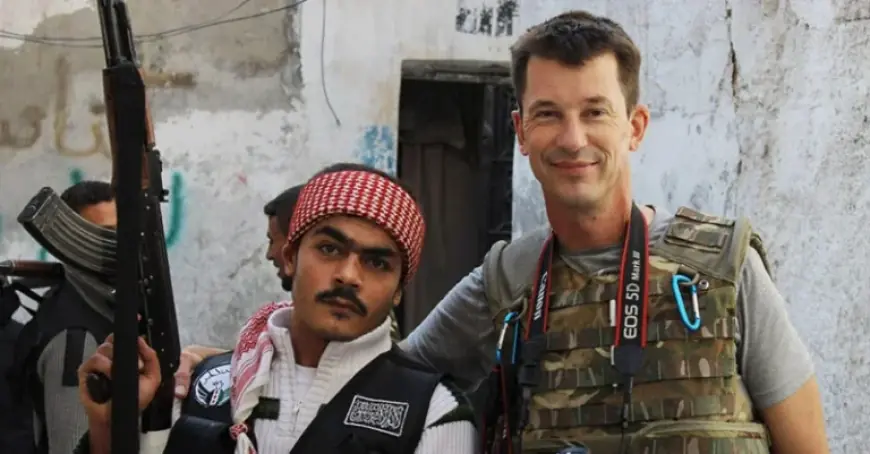
john cantlie appears at the center of a three-part documentary that traces his path from frontline reporting to captivity, and highlights both his appetite for danger and the unanswered questions about his fate. This article examines the tension between the film’s portrait of daring and the record’s gaps — including family non-participation and only a tentative conclusion about his death.
Hostage documentary and John Cantlie’s filmed record
Confirmed: The three-part documentary Hostage compiles Cantlie’s own footage and colleagues’ recollections to present a portrait of his reporting in Libya and Syria. The record in the film includes his on-the-fly smartphone videos, selfie footage on frontlines, and sequences where he jokes beside obvious targets. Documented: the film places him within a moment when frontline reporting felt increasingly hazardous, and it identifies Cantlie as a former presenter of motorcycling documentaries who became a freelance photojournalist.
Documented: colleagues in the film recall a garrulous machismo and a confidence delivered with laughter and bravado. Confirmed: one colleague who worked with Cantlie in Libya and Syria appears in the reconstruction, and a witness named Mustafa Karali describes Cantlie’s visible enthusiasm for danger during a 2011–2012 period of conflict.
Kidnapping in Syria and the alleged death in Iraq
Confirmed: Cantlie was kidnapped in Syria in 2012 and later featured in a series of propaganda videos released by his captors. Documented: while other western hostages were murdered, Cantlie was kept alive and used in filmed messages. Confirmed: the record presented in the material states he is believed to have died in an airstrike in Iraq in 2017, a characterization framed as likely rather than definitively established.
Open question: What remains unclear is the precise evidence that links his captivity in Syria to the reported 2017 airstrike in Iraq. The documentary and the assembled material describe the arc from capture to use in propaganda to a belief that he died in an airstrike, but the record provided in the film does not eliminate uncertainty about the final circumstances.
James Foley, Mustafa Karali and family absence in Hostage
Documented: the film situates Cantlie alongside colleagues such as James Foley, with whom he worked in Libya and Syria. Mustafa Karali appears as a principal witness who recounts early encounters and notes Cantlie’s exuberant response to danger. Confirmed: the documentary proceeds without participation from Cantlie’s family, who declined to be involved, a fact the film explicitly notes.
Open question: The absence of family testimony leaves gaps. What remains unclear is whether family participation would add corroborating detail about Cantlie’s decision-making, his movements before capture, or confirm final reports about his death. The assembled testimonies and footage document a pattern of risk-taking and also document external forces — captors who used him alive — that complicate any simple account of agency and fate.
Closing paragraph — specific evidence to resolve the tension: The central uncertainty is the documentary’s tentative account of death. If confirmation that John Cantlie died in the 2017 airstrike in Iraq is produced, it would establish that his captivity ended in that strike rather than in another, and it would resolve the film’s ‘most likely’ phrasing about his fate.