Trump’s Iran Strategy: Navigating US-Israel Conflict Escalation

In the ongoing military conflict involving the United States and Iran, President Donald Trump’s strategy raises critical questions about America’s objectives. As the second week of bombardments begins, the US and Israel have conducted extensive missile strikes against Iranian targets. To date, approximately 2,000 sites have been attacked, resulting in significant Iranian casualties and the killing of high-ranking officials. This escalation has sparked a broader inquiry into Washington’s endgame.
Military Actions and Casualties
Since the initiation of hostilities on February 28, over 1,200 Iranian lives have been lost, including more than 160 children due to bombed civilian areas. The conflict has also claimed the lives of seven American soldiers. The attacks have targeted crucial infrastructure, such as oil refineries and nuclear facilities, which adds complexity to the unfolding crisis.
Strategizing for Regime Change
- President Trump’s approach has often hinted at a desire for regime change in Iran, although the term has not been explicitly used.
- The assassination of Iran’s Supreme Leader, Ali Khamenei, serves as a pivotal point in this strategy.
- Experts believe that the objective was to weaken the Iranian regime enough to instigate a popular uprising.
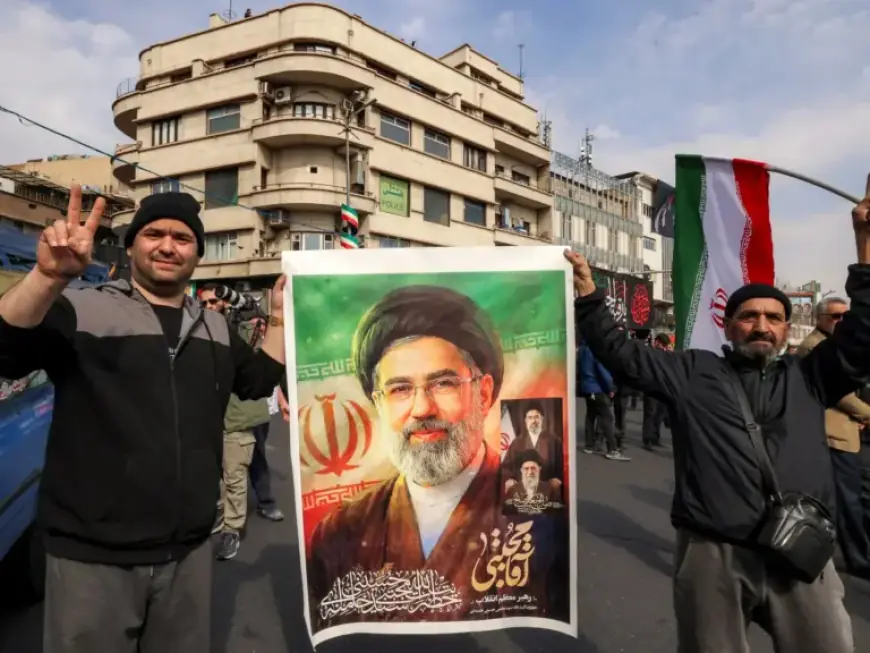
Despite military successes, analysts assert that the Iranian government has demonstrated considerable resilience in the face of these attacks. Mojtaba Khamenei has since been appointed as the new Supreme Leader, signaling a continuation of the Islamic Republic’s authority.
Shifting Positions of the Trump Administration
Trump’s administration has fluctuated between aggressive military action and diplomatic overtures. Early in the conflict, he called for members of the Islamic Revolutionary Guard Corps (IRGC) to surrender for protection. However, this proposition was rejected unanimously, as the IRGC continues to lead Iran’s defense efforts.
Throughout his strategy, Trump has emphasized the elimination of Iran’s military capabilities. US forces have targeted both naval assets and missile manufacturing facilities, asserting operational control over Iranian airspace.
Implications of Leadership Selection
The appointment of Mojtaba Khamenei as Supreme Leader complicates the strategic landscape for the US. Analysts suggest that his rise to power is a testament to the IRGC’s entrenched position within Iran’s political machinery, countering US attempts at destabilizing the regime.
US Ground Invasion Considerations
Trump’s team has not dismissed the possibility of a ground invasion. However, the political ramifications stemming from prolonged military engagements in Iraq and Afghanistan bring hesitancy to such an option. Experts indicate that a ground invasion is the least likely strategy due to rising domestic pressures and the challenge of military logistics.
Israel’s Role in the Conflict
Israel considers Iran a principal threat and views the current war as an opportunity to reshape the Middle Eastern landscape following recent conflicts. The aim is to eliminate any regional adversaries capable of countering Israeli power.
Potential Paths Forward
With diverse strategies at play, the most feasible approach may involve a compelling settlement rather than an outright victory through invasion. Analysts propose that Trump might negotiate concessions with specific Iranian factions, creating an environment conducive to political victory while avoiding military escalation.
As this complex situation evolves, Trump’s pragmatism and willingness to define victory will significantly impact the ongoing conflict. His ability to navigate the US-Israel-Iran dynamic could ultimately shape the trajectory of this war.