Trying vs. Tink: How a Time Jump and a Series Reboot Reinvent Familiar Characters

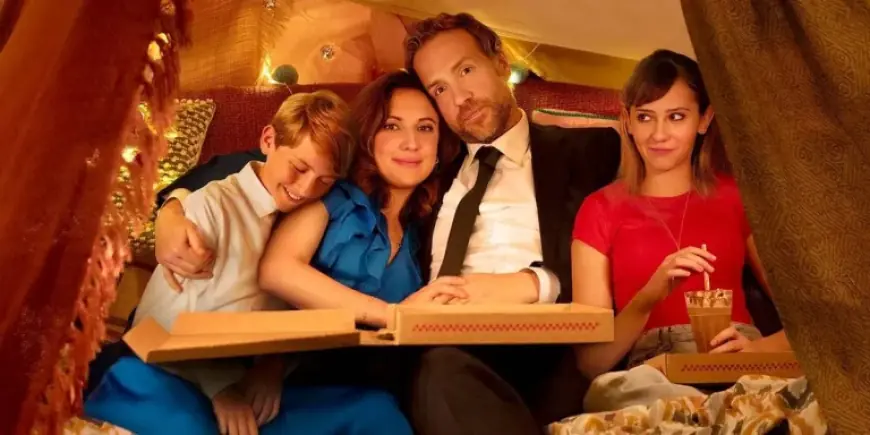
Nikki and Jason’s sitcom Trying jumps forward six years in Season 4 while Tink is being developed as a live-action drama series from Liz Heldens and Bridget Carpenter. Which reinvention — a bold time jump for established characters or a format pivot for a classic character — better renews a story’s dramatic potential?
Trying Season 4 Time Jump: Nikki, Jason and Princess at New Ages
In Trying, Season 3 ended with Nikki (Esther Smith) and Jason (Rafe Spall) finalizing an adoption, and Season 4 then leaps six years forward. This move ages Princess into a 16-year-old (Scarlett Rayner) and Tyler into a 12-year-old (Cooper Turner), which opens plotlines not possible when they were 10 and younger. One confirmed result is that Princess now pursues answers about her birth mother, Kat (Charlotte Riley), while Nikki and Jason negotiate parenting teenagers and career pressures. Creators have already signaled more change: Season 5 is expected later this year and will start from the post-Season 4 moment with Kat’s arrival and new workplace complications for Nikki and Jason. Analysis: the time jump reframes the show’s title and places characters in situations that generate emotional stakes from age and earned bonds rather than from the adoption arc alone.
Tink Series Choice: Liz Heldens and Bridget Carpenter Back a Drama Format
Tink is being developed as a live-action drama series with Liz Heldens and Bridget Carpenter writing and executive producing. That creative team choice turns a character long associated with shorter films and past development into a serialized drama built to expand over episodes. One concrete production history point is that a feature version of the Tink project existed earlier with Reese Witherspoon attached, showing the property moved between formats in its development life. Another data point: an actor played Tinker Bell in a recent live-action film adaptation, demonstrating prior live-action interest in the character. Analysis: shifting Tinker Bell from a planned feature to a series suggests a bid for wider narrative scope and worldbuilding that a single film cannot provide.
Comparing Reinvention: Princess’s Search vs. Tink’s Series Potential
Apply the same criteria — narrative depth, character reach, and production risk — to each project. For narrative depth, Trying’s six-year jump gives Princess and Tyler immediate, age-driven questions: Princess can now seek her birth mother in ways a 10-year-old could not, and Tyler’s slightly older age allows more nuanced emotional work. For character reach, Tink’s series format aims to expand a single iconic figure into serialized arcs and supporting players over multiple episodes, leveraging creators with long TV resumes to build that scope. For production risk, Trying’s move recasts familiar cast members into older roles but stays within an established family sitcom framework; Tink’s format shift asks audiences to accept a dramatic reorientation of a classic figure and depends on long-form storytelling to pay off. Analysis: Trying’s reinvention is structurally conservative but character-focused, while Tink’s is structurally ambitious and dependent on serialized payoff.
Both projects show creative teams trying to avoid stagnation: in Trying, the time jump uses age and earned relationships to renew stakes; in Tink, the creators are betting serialized length will let them explore facets of a well-known character that a single film could not. Each approach trades one set of risks for another — intimacy and continuity versus scale and reinvention.
Finding: The comparison establishes that a time jump like Trying’s is the stronger choice for sustaining intimate, earned character drama, while a series retool like Tink’s offers greater potential for expansive worldbuilding but carries higher structural risk. The next confirmed event to test this finding is Trying’s Season 5, expected later this year; if Trying maintains its older-character focus and deepens Princess’s and Tyler’s arcs in that season, the comparison suggests that time-jump reinvention better preserves emotional continuity for established ensembles.