Quincy Williams and the Jets’ 2026 quarterback debate: safety vs. balance

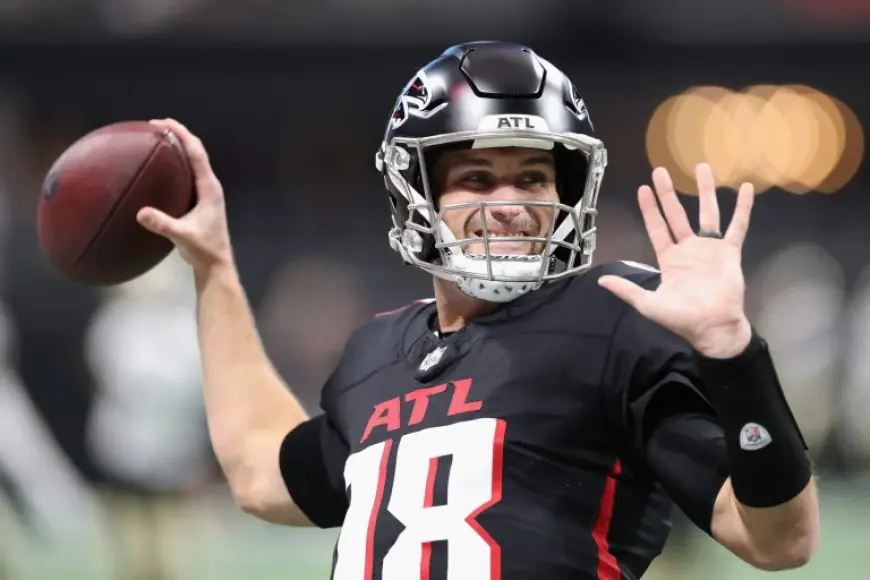
As the New York Jets head into the 2026 offseason facing another quarterback decision, quincy williams sits in the background of a bigger organizational question: which direction fits the team’s immediate needs. Kirk Cousins, Geno Smith, and Carson Wentz are framed as three veteran options, each tied to a distinct approach. The comparison answers a simple question: what does each path prioritize, and what does that reveal about what the Jets value most?
Kirk Cousins as Aaron Glenn’s “anti-chaos” option
Cousins is positioned as the safest possible starting quarterback choice for 2026, with the context centering on predictability and ball security. He is expected to hit free agency after the Atlanta Falcons announced plans to release him to avoid triggering a massive future contract guarantee. Even at 37 years old, he is described as a disciplined rhythm passer, and the traits highlighted are precise: operating on schedule, identifying protections, reading defenses before the snap, and delivering the ball on time.
That profile aligns directly with offensive coordinator Frank Reich’s timing-based system, where pre-snap processing and protection control allow an offense to run complex concepts immediately. For head coach Aaron Glenn, the appeal is framed in even more straightforward terms: Cousins protects the football. The context cites his 10 touchdown to 5 interception ratio while splitting time with Michael Penix Jr. last season in Atlanta, using that as the statistical shorthand for why he represents the “anti chaos” quarterback archetype.
Geno Smith’s balanced fit with Garrett Wilson and Breece Hall
Smith is presented as the most balanced alternative—less about maximum safety and more about pairing competence with adaptability. Recently released by the Las Vegas Raiders, he is described as a reliable veteran who can run a modern passing offense while still protecting the football. The framing here is about a high floor without requiring a long-term commitment, a pitch that matches Glenn’s need for wins while also leaving the organization flexible.
Unlike Cousins, whose main selling point is structure and discipline, Smith’s fit is tied to the Jets’ current playmakers. The context points to his deep ball and strength on vertical timing routes, specifically connecting that style to wide receiver Garrett Wilson. It also emphasizes quick decision-making as a way to keep the offense balanced, with running back Breece Hall remaining heavily involved in both the running and passing games. The comparison inside the Smith case is subtle but direct: he may not carry Cousins’ pre-snap mastery reputation, yet his recent consistency is used to argue he could be one of the most dependable veteran starters likely to be available.
Frank Reich and Carson Wentz: familiarity, upside, and volatility
Wentz represents the most relationship-driven option, and the context treats that relationship as a competitive advantage and a potential risk. Wentz and Reich share what is described as one of the strongest quarterback-coach relationships in the league. The link is specific: Wentz played the best football of his career under Reich with the Philadelphia Eagles in 2017 and later reunited with him on the Indianapolis Colts. Few quarterbacks, the context argues, understand Reich’s offensive philosophy better.
The on-field description is also distinct from Cousins and Smith. Wentz is framed as a traditional prototype Reich prefers: a 6’5” pocket passer with a strong arm, capable of attacking the middle of the field with layered throws and deep crossers. Those concepts are tied to Garrett Wilson and tight end Mason Taylor in the intermediate areas. The appeal is “familiarity and upside, ” but the risk is labeled plainly as “volatility, ” creating the sharpest contrast of the three: Wentz is the bet that the system and relationship can pull his best version to the surface.
Side-by-side comparison of the three veteran paths
| Criteria | Kirk Cousins | Geno Smith | Carson Wentz |
|---|---|---|---|
| Primary pitch | Safest starter, disciplined rhythm passer | Most balanced option, high floor | Familiarity with Frank Reich, upside |
| How it fits Frank Reich | Timing-based precision; pre-snap protections and processing | Runs a modern passing offense; quick decisions | Deep familiarity with Reich’s philosophy; middle-field concepts |
| How it fits Aaron Glenn | Football protection and reduced chaos | Immediate results with flexibility | Potential payoff, but volatility risk |
| Roster connections named | None specified | Garrett Wilson, Breece Hall | Garrett Wilson, Mason Taylor |
| Risk profile (as framed) | Lower risk, stability-first | Dependable, balanced trade-offs | Volatility despite schematic fit |
Analysis: Placing the three options side by side shows the Jets are not just picking a quarterback; they are choosing which internal priority leads the decision. Cousins centers Reich’s timing system and Glenn’s need for turnovers to stay down. Smith tries to satisfy both while staying aligned with the roster’s current skill players. Wentz leans hardest into the Reich relationship, accepting volatility in exchange for the possibility that familiarity produces a higher ceiling.
The finding from the comparison is direct: the “best” option depends on which organizational voice carries more influence, because each candidate is built around a different definition of what the Jets need most right now. The next concrete test of that will be the Jets’ actual quarterback choice for 2026; if quincy williams remains part of a roster expected to support a win-now push under Aaron Glenn, the comparison suggests the Jets will lean toward the option framed as most dependable rather than the one defined by volatility.