Jesus Luzardo extension underscores Phillies’ bet on durability and postseason poise

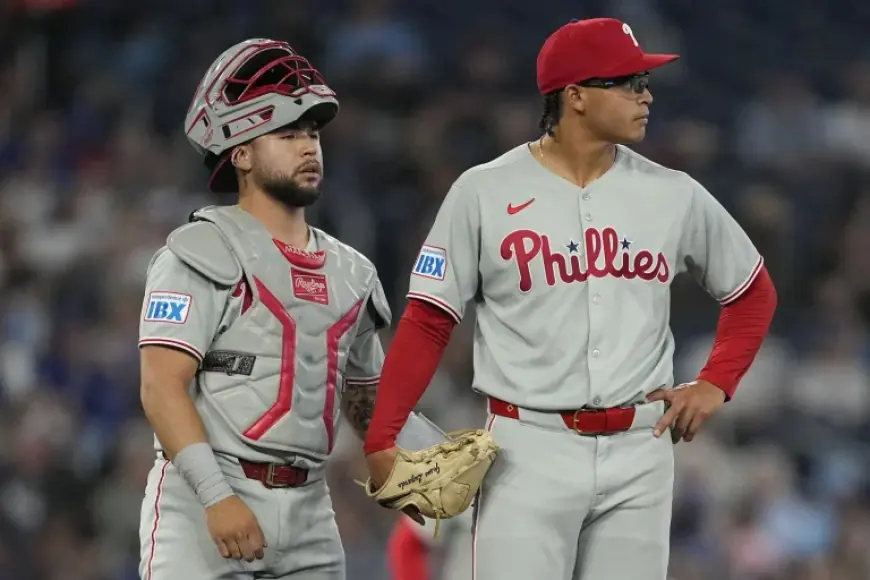
The Philadelphia Phillies and jesus luzardo have reached agreement on a five-year contract extension that keeps the left-handed pitcher in Philadelphia through 2031. The move reveals a clear organizational preference for locking in a pitcher whose 2025 value was defined not only by peak performance, but by a documented ability to correct a destabilizing flaw and still deliver in the postseason.
Phillies and Jesus Luzardo agree to five-year deal through 2031
The agreement formalizes a relationship that began in December 2024, when the Phillies acquired jesus luzardo from the Miami Marlins for a pair of minor leaguers. On March 9, the team committed to him for the long haul, reaching a five-year extension that runs through 2031. The context around the deal matters because it is anchored to what Luzardo showed after arriving in Philadelphia: a full-season workload, high-end strikeout production, and postseason outings that became a referendum on his competitive makeup.
The pattern points to the Phillies treating 2025 as proof-of-concept rather than a one-off spike. In his first season with the club, Luzardo tied a career-high with 32 starts, led the staff with 15 wins, threw a career-best 183 2/3 innings, and set a personal record with 217 strikeouts. Those are the specific outputs the extension is paying for, but the decision also reflects what happened inside the year: the season contained both dominance and a severe downturn, and the Phillies still chose to extend him.
Pitch-tipping and 2025’s sharp swings shaped the decision chain
The clearest trigger in the record of Luzardo’s 2025 season is the identification and correction of pitch-tipping. After posting a 2. 15 ERA through his first 11 starts, a May 31 outing kicked off a ten-start stretch in which he had an 8. 04 ERA, the worst mark in baseball over that span. The context attributes that collapse to pitch-tipping, supported by a pronounced split: with runners on base during that stretch, opposing hitters batted. 418 with a 1. 263 OPS against him; with the bases empty, they hit. 235 with a. 598 OPS.
The data suggests the extension is as much about fixability as it is about raw results. Once the issue was identified, Luzardo fixed it, and his final 11 starts produced a 2. 84 ERA and a 2. 65 FIP. Paired with his first 11 outings, the arc describes a pitcher who, over large samples, performed like a top-end starter for most of the season, even if the middle portion threatened to define the year. By extending him after that complete cycle, the Phillies signal they view the midseason crater as a correctable event rather than a baseline risk.
Durability also sits at the center of the team’s calculus because the context frames it as a reversal from 2024. That season was described as injury-riddled, including left-elbow tightness and a lumbar stress reaction that ended his year in late June, with an ERA north of six. Against that backdrop, 183 2/3 innings and 32 starts in 2025 read less like routine counting stats and more like a specific answer to a previously defined concern.
Max Scherzer’s mentorship adds a process narrative behind the performance
Another concrete strand running into the extension is the offseason preparation described after Luzardo joined the Phillies. Not long after he was traded in December 2024, Max Scherzer began giving him impromptu “pop quizzes” at Cressey Sports Performance in Palm Beach Gardens, Florida, where both pitchers trained during the winter. Scherzer, a Toronto Blue Jays right-hander who spent parts of nine seasons in the National League East, tested Luzardo on how he would attack different hitters in the division, going team by team and hitter by hitter in rapid-fire succession.
The pattern points to an emphasis on decision-making, not just stuff. Scherzer’s routine was framed as “grilling him on how to pitch against his division foes” while pushing Luzardo to “play the long game” in preparing for the season, and Luzardo said he liked the results. Eric Cressey, the gym’s owner, described the connection as unusually aligned in terms of how the two pitchers are “wired, ” saying Scherzer likes to teach someone who wants to be great and asks the right questions.
That preparation story matters because the extension arrives after a season in which Luzardo’s outcomes were shaped by information—first the damaging information his pitches were being read, then the corrective information once pitch-tipping was identified. In the postseason, the context highlights a separate kind of test: Game 2 of the National League Division Series in 2025, described as arguably the biggest game of the Phillies’ season, when the club turned to Luzardo after a “crushing defeat” the night before. He delivered six-plus innings, allowed three hits and two runs, and struck out five, including retiring 17 consecutive batters. He then came out of the bullpen on short rest in Game 4 and struck out three more, even as the Phillies lost the series.
For now, the immediate implication of the extension is that Philadelphia is committing to the version of Luzardo that combined volume, correction, and late-stage composure. If the same durability that produced 32 starts and 183 2/3 innings in 2025 holds, the data suggests the Phillies believe they have reduced one of the biggest variables in their rotation planning through 2031.