Voting Rights Advocates Alert Supreme Court to Concerning Case

As the U.S. Supreme Court reviews a pivotal case regarding voting rights, advocates are raising alarms over its potential impact on Black Americans. Last weekend, a significant gathering took place in Selma, Alabama, commemorating the 61st anniversary of the Voting Rights Act, amid concerns for its future.
Supreme Court Case and Its Implications
The Supreme Court is evaluating the constitutionality of Section 2 of the Voting Rights Act, a critical law aimed at protecting minority voting power. If removed, several congressional districts designed for majority-minority representation could be compromised, particularly in Republican-dominated Southern states.
- Current Supreme Court Composition: 6-3 conservative majority
- Potential Outcome: Elimination of majority-minority districts
- Impact Areas: Southern states, primarily under Republican leadership
Gathering in Selma: A Call to Action
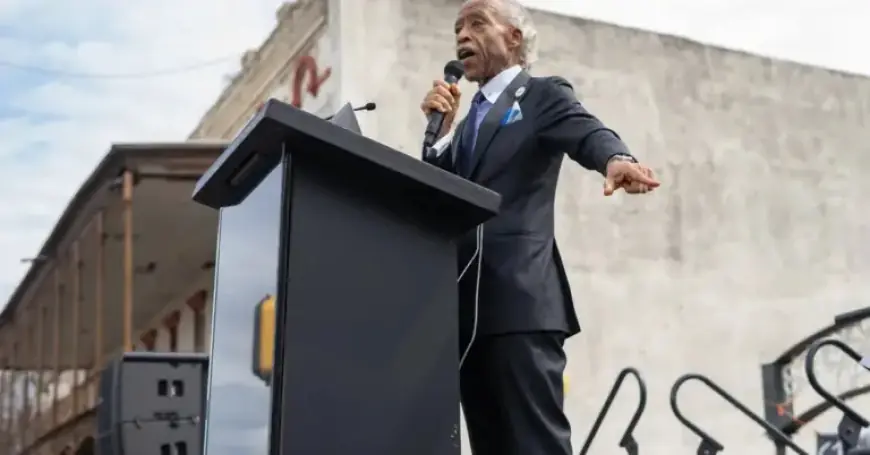
During the events in Selma, numerous voting rights advocates and former civil rights leaders marched across the iconic Edmund Pettus Bridge. This gathering aimed to evoke the spirit of Bloody Sunday, where civil rights demonstrators faced brutal opposition in 1965.
The Rev. Al Sharpton addressed the crowd, emphasizing the ongoing struggle for voting rights. He stated that the march symbolized preparation for intensified advocacy and voter mobilization efforts.
Key Figures in Attendance
Several notable political figures participated in the Selma event:
- Pete Buttigieg – Former Transportation Secretary
- Gov. JB Pritzker – Illinois
- Gov. Wes Moore – Maryland
Current Campaigns and Legal Challenges
Various organizations have initiated educational campaigns in response to the Supreme Court’s review of voting rights. They emphasize the necessity to galvanize support for the Voting Rights Act amid ongoing legal challenges.
- October Protest: About 300 individuals traveled from seven Southern states to protest outside the Supreme Court.
- Banners displayed included: “Your Voice is Your Vote” and “Protect Our Vote.”
The legal challenge at the heart of this discussion arises from the case Louisiana v. Callais, questioning the legitimacy of newly drawn congressional maps in the state. Critics argue that the map constitutes racial gerrymandering, which directly contra-venes Section 2 of the Voting Rights Act.
Historical Context
The Voting Rights Act was enacted in 1965 to eliminate systemic racial discrimination in voting. However, its provisions have faced multiple legal challenges, particularly since a 2013 Supreme Court decision weakened federal oversight of voting laws in certain states.
During the ongoing debate, advocates also recognize that new strategies may be needed to safeguard voting rights and enhance minority representation on the electoral front.
Efforts at the State Level
Democratic representatives in various states have begun drafting legislation to strengthen voting rights. For example, a proposed bill in Mississippi aims to establish protections against voter suppression.
- Proposed Bill: Mississippi Voting Rights Commission
- Legislation aimed at protecting minority voters is gaining traction in several states.
In Mississippi, grassroots organizations like Mississippi Votes are focusing on informing the public about potential ramifications from the Supreme Court’s decision.
The urgency of these initiatives was echoed by young advocates, such as Jackson State University students, who are striving to encourage voter engagement and awareness within their communities.
Conclusion
The Supreme Court’s decision will be monumental, with the potential to reshape the electoral landscape across the Southern states. Voting rights advocates are determined to continue their fight, as the necessity for awareness and activism becomes increasingly vital in these uncertain times.