Ryanair bag change prompts cardboard packing advice to curb overstuffing

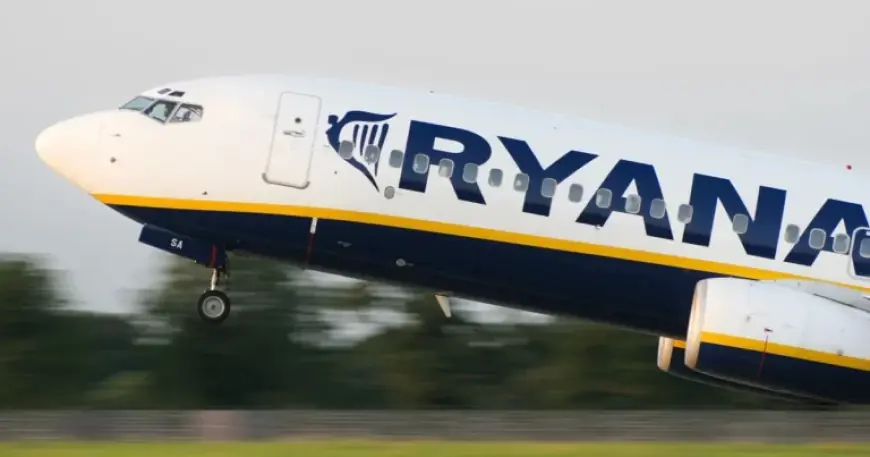
Irish ryanair passengers have been urged to place a lightweight piece of cardboard in their hand luggage after the airline expanded its underseat bag allowance by 20%. The guidance exposes a simple tension: bigger permitted dimensions can tempt travelers to overfill soft-sided bags, increasing the chance of a non‑compliant bulge and a potentially expensive error at the gate.
Ryanair’s 20% underseat bag expansion and the EU trigger
The budget carrier expanded its personal bag allowance by 20% in line with new EU regulations, with the updated bag sizes now active. From September 2025, travelers on a basic fare can bring a larger bag up to 40cm x 30cm x 20cm at no extra cost, provided it weighs under 10kg and fits beneath the seat in front. The data suggests this is a rule-bound shift rather than an ad‑hoc promotion: the EU framework is the single driver named for the allowance change. That structure matters because it sets a clear compliance line for passengers and gate staff alike, anchoring expectations to precise dimensions and weight.
The immediate takeaway is straightforward. By specifying 40cm x 30cm x 20cm and a sub‑10kg cap for bags that must slide under the seat, ryanair has created more usable volume for basic fare customers. Yet, as with any capacity increase, the pattern points to a behavioral response: travelers may try to squeeze in more, especially in soft-sided designs that can balloon beyond their nominal footprint when stuffed.
Tom Schott’s cardboard frame method to avoid a costly bulge
Packing specialist Tom Schott of Schott Packaging warns Irish holidaymakers that the enhanced allowance could encourage overstuffing. He calls the new dimension “a game-changer, ” but only if used with structure. Schott identifies one core mistake—cramming—which leads to soft bags losing shape and developing the very bulge that attracts gate staff. The data suggests that bag rigidity, not just size, is the decisive factor in meeting the expanded standard without incident.
Schott’s remedy is deceptively simple: insert a lightweight, snug-fitting cardboard box to create a rigid frame, then pack around it. He also lays out a method to organize items and protect valuables so the extra capacity translates into compliant order rather than friction at boarding:
- Use a cardboard insert as a structural frame so the bag keeps its shape and corners.
- Sort items into sealable bags to optimize space and manage small sections cleanly.
- Place a small, sturdy box in the center, cushioned by clothes, to create a crush-proof zone for chargers, adapters, and toiletries.
- Pre‑plan by laying items out within a 40cm x 30cm outline before packing to see what truly fits.
The implication is narrow but consequential: a soft bag that sags or bulges can negate the benefit of the added allowance, while a structured approach helps passengers use every allowed centimeter without drawing extra checks. As Schott frames it, “A well‑packed bag is a compliant bag. ”
September 2025 dimensions—40cm x 30cm x 20cm—set the compliance line
From September 2025, the underseat baseline cited—40cm x 30cm x 20cm, under 10kg, beneath the seat—becomes the reference point for basic fare travelers. The pattern points to one near‑term effect: passengers will calibrate their bag choices and packing styles to these exact contours. Pre‑planning within a 40cm x 30cm footprint and using modular, crush‑proof packing are not extra flourishes; they are techniques designed around the stated threshold to prevent last‑minute repacking or gate‑side surprises.
With the updated sizes already active and a formal dimension marker cited for September 2025, the immediate playbook for Irish travelers is to treat space as a box to be engineered, not a sack to be filled. Schott’s advice turns the expanded capacity into reliable compliance: structure the bag, protect fragile items, and avoid the sprawl that leads to visible bulges. If that holds, the data suggests travelers can add an extra outfit and still “breeze through the boarding gate. ”
The next confirmed milestone is September 2025, when the 40cm x 30cm x 20cm standard is in focus for basic fares. For ryanair customers who adopt structural packing now, that shift should feel less like a change and more like a confirmation of a routine already built around the stated limits.