Joey Wentz injury forces Braves to rethink spring pitching depth plans

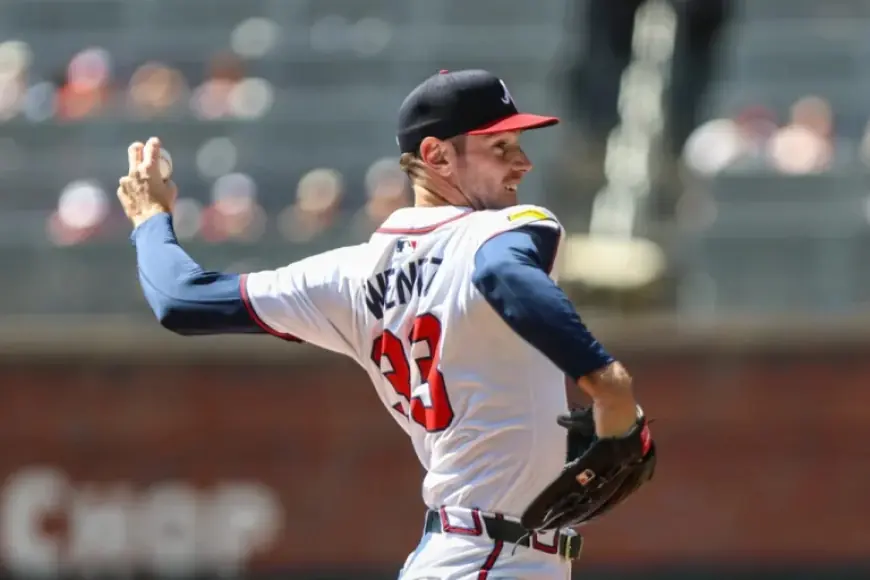
Braves left-hander joey wentz will miss the 2026 season after tearing the anterior cruciate ligament (ACL) in his right knee during a collision in Sunday’s spring game against the Rays in Port Charlotte, Florida. The abrupt shift from early optimism to a season-ending diagnosis reveals how quickly spring “depth” can turn into a structural need, especially with Atlanta already losing Spencer Schwellenbach and Hurston Waldrep to elbow injuries.
Joey Wentz’s MRI turns a spring collision into a season-ending injury
The injury occurred in the bottom of the fifth inning when Rays shortstop Taylor Walls dropped a bunt up the first base line. As joey wentz raced to cover first base, he and Walls collided. In the immediate aftermath, the injury was not thought to be serious. Yet an MRI on Monday morning revealed a torn right ACL, and the Braves ruled him out for the 2026 season.
Manager Walt Weiss said Monday at CoolToday Park that the MRI result was unexpected even to Wentz, noting it “didn’t feel like it was torn. ” That gap between how the injury initially presented and what the imaging later showed is the key factual hinge in this story: it explains why Atlanta’s planning effectively changed overnight, from monitoring discomfort to replacing a pitcher who had been directly competing for a rotation job.
On the field, Wentz had been building a spring workload. Sunday was his third Grapefruit League appearance, and he entered the fifth inning after earlier action in the game. Over 84 pitches this spring, he had allowed two earned runs on three hits, walked four, hit a batter, and struck out six. Those details matter because they show he was not simply “in camp, ” but actively being stretched out and evaluated in a role tied to opening the season.
Walt Weiss’s “compete” message helps explain the risk behind the play
Weiss framed the collision as the byproduct of routine competitiveness rather than a reckless decision. He addressed the inevitable question of why a pitcher would try to make that kind of play in spring training, saying it is “what we do” when “the ball’s hit and we compete. ” The pattern points to a basic reality of roster construction: players earn roles by performing with regular-season intensity, even when the calendar is still spring.
That competitive expectation is the single clearest trigger inside the context for how this happened. Wentz was covering first on a bunt attempt, and the resulting collision created the injury. The data suggests that spring evaluations place pitchers into real defensive situations, not controlled rehearsals, because they are expected to execute the same plays that will be demanded once games count.
Article 2 underscores why the incident created immediate alarm even before the MRI. It describes Wentz being carted off with an apparent right leg injury, while initial examinations suggested it “likely isn’t dealing with anything too serious, ” and that the cart ride “may have been precautionary. ” That earlier read now stands in sharp contrast to Monday’s MRI result. The implication is not that the evaluations were careless, but that the visible signs at the moment of injury did not reliably predict the eventual diagnosis.
Spencer Schwellenbach and Hurston Waldrep injuries shrink Atlanta’s rotation margin
Wentz’s loss lands in a pitching picture that was already tightening. The Braves have already lost starters Spencer Schwellenbach, who was expected to be in the starting rotation, and Hurston Waldrep, described as a prospect, to elbow injuries. Weiss said the club currently has “only have four members of the rotation set in stone, ” a concrete indicator that the team was already operating with limited certainty before Wentz’s knee injury.
joey wentz was expected to factor into the Braves’ pitching plans coming out of spring training, and he was competing with Bryce Elder to be the team’s fifth starter. There was also a scenario in which the club carried him at the season’s outset because it has 13 games in 13 straight days. The immediate implication of the torn ACL is that this specific competition ends by force, and the team must now cover both the fifth-starter decision and the workload stress that the 13-in-13 stretch would have amplified.
Atlanta’s remaining choices are more clearly defined in the context than they were a week ago. Weiss pointed to “plenty of options, ” including JR Ritchie, a prospect scheduled to start against the Blue Jays in Dunedin, Florida, on Tuesday, and veterans Martin Perez and Carlos Carrasco. The spring results cited add texture without resolving the decision: Carrasco gave up four runs, including two home runs, in Tuesday’s start against the Twins, while Perez has allowed one run over five innings this spring.
For now, the depth chart is less about theoretical coverage and more about which arms can credibly absorb innings. The pattern points to a front office and coaching staff being pushed into practical triage, because three spring injuries have reduced the buffer that normally allows teams to manage workloads and roles gradually.
The next confirmed milestone is JR Ritchie’s scheduled Tuesday start against the Blue Jays in Dunedin, Florida, which will occur with a clearer opening in the Braves’ plans than existed before Sunday’s collision. If Weiss’s view that the club has “plenty of options” holds, the data suggests Atlanta will use these remaining spring outings to identify which of Ritchie, Martin Perez, Carlos Carrasco, or Bryce Elder can stabilize the fifth spot after joey wentz’s season-ending ACL tear.