Tariq Woolen free agency buzz reveals Seahawks’ shifting tolerance for inconsistency

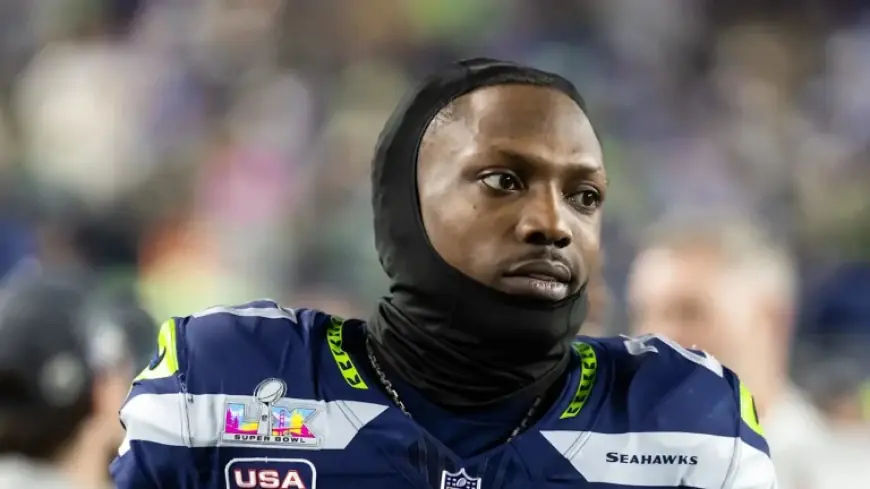
tariq woolen is emerging as a prominent name ahead of NFL free agency, with projections tying him to the Los Angeles Rams and league executives expecting the San Francisco 49ers to show interest if Seattle lets him reach the market. The pattern points to a specific tension: Woolen’s top-end traits still draw demand, but Seattle’s late-season usage and repeated discipline lapses highlight how quickly inconsistency can erode standing and price.
Seattle Seahawks signals around Riq Woolen sharpen as March 9 approaches
Free agency “unofficially begins” on Monday, March 9, and multiple strands of reporting converge on the idea that Riq Woolen is more likely leaving Seattle than staying. Even as other Seahawks names dominated early departure chatter, Woolen drew less public discussion in some circles precisely because he was “presumed to leave. ” That presumption is not presented as a formal team decision, but it frames how the market is treating him: as an available starting corner rather than a player Seattle is expected to retain at all costs.
Usage details add weight to that interpretation. Mike Macdonald used Josh Jobe in front of Woolen during the season’s second half, and Woolen only topped 70% usage in one of the team’s final eight regular-season games. That is a concrete signal of changing internal trust, regardless of whether the club ultimately re-signs him. The data suggests teams around the league are reading that shift as an opening, because interest is already being sketched out by division rivals and a direct NFC West counterpart.
That same tension shows up in the way Woolen is evaluated: he is described as capable of “excellent coverage” and even “shutdown” stretches, yet also inconsistent “from one play to the next. ” For a cornerback, that kind of volatility is not just aesthetic; it can change how a coaching staff structures calls and how much margin a defense needs elsewhere. The fact that the discussion is centered on whether he reaches the market, rather than on a clear Seattle push to keep him, reflects how performance variability can drive roster decisions as much as raw ability.
Rams and 49ers interest puts Riq Woolen’s strengths-and-flaws under a microscope
Two specific landing zones are being floated: Los Angeles and San Francisco. In a projection, the Rams are linked to Woolen as a potential perimeter upgrade, with the reasoning tied directly to his “speed, length and ball-hawking skills. ” The same projection acknowledges a point of friction: Woolen drew an unsportsmanlike penalty for talking trash to Sean McVay and the Rams sideline during an NFL championship game, implying that any fit would require early relationship management. The implication is narrow but meaningful: teams may be willing to manage interpersonal or discipline issues when the physical profile is hard to find.
San Francisco’s interest is presented more as expectation than as a completed pursuit. Several executives around the NFL expect the 49ers to be in the mix if Seattle lets him hit the market. That expectation lands alongside specific 49ers cornerback context: the team used Day 2 picks at corner in 2024 (Renardo Green) and 2025 (Upton Stout), and it has Deommodore Lenoir signed long term to a five-year, $89. 8MM extension in 2024. Yet Lenoir is also owed a $16. 75MM guarantee for his 2026 compensation on April 1, a detail that “could give San Francisco a decision. ” The pattern points to a roster-building reality: even teams with recent draft investments and big extensions still scan for options when future guarantees and cap decisions approach.
Woolen’s on-field evaluation explains why interest can coexist with hesitation. He is described as “up and down, ” with elite catch-up speed and “fantastic” press coverage, plus the ability to catch the ball. At the same time, he “doesn’t tackle or play the run well, ” takes “bad angles, ” and “doesn’t wrap well. ” The data suggests his best market will come from defenses that can keep his strengths featured, rather than demanding complete versatility. That is not abstract: the commentary explicitly warns that a team should avoid asking him to tackle much, an unusually specific constraint for a starting defender.
Spotrac pricing and Seattle’s late-game examples shape the leverage battle
Woolen’s likely price is being debated in parallel with his reputation. One estimate pegs his market value at $8. 2 million ahead of free agency, while another discussion frames the open-market number as potentially as much as $8 million per year, down from an earlier mid-teens-per-year possibility. Regardless of the exact figure, the direction is clear in the context: the asking price has “diminished somewhat. ” The implication for the next negotiation cycle is straightforward: even for a player expected to “get paid a bunch, ” the market can re-rate quickly when the conversation shifts from ceiling to dependability.
The reasons for that re-rating are grounded in specific game moments highlighted in the context. In Week 1 against the San Francisco 49ers, Woolen is described as decent for much of the game, then “awful at the end, ” committing a “terrible penalty” that set the 49ers up deep in Seattle territory late in the Seahawks loss, followed by allowing a touchdown pass after not easily knocking the ball down. Another cited episode comes in an NFC Championship game against the Los Angeles Rams: he was penalized for needless taunting that turned a 4th-and-13 situation into a first down, and on the next play he gave up a long touchdown pass.
Those examples are doing two jobs at once in the market narrative. First, they compress the critique into high-leverage snaps: penalties, end-of-game execution, and immediate consequences. Second, they frame “inconsistency” as something that changes outcomes, not just film grades. Still, the context also includes performance measures that keep his value afloat: he allowed a passer rating of 78. 5, ranking 25th among 200-plus-snap cornerbacks in 2025, and another set of numbers cited includes 4. 6 yards per attempt allowed, described as third-lowest of 79 cornerbacks who were the primary defender on at least 50 passes. The data suggests the debate is less about whether Woolen can play at a starting level and more about whether a team can live with the swing plays that accompany it.
Next week’s calendar cements the trajectory. Free agency “unofficially” begins Monday, March 9, and the free agency period “officially begins” on Wednesday, March 11. If Seattle lets tariq woolen hit the market during that window, the data suggests the Rams projection and expected 49ers interest will quickly test whether his discounted estimate near the $8 million range becomes a bargain for an upside starter or a warning label teams price in.