Gardner Minshew and Chiefs 2026 tracker: a contrast in specificity

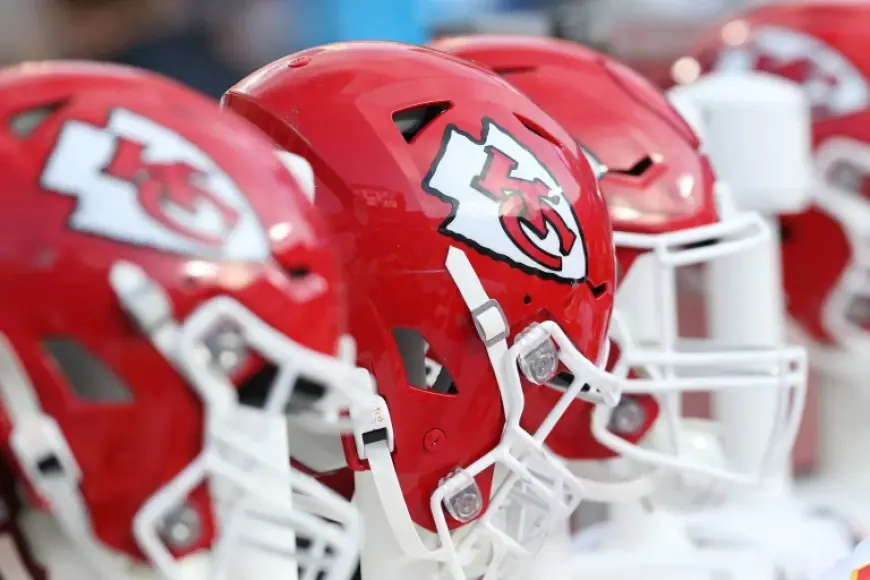
As Kansas City’s offseason coverage shifts into roundup mode, gardner minshew stands out as a useful contrast point: one named player versus a Chiefs-centered free-agency tracker that stays mostly at the level of themes and prompts. Placing those two approaches side by side answers a practical question for fans: does this tracker function more as a real-time transaction log, or as an organizing hub for possibilities and priorities?
Kansas City Chiefs tracker: Brett Veach, cap flexibility, and a one-year specialist deal
The free-agency tracker frames itself as a continuous update stream for “all the news from free agency in Kansas City and across the NFL, ” while keeping the Kansas City Chiefs as the organizing center. Even within that broad promise, the concrete details that surface are limited, with one clearly stated transaction-style item: Kansas City and its “long-time specialist” agreed to a one-year deal.
Beyond that, the tracker leans on structural signals rather than player-by-player accounting. It says Kansas City has created “plenty of cap flexibility” to be active on Day 1 of free agency, then pivots to questions about how general manager Brett Veach might find bargains. The same pattern repeats in other lines: a preview of potential departures for division rivals, and an offseason “blueprint” shaped by draft position, NIL shifts, and free agency strategy.
For readers, that combination matters. The tracker supplies a Chiefs-first framework—cap posture, front-office shopping behavior, and the idea of an offseason plan—while offering only a small amount of confirmed contract specificity inside the text provided.
gardner minshew as a comparison point: named-player clarity versus roundup breadth
In contrast, gardner minshew represents the kind of detail fans often look for when they open a free-agency tracker: a specific player whose status can be checked quickly. Within the text provided, however, the tracker does not attach player-level updates to that name, and it does not list transactions, visits, trades, or signings tied to gardner minshew.
That absence becomes the comparison’s pressure test. A named player invites a “where does he fit, what changed today” style of reading. The tracker, as written here, instead delivers a broader roundup posture: it signals that Chiefs activity is being monitored, but it emphasizes the mechanisms and questions surrounding roster construction rather than detailing a stream of individual moves.
Put simply, gardner minshew functions as a lens on the tracker’s current level of resolution. Where a player name implies a searchable, transaction-oriented ledger, the tracker’s content reads more like a hub that collects themes—cap flexibility, bargain hunting, and divisional departures—until more discrete updates are available.
Kansas City vs. “across the NFL”: what the divergence reveals about the tracker’s role
The tracker explicitly tries to cover two scopes at once: “all the news” in Kansas City and “across the NFL. ” Yet the details supplied in the text skew heavily toward the Kansas City frame—cap flexibility, Brett Veach’s approach, and offseason strategy—while the “across the NFL” element appears more as a stated intent than as a catalog of league-wide moves.
Here is what that looks like when compared on the same criteria—specificity, focus, and actionability—using only what is present in the text:
| Comparison point | Chiefs tracker content (in text) | Named-player expectation (gardner minshew lens) |
|---|---|---|
| Named transactions | One-year deal for a long-time specialist | Player-specific signing/trade detail is implied, but not provided here |
| Decision-maker focus | Brett Veach and “bargains” | Team fit would be the typical next step, but no such detail appears |
| Resource posture | “Plenty of cap flexibility” for Day 1 | A player name invites cap/contract linkage, but none is included |
| Scope of coverage | Kansas City plus “across the NFL” as a stated aim | A player reference usually narrows scope, but the text stays broad |
| Forward-looking prompts | Division rival departures; offseason blueprint; draft and NIL shifts | Player-level prompts are absent in the provided material |
Analysis: The comparison establishes that the tracker’s current utility lies more in framing Kansas City’s free-agency posture than in delivering a dense feed of player-specific updates. The one-year specialist agreement shows it can carry concrete items, but the rest of the text functions as an organizing guide: what Kansas City can do (cap flexibility), how it might do it (bargains), and what external factors shape the plan (draft position, NIL shifts, free agency strategy).
The finding is straightforward: as presented, the Chiefs tracker reads as a strategic hub first and a transaction ledger second. The next confirmed test of that role is whether additional Chiefs free-agency action appears in the same concrete form as the one-year specialist deal; if Kansas City’s Day 1 activity matches the “cap flexibility” claim, the comparison suggests the tracker will shift from prompts to a more itemized update stream.