Jello Biafra’s stroke recovery points to a rehab-first public update cycle

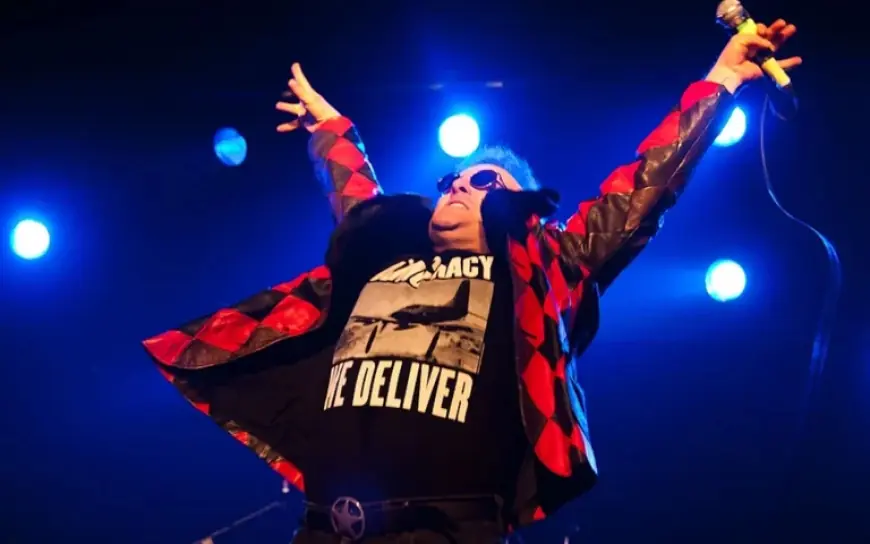
jello biafra recently suffered a stroke and is now ok and doing physical rehab. The immediate details shared about how the medical crisis began on March 7, paired with the focus on rehab, signal that the clearest near-term trajectory centers on recovery progress rather than any additional public-facing plans.
March 7 and the first-person detail from jello biafra
The confirmed development is specific and personal: on March 7, jello biafra got up in the middle of the night and realized he was suddenly having a medical crisis. In his own account, he described hopping out of bed because he needed to pee, then feeling his left leg collapse and falling to the floor. He said he could not break the fall with his left arm because it was not working, and he could not hop back up again.
Those details establish the key facts the public has right now: the onset was sudden, it happened overnight, and he recognized what was happening. The narrative is also notable for what it emphasizes. It does not linger on hospital logistics or broader medical specifics; it stays tightly focused on the moment of realization and the physical limitations he experienced at that time. That framing matters because it shapes what the next updates are likely to center on: function, movement, and rehabilitation milestones rather than a broader medical briefing.
Physical rehab becomes the center of the immediate timeline for Jello Biafra
The current status is clear in the context: he is ok now and is doing physical rehab. He also described having “a lotta rehabbing to do, ” while adding he still has “a lot of great stuff” in him. In practical terms, that combination of reassurance and a rehab-focused message suggests a near-term communication pattern built around recovery, with updates potentially arriving as his rehab progresses rather than on a fixed schedule.
One additional signal embedded in the same context is the intention to continue communicating. The phrasing that updates will continue indicates an open channel, but it does not specify timing, format, or what kind of milestones would trigger new information. For now, the most visible through-line is that rehab is not a side note; it is the main storyline, and the only concrete next-step activity explicitly described.
Based on context data.
- Confirmed event: Stroke on March 7, discovered during the night after getting up.
- Immediate symptoms described: Left leg collapsed; left arm not working; unable to get back up.
- Current status: Ok now and in physical rehab.
- Near-term priority stated: “A lotta rehabbing to do. ”
If the rehab-first messaging continues, updates may stay narrow and progress-based
If the rehab-first messaging continues… the direction implied by the context is a stream of straightforward recovery notes rather than expanded disclosures. The strongest evidence for that is the distribution of detail: the account is vivid about the moment the stroke hit, then quickly pivots to the present tense of physical rehab. That arc naturally lends itself to future check-ins that track improvement, setbacks, or new rehab stages, while leaving many medical specifics unstated.
Should a change occur in how information is shared… the next phase could look different if communications move beyond rehab status into more concrete statements about what “ok now” means day-to-day. The context already contains two distinct layers of information: an immediate, descriptive narrative of the onset and a brief, stabilizing status update. A shift toward more detailed health reporting would require a new confirmed disclosure of the same specificity as the March 7 account, but aimed at current abilities and recovery benchmarks.
The next confirmed signal in the context is the stated intention to provide further updates. What the context does not resolve is any timeline for those updates, or the scope of what will be shared beyond physical rehab. For now, the visible trajectory remains clear and tightly bounded: recovery is underway, and the public-facing story is likely to follow the pace of rehabilitation.