Lazio face Sarri’s sharp public critique as Provedel absence bites

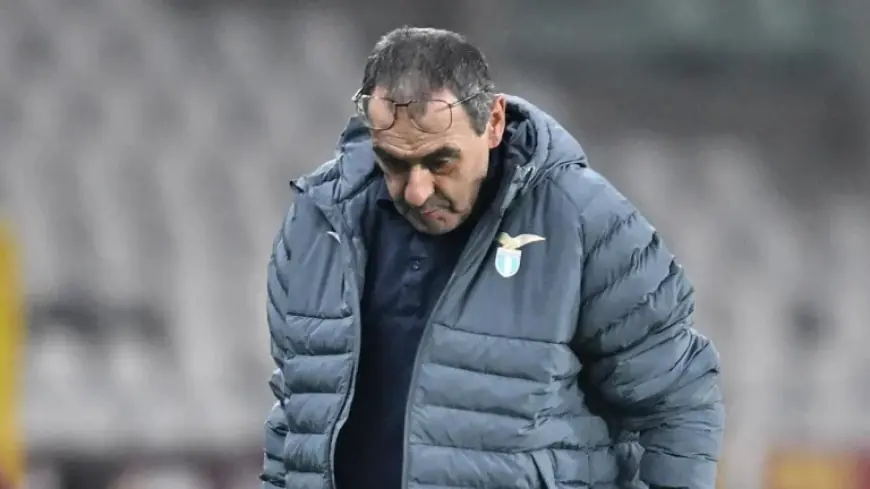
lazio entered the Sassuolo match under unusually direct scrutiny from Maurizio Sarri, who tied the team’s uneven performances to mindset and motivation. His comments also revealed a second structural pressure point: squad decisions and matchday conditions are now being discussed as part of the same performance problem, with Sarri calling Provedel’s absence “serious” and describing an empty stadium as “sad and depressing. ”
Maurizio Sarri links Lazio’s swings to “mental attitude” before Sassuolo
Sarri’s pre-match remarks began with a relatively controlled message: he said he hoped to see the “real Lazio, ” pointing to numbers that change so much “within three days” that they cannot be explained except by mental attitude. He framed the issue as motivation, adding that it “must not happen, ” and said he hoped the evening would not become “the occasion” for another drop-off. That setup matters because Sarri did not present the problem as tactical complexity; he presented it as a repeatable behavioral variable.
The pattern Sarri described becomes more pointed when he contrasts performance between Sunday and Wednesday, again stressing that the difference “is in the different mental attitude. ” The data suggests that, in his view, the club’s short-cycle inconsistency has become a defining feature rather than a one-off issue. By anchoring his criticism to recurring “numbers” over short intervals, Sarri is effectively setting a standard that can be tested every week, not argued as subjective feeling.
Provedel, Mandas, and Motta put squad choices at the center
Sarri then shifted from the collective to individuals, and his tone sharpened. On Motta, he said that the more he speaks, the more he puts the player “under pressure, ” while also stating that the player trains normally. On Provedel, Sarri was blunter: he called the goalkeeper’s absence “serious. ” He also revisited a transfer decision, saying he was completely against the sale of Mandas and urging that a young player with quality should be seen on the pitch.
The pattern points to a coach who is pulling personnel planning into the same conversation as match performance. Sarri did not merely lament injuries or rotation constraints; he explicitly connected a current problem (Provedel being unavailable) with a prior decision (Mandas being sold) and with selection scrutiny (Motta being discussed publicly). One implication is that lineup choices for Lazio-Sassuolo carried added symbolic weight: they were not only about the match, but also about validating—on the field—Sarri’s view of what resources the team should have retained.
At the Olimpico, Lazio-Sassuolo reaches halftime at 1-1
On the pitch, the evening started quickly at the Olimpico. Lazio took the lead through Daniel Maldini, who capitalized on a rebound after a “nice move” involving Isaksen. Sassuolo replied through Laurienté, described as “fulminating” Motta for the equalizer. At 9: 33 pm ET, the first half ended 1-1 after goals by Maldini and Laurienté.
The in-game sequence mirrors the tension in Sarri’s framing. Lazio’s early advantage, created Isaksen’s involvement, offered a version of the “Wednesday” performance Sarri said he wanted to see. Yet the equalizer brought the discussion back to the pressure on individuals: the live match notes explicitly link Laurienté’s finish to beating Motta, the same player Sarri said he was putting under pressure. The data suggests that Sarri’s public messaging can become self-reinforcing in real time, because any key moment involving those players will be interpreted through the lens he has already set.
Still, the match feed also recorded a moment that complicates a simple blame narrative. Motta was credited with a “nice save” on a shot by Nzola, described as preventing the opponent’s equalizer. That single fact underscores the unresolved element in Sarri’s approach: public pressure may sharpen focus, but it also raises the stakes of every visible action, good or bad, for the individuals he names.
The empty stadium critique adds a club-level demand from Sarri
Sarri’s sharpest institutional message concerned the atmosphere. He said an empty stadium is not only ugly but “sad and depressing, ” and added that it is time for the club to do something. He again tied matchday differences—Sunday versus Wednesday—to mental attitude, calling it a mistake and insisting the team must always have great motivation.
One immediate implication is that Sarri has widened accountability beyond the squad. He did not treat the environment as incidental; he described it as emotionally draining and asked the club to act. The pattern points to a pressure chain where performance, roster management, and stadium conditions are being pulled into the same diagnosis. For Lazio, that creates a more demanding feedback loop: results are being evaluated not just as points earned, but as evidence of whether the club can stabilize motivation and conditions that Sarri now treats as central.
The next confirmed milestone is the second half at the Olimpico, with Lazio-Sassuolo level at 1-1 at 9: 33 pm ET. If Sarri’s “numbers within three days” framing holds, the data suggests his post-match evaluation will again hinge less on isolated incidents and more on whether Lazio’s attitude stays consistent after conceding the equalizer.