Case Keenum re-signing vs. coaching talk: what the Bears chose

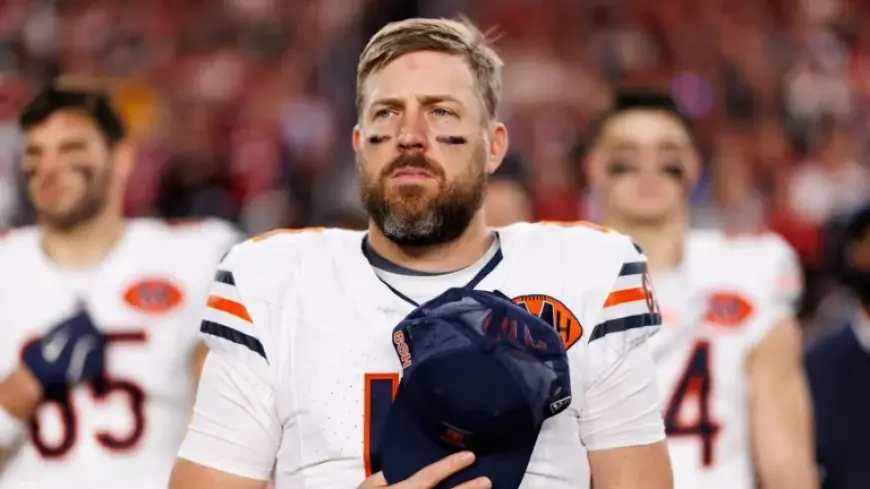
The Chicago Bears are keeping case keenum in the quarterback room into 2026 with a two-year, $5. 5 million contract, alongside Caleb Williams and Tyson Bagent. That outcome stands in direct contrast to earlier talk that the Bears wanted to retain Keenum in Chicago by shifting him from player to coach. The comparison answers a simple question: did Chicago treat Keenum primarily as a roster spot, or as an emerging staff candidate?
Case Keenum returns as the Bears’ third quarterback
Chicago’s latest move is straightforward: Case Keenum is re-signing with the Bears on a two-year, $5. 5 million deal. With starting quarterback Caleb Williams and backup Tyson Bagent already under contract, the decision keeps the same three-quarterback structure in place from 2025 into 2026, barring something unexpected.
The contract choice also fits the profile described for Keenum at this stage of his career. He is 38 and has “made a good living” as a backup since he initially signed with the Houston Texans as an undrafted free agent in 2012. His salary for the year tied to the new deal pushes his career earnings to about $60 million in the NFL, reinforcing that his value has come from longevity and role stability rather than a late-career swing at becoming a long-term starter.
Ben Johnson’s earlier idea: keep Keenum, but as a coach
Before the re-signing, the possibility on the table looked different: the Bears were described as wanting to keep Keenum in Chicago, but not as a quarterback. In that scenario, Ben Johnson was hoping Keenum could join his coaching staff and continue to mentor the team’s young passers, Caleb Williams and Tyson Bagent.
That coaching pathway was framed as plausible partly because Keenum had “quickly endeared himself” to Johnson after arriving in Chicago in 2025 as a veteran voice in the quarterback room. It was also framed as plausible because Keenum’s on-field starting role had narrowed: he last started a game in 2023 for the Texans, and he has had no more than two starts in a season since 2019. The same discussion also raised practical constraints. Any move to the coaching staff would require Keenum to retire from playing, and it was unclear what exact role he would take because the Bears already have quarterbacks coach J. T. Barrett and offensive assistant Robbie Picazo, who focuses on quarterbacks and receivers.
Chicago’s decision point: continuity at quarterback over an immediate transition
Placed side by side, the two paths describe competing ways to “retain” the same veteran: keep him on the roster as the third quarterback, or move him into a staff role centered on mentoring. The Bears’ actual choice—re-signing Keenum to play—indicates a preference for roster continuity and an unchanged quarterback room structure into 2026, rather than beginning a near-term transition into coaching.
| Criterion | Re-signing Case Keenum as QB | Retaining Case Keenum as coach |
|---|---|---|
| Form of retention | Two-year, $5. 5 million contract as third-string quarterback | Joining Ben Johnson’s coaching staff |
| Effect on 2026 QB room | Caleb Williams, Tyson Bagent, Keenum all remain together | Mentorship continues, but Keenum no longer occupies a QB roster spot |
| Precondition | Continues playing | Must retire from playing |
| Fit with recent usage | Matches his long-standing backup role since 2012 | Aligns with view that he “does not profile as much more as a player” |
| Staffing complication | No coaching-staff reshuffle implied | Role unclear with J. T. Barrett and Robbie Picazo already in place |
Analysis: The contrast suggests the Bears chose the lower-friction option. A coaching move required Keenum to retire and required Chicago to define a specific place for him on a staff that already included J. T. Barrett and Robbie Picazo. Re-signing him avoided both hurdles while preserving the mentor presence described in the quarterback room, even if it keeps that mentorship inside the player structure rather than formalizing it on the coaching staff.
The comparison also sharpens what “value” means in Keenum’s situation. The coaching idea leaned on his reputation as a veteran voice and mentor, while acknowledging his limited starting opportunities in recent seasons. The re-signing, meanwhile, converts that same veteran value into the most traditional form: a roster role that helps keep the depth chart and room dynamics consistent through 2026.
The finding is clear: Chicago kept case keenum as a quarterback, not as a coach, and prioritized continuity with Caleb Williams and Tyson Bagent into 2026 over an immediate staff transition. The next test of that finding will be whether any separate coaching role for Keenum is discussed after this playing commitment; if he maintains a player-first stance under the two-year deal, the comparison suggests the coaching pipeline remains a later-career option rather than a near-term Bears plan.