Melbourne Storm thump Eels as mistakes expose Parramatta rebuilding fragility

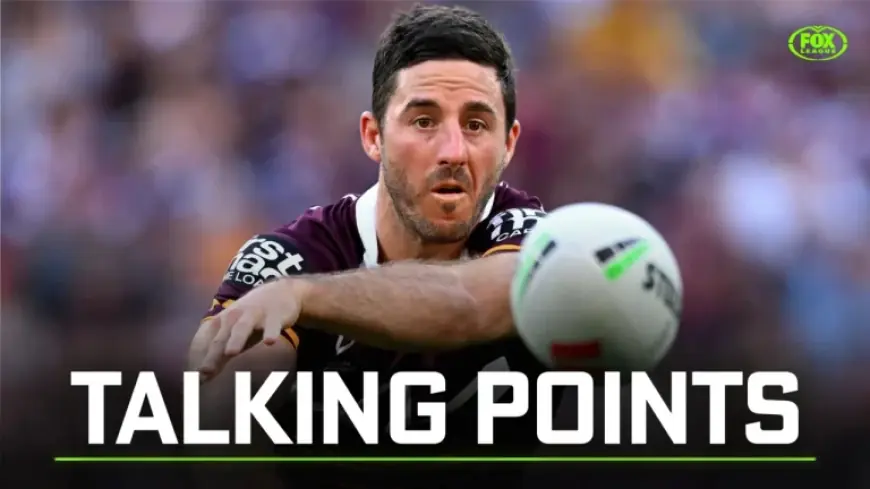
Confirmed: Melbourne stormed past the Parramatta Eels in Round 1, handing Parramatta a reality check. Documented commentary and match detail show an error-prone Eels side whose new playmaking combination failed to build pressure, and a ruck defence repeatedly opened up — tensions this article examines in the record.
Melbourne Storm’s win and the Eels’ preseason expectations
Confirmed: Melbourne produced a thumping win over Parramatta, a result framed in commentary as a reality check for the Eels. Documented: commentators and former players highlighted the contrast between Melbourne’s established spine — Cameron Munster, Jahrome Hughes and Harry Grant — and Parramatta’s newly assembled playmakers. The Eels entered 2026 with high expectations because of how they finished 2025 and the addition of five-eighth Jonah Pezet alongside Mitchell Moses.
Jonah Pezet and Mitchell Moses: documented cohesion gap for Parramatta
Documented: the context specifies that Mitchell Moses had returned from injury last season and had been playing alongside Dylan Brown for an extended period, making immediate chemistry with Pezet less likely. Confirmed: the error count in the match limited chances for Pezet and Moses to build pressure together. Bryan Fletcher explicitly framed the issue as a cohesion problem when comparing Parramatta to Melbourne’s spine, saying Parramatta’s new combination had not yet played the number of games necessary to sync.
Harry Grant’s impact and Nathan Hindmarsh’s ruck defence concerns
Confirmed: Harry Grant produced match-defining plays that exposed Parramatta’s ruck defence; commentators described one moment where Grant sliced through the middle to score as “embarrassing, ” and he later scored again from dummy-half. Documented: Nathan Hindmarsh expressed particular concern about Parramatta’s ruck defence being continually exposed by Grant. The context also records that Michael Maguire has come under fire over his Brisbane Broncos selections and that a group of new Raiders players stamped their mark on the competition, but the central match narrative focused on Grant’s influence and Parramatta’s defensive lapses.
Documented pattern: taken together, the match facts show two distinct strands. First, Melbourne’s established spine executed cohesively and capitalised on openings. Second, Parramatta’s new-look spine suffered from an elevated error count that curtailed its ability to apply sustained pressure. Confirmed: commentators and former players framed the result as exposure of a rebuilding side rather than a polished unit.
Open question: The context does not confirm whether Parramatta’s issues are temporary growing pains or indicative of deeper structural problems. What remains unclear is the timeline for any improvement in cohesion between Pezet and Moses and whether ruck-defence adjustments will be sufficient to stop similar incursions from elite hookers.
Closing: The specific evidence that would resolve the central question is clear in the record. If a subsequent reduction in error count is confirmed and Pezet and Moses demonstrate sustained cohesion that allows Parramatta to build pressure without the ruck repeatedly breaking down, it would establish that Round 1 was an early-stage combination problem rather than a more systemic deficit.