Hunter Hayes vs. his earlier era: what “Evergreen” says now

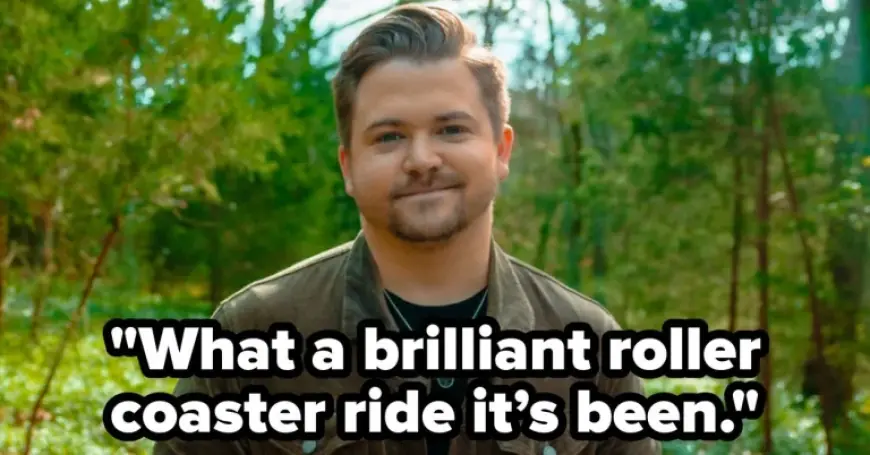
hunter hayes is marking a new chapter with the album Evergreen (available now) while also preparing to bring the project on the road, including a March 27 show at Mr. Smalls Theatre in Millvale. Put beside the earlier moment when “Wanted” helped launch him into the spotlight, the question is what has actually changed: the music, the working process, or the way he measures progress.
Hunter Hayes then: “Wanted” fame and a high-output system
In the period when “Wanted, ” “Somebody’s Heartbreak, ” and “I Want Crazy” became major hits, Hunter Hayes moved quickly into a higher-profile phase of his career. One detail from that time, recalled in connection with Pittsburgh, captures the pace and the learning curve: having recently turned 21 back in 2012, he went out with bands and crew to see the James Bond film “Skyfall, ” ordered a Vesper at a martini bar, and still had a show the next day. He described being “so new to the whole thing, ” and remembering the worry about whether he would be OK the next day.
That same early era also came with a very specific creative expectation. While writing with a label, Hayes described writing 100 songs a year “just to make sure I had something they felt good about. ” In this version of his career, volume served as a kind of security: more songs increased the odds of satisfying someone else’s standard, even if it meant a larger gap between what was written and what felt personally essential.
Hunter Hayes now: “Evergreen, ” independence, and a “Season 1” mindset
In the current album cycle, Hayes frames Evergreen as part of a trilogy that begins with Wild Blue and continues through 2023’s Red Sky. He described Wild Blue as his first time making an album “without anybody really watching, ” and said that Red Sky became the place where “all the angsty stuff was supposed to go. ” By contrast, Evergreen is described as “grounded, ” tied to looking ahead and deciding “what I wanted that to look like, who I wanted to be, and how to bring that into existence. ” He also characterized it as “letters from your future self. ”
Independence is not just a business status in his telling; it changes the mechanics of release and revision. Hayes said streaming favors singles while he favors albums, and his response has been to treat projects as open-ended: “no album is ever finished, ” with every series having “seasons. ” In that framework, Evergreen is “Season 1, ” and he said he is already working on “Season 2. ” He also described choosing from at least 50 songs, with some held for future seasons, and said that independence lets him reduce the old writing ratio and aim for a place where “everything I make I love. ”
Even the sonic details in the opening track show a present-tense emphasis on experimentation inside a controlled vision. Hayes wanted the riff in “Evergreen” to come from an instrument “that wasn’t obvious, ” identifying the Oud as the biggest player in that sound. He found a “reasonably priced” Oud on Reverb, practiced the riff repeatedly for an hour, and said the recording is his first time playing the instrument.
“Wanted” vs. “Evergreen”: what the side-by-side comparison reveals
| Point of comparison | Earlier era tied to “Wanted” | Current “Evergreen” era |
|---|---|---|
| Creative pressure | Writing with a label and producing 100 songs a year to meet external approval | Selecting from at least 50 songs, reducing the ratio to focus on work he loves |
| Project identity | Breakout hits that launched him into the spotlight | A “grounded record” framed as “Season 1” of a continuing series |
| Relationship to time | Early touring memories in Pittsburgh in 2012, learning in real time | Song “Evergreen” written in 2018, shaped over years into an album available now |
| How he defines change | Newness to fame and touring routines | A month away from obligations after touring Red Sky, used to clarify the future |
| Sound choices | Not defined here by one specific studio anecdote | Oud-driven riff on “Evergreen, ” recorded on his first time playing the instrument |
Analysis: The comparison points to a clear shift in control and pacing. The earlier “Wanted” moment shows momentum built on visibility and output, with the creative system designed to satisfy an outside gatekeeper. The Evergreen moment presents a different organizing principle: fewer songs per year, a longer runway for ideas, and a release model that keeps an album open to continuation rather than treating it as a final statement.
Still, both eras share a through line that helps explain why Hayes can make the shift without abandoning what first drew attention: he remains closely involved in the full process. The context describes the excitement of seeing him play every instrument on his debut album and being connected to “every part of the process — from singing and writing, to arranging and producing. ” In the Evergreen era, that same hands-on identity shows up in the choice to chase an “instrument that wasn’t obvious, ” then commit a first-time performance to the recording.
The finding from placing these two versions of Hunter Hayes side by side is that Evergreen is less a break from the past than a re-architecture of the same core drive: hands-on authorship, but with independence shaping how much he makes, how he releases it, and how he lets it evolve. The next confirmed test arrives on March 27 at Mr. Smalls Theatre in Millvale; if hunter hayes sustains the “Season 1” approach on tour, the comparison suggests the Evergreen era will be measured by continuity and iteration, not only by a single breakout moment.