Boye Mafe’s next move forces Seattle and Washington to rethink edge rush

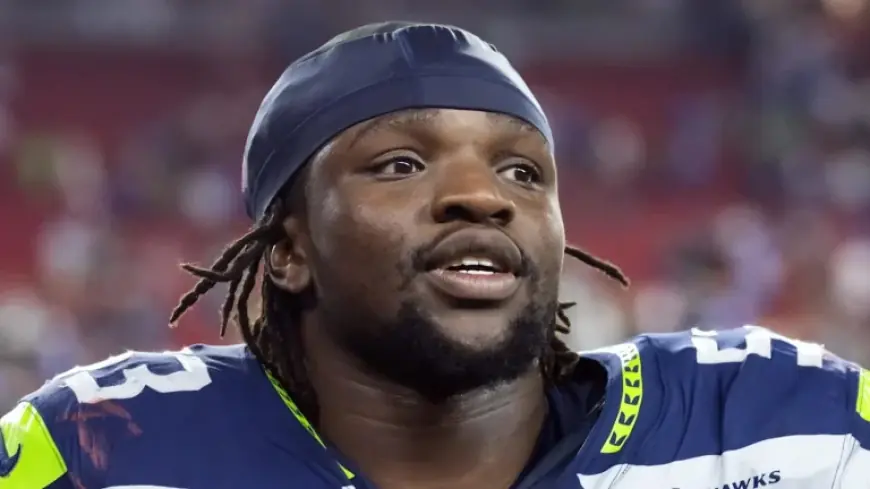
For boye mafe, the conversation around his next contract is being shaped by two very different needs: a Washington defense looking for a specific kind of edge presence, and a Seattle front office preparing for the possibility that he leaves. The same player is being framed as a “better price” fix in one place and a potential hole to fill in another.
Adam Peters and Daronte Jones see boye mafe as a 3-4 fit
In Washington, the appeal is less about a single headline stat and more about how boye mafe might fit into a new structure. Adam Peters has been pointed toward Seattle’s pending free agents before, with Kenneth Walker III and Rashid Shaheed projected as potential landing spots after playing crucial roles for the Seahawks in their march to the Super Bowl. Yet the argument for Mafe is framed differently: as a way to fill an “even bigger hole” for Washington at what is described as a better price.
That idea rests on how Mafe is described as matching the “prototypical profile” for an outside linebacker in a 3-4 front, which appears to be the favored alignment of new defensive coordinator Daronte Jones. The details used to make that case are specific: Mafe is listed at 6-foot-4 and 261 pounds, with the size to set the edge against the run, plus speed and burst that have helped him as a pass rusher.
Still, the selling point is not presented as simple production. The context around Mafe acknowledges that if sack totals are the only measure, his recent line could look underwhelming for a team trying to improve its pass rush.
Seattle’s sack totals and win rates pull boye mafe in opposite directions
Mafe’s recent seasons are presented as a downward slope in sacks: nine in 2023, six in 2024, and two last year. The dip, especially in 2025, is flagged as something that “raises eyebrows, ” and it is directly tied to a contract projection of $12. 24 million per season on a three-year, $36. 72 million deal.
That projection is contrasted with another edge rusher, Odafe Oweh, who is projected to get much more. The comparison uses two measures to show how evaluation can split. On total sacks, Oweh’s most recent season is described as adding 7. 5, compared with Mafe’s two. On a different measure, Mafe is presented as having the edge: his pass rush win rate finished eighth at 19%, while Oweh is listed 10th at 17%.
The push and pull matters because it defines what teams might feel they are buying. Sack totals can shape market perception and price, while win rate can shape how a coaching staff imagines pressure arriving within its scheme. In this framing, Washington’s interest is built on fit and underlying performance rather than headline production alone.
DeMarcus Lawrence and Seattle’s draft board hang over boye mafe
Back in Seattle, the storyline is less about whether Mafe can help and more about what happens if he is not there. There is described to be “still a chance” that boye mafe returns to the Seahawks as a free agent, and he could become a priority on defense depending on what DeMarcus Lawrence decides to do. Lawrence has not made a final declaration on retirement, but the rumors are described as enough that Seattle must “attend to the edge rusher position. ”
The link between the two players is practical. Mafe is described as having played behind Lawrence for most of last season, and that experience is used to argue that bringing Mafe back—if Lawrence does not walk away—would make the most sense. Yet the same context also accepts the opposite outcome: Mafe could sign elsewhere, leaving Seattle needing to fill a hole regardless.
That is where the draft names enter the picture. Seattle is described as having options who could fit into Mafe’s “empty slot” with a similar presence of versatility and explosiveness. One candidate mentioned is Jacas, who is described as bringing physicality, versatility, and explosiveness off the edge, plus the ability to collapse the pocket. Jacas recorded 11 sacks last season with the Illini and 20 over the past two seasons, along with over 40 quarterback pressures. Although Jacas did not work out at the combine last week, his film is described as enough for Seattle to assess the 6-foot-4, 260-pound edge rusher.
Another edge prospect discussed is Parker, described as physical and explosive off the line. Parker’s production two seasons ago is detailed: 19. 5 tackles for loss, 11 sacks, and six forced fumbles with the Tigers. The fit is tied to a team tendency described in the same breath—Seattle’s “knack for ripping the ball out of arms and hands, ” with the claim that every game last season it seemed like the Seahawks forced a fumble. Parker is also described as not having the same 2025 season, which could move him down the draft board and potentially fall in Seattle’s favor, and his measurements are listed at 6-foot-4 and 263 pounds.
For now, boye mafe sits at the center of both narratives: a player Washington is being told can match Daronte Jones’ preferred 3-4 vision, and a player Seattle might try to keep—unless the market pulls him away, or the team decides its next edge presence will come from a draft class already being mapped against his profile.