Cameron Thomas joins Falcons on a one-year deal, signaling defensive depth priorities

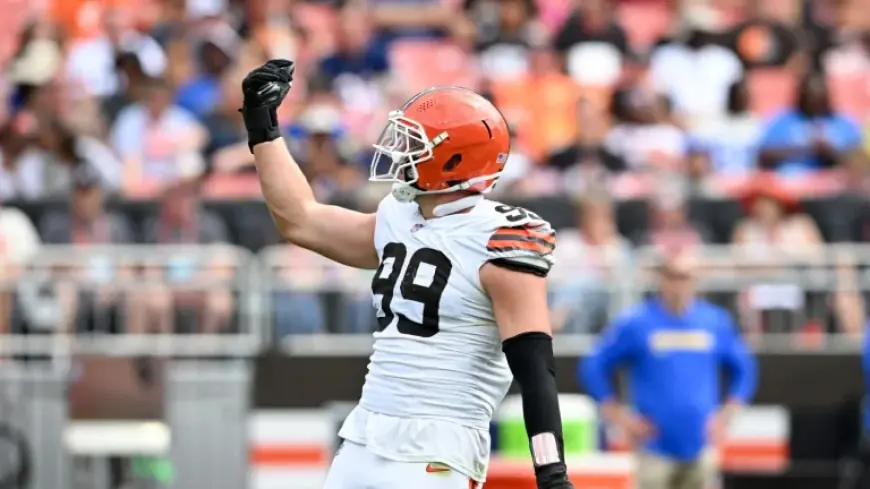
The Falcons agreed to a one-year, $3. 1 million deal with cameron thomas, adding a defensive end who most recently played for Cleveland. The move also highlights a broader pattern under new Falcons coach Kevin Stefanski: prioritizing familiarity and role clarity on defense, with a player whose recent workload points to a defined rotational job rather than an immediate full-time starting role.
Cameron Thomas agreement ties Atlanta to a defined rotational profile
The confirmed development is straightforward: defensive end Cameron Thomas, 26, agreed to a one-year, $3. 1 million contract with the Falcons. Kevin Stefanski, now Atlanta’s head coach, previously coached Cleveland when the Browns claimed Thomas after he was waived in November following a brief stint with Kansas City. That coach-player overlap matters because it reduces ambiguity about why the signing happened now and what the coaching staff believes it is buying.
On the field, the recent usage markers supplied in the context put boundaries around expectations. In 2025, Cameron Thomas appeared in all 17 games and totaled 28 tackles, 2. 5 sacks, and seven quarterback hits while playing 29 percent of Cleveland’s defensive snaps. That snap share, paired with 57 percent of special teams snaps, indicates a player valued for steady availability across game day roles, not just pass-rush flashes. The pattern points to Atlanta adding someone who can fill multiple in-game needs without requiring a major defensive snap commitment.
His career arc described here also reflects how the league has treated him so far: drafted in the third round in 2022 by Arizona, traded to Kansas City at the start of the 2024 season, then waived in November after four games, and claimed by Cleveland. Each step signals movement toward narrower responsibilities. For Atlanta, that kind of track record can fit a roster-building approach that looks for specific, repeatable jobs on the defensive line rather than a single all-purpose answer.
Kevin Stefanski familiarity and Atlanta timing explain the Cameron Thomas fit
The clearest trigger in the context is Stefanski’s presence. Cleveland claimed Thomas when Stefanski was coaching the Browns, and Thomas served in a reserve role there. The data suggests Atlanta’s decision chain leaned on that prior evaluation: the staff has already seen how he practices, prepares, and functions within a rotation. In a signing environment where projection risk is high, importing a player with an established internal reference point can be its own form of cost control, particularly on a one-year deal.
Another contextual clue is timing within Atlanta’s broader activity. One account describes a “flurry of signings” on offense and special teams, while noting the Falcons “hadn’t touched defense yet” before adding Cameron Thomas. That sequencing suggests a deliberate roster triage: address several non-defensive spots first, then look for a defensive addition that is described as “young” and “affordable. ” While the context does not provide Atlanta’s cap situation or a full depth chart, it does offer one direct framing: Thomas is viewed as a “rotational option for a defensive front that could use more help. ” The implication is narrow but clear: the signing is meant to raise the floor of the defensive line rotation, not to serve as a centerpiece move.
The role description goes further by comparing the intended usage to Zach Harrison, calling Thomas an “inside/outside guy” who will “likely be more impactful outside. ” That is not a guarantee of alignment, but it does provide a concrete explanation of the type of flexibility Atlanta is purchasing. If the plan holds, the context suggests the Falcons want a player who can be deployed across spots within a front while still offering a more natural fit on the edge.
David Onyemata’s departure sets a practical expectation for Atlanta’s defensive front
The immediate roster consequence identified in the context is not a direct replacement statement, but a timing-based contrast: Atlanta “just saw David Onyemata sign with the Jets earlier today. ” With no additional details given about Onyemata’s role, the only grounded takeaway is that a defensive lineman left the roster picture while the Falcons added Cameron Thomas. The pattern points to Atlanta managing attrition and depth at the same time, rather than treating the defensive front as settled.
From Thomas’ production and usage, the implied value is dependability in a limited role. One account states he posted 2. 5 sacks and 13 pressures “last year” in just over 300 defensive snaps and was not credited with a single missed tackle on the season, while another provides the season line of 28 tackles, 2. 5 sacks, and seven quarterback hits in 2025. Taken together, the data suggests his impact is meant to be efficient, not volumetric: generate pressures when on the field, hold up against the run, and contribute on special teams, where he played 57 percent of snaps for Cleveland.
Yet the same context includes a built-in limiter: he has played on a “limited basis throughout his career, ” and one evaluation explicitly says it does not expect him to take on “a huge role” in Atlanta. That complicates any attempt to frame the signing as a single solution for the defensive line. Instead, the structural consequence is narrower: Atlanta gains a player whose recent 17-game availability supports weekly roster stability, but whose snap share points to a complementary piece.
The next confirmed milestone is simply the Falcons integrating Cameron Thomas into a defensive front described as needing “more help, ” after a stretch of offensive and special teams additions and the same-day note of David Onyemata signing with the Jets. If that roster sequence holds, the data suggests Atlanta’s next defensive decisions will continue in the same lane: targeted additions that fill rotational and special teams roles without promising an oversized workload.