Connecticut Landscapers Face New Costs from Leaf Blower Ban in SB 319

Landscapers and small lawn-care businesses in Connecticut now face higher equipment costs and operational changes as a phased ban on gas-powered leaf blower devices moves through lawmakers. Senate Bill 319 would prohibit the sale of gas-powered handheld and backpack leaf blowers beginning Jan. 1, 2029 ET and ban their use statewide by Sept. 1, 2030 ET.
Senate Bill 319 and Leaf Blower Timetable
Senate Bill 319 would make it illegal to sell gas-powered handheld or backpack leaf blower models by Jan. 1, 2029 ET and illegal to use them by Sept. 1, 2030 ET, establishing a clear timetable for the transition. The bill would require several state departments, including the Department of Administrative Services, the Department of Energy and Environmental Protection and the Department of Transportation, to replace mowers, trimmers and blowers with electric hand-held or push alternatives as current equipment expires. Health and environmental advocates say the measure would cut air and noise pollution in neighborhoods, and testimony from the American Lung Association said running a commercial gas-powered leaf blower for one hour produces smog-forming emissions equivalent to a new sedan driving 1, 100 miles.
Michael Sennello
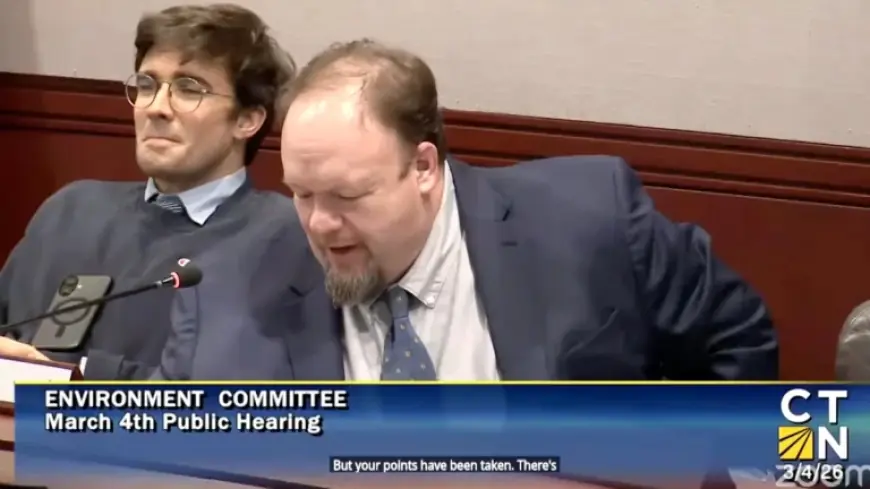
Michael Sennello, owner of Western CT Pro Turf, warned lawmakers that the bill could put small landscaping businesses out of work and said his operation has one employee. He told the committee the battery-powered blowers he has used “just aren’t even remotely close” to matching gas equipment for hours of runtime and consistent power during peak seasons like fall cleanup. Sennello estimated replacement costs at a minimum of $1, 300 to replace each blower and said fitting work trucks with battery banks could cost tens of thousands of dollars per truck, a burden he said would fall on small operators and ratepayers if financed through the Public Benefits Charge. Sennello later posted a video clip of his testimony on social media.
Rep. Rick Lopes
Committee chair Rep. Rick Lopes dismissed the testimony as a “legislative infomercial, ” adding lawmakers would continue working on the bill and that there was “no desire in this bill to make it onerous on small business owners. ” State Sen. Ryan Fazio also shared the clip and urged lawmakers to take small business concerns seriously. Departmental testimony from Transportation Commissioner Garrett T. Eucalitto said the proposal would impose ongoing costs on the state and on electric ratepayers through the public benefits charge and could create upfront capital costs for contractors and municipalities.
If Senate Bill 319 advances in committee, the sale prohibition would begin Jan. 1, 2029 ET and the use ban would take effect by Sept. 1, 2030 ET; if the bill does not advance, those deadlines would not apply.