Crude Oil Prices Today: WTI and Brent Crude Smash $100 After Strait of Hormuz Closure

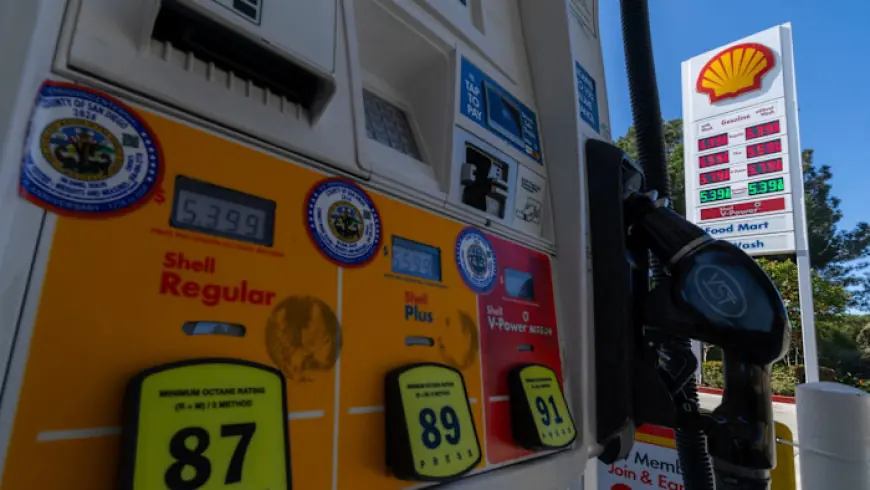
Crude oil prices exploded to levels not seen in nearly four years on Monday, March 9, as the escalating US-Israel war on Iran effectively shut down the Strait of Hormuz — the world's most critical oil chokepoint. Markets opened in historic territory, sending shockwaves across global stock exchanges from Tokyo to New York.
Crude Oil Price Today: WTI Near $95, Brent Crude Hits $108 After Overnight Chaos
West Texas Intermediate crude oil traded roughly 4% higher near $95 a barrel Monday after earlier surging as much as 31%. Prices pared gains after G7 finance ministers said they were ready to take any steps needed to support global energy supply, including releasing strategic reserves, though the group stopped short of announcing an immediate coordinated release.
Brent crude jumped to $108.20 following the Hormuz blockade, and WTI posted its biggest weekly gain in history at 35.6%. At the peak of overnight trading, Brent hit a session high of $119.50 before retreating as diplomatic signals eased some of the panic.
US oil futures rose $8 a barrel to $99, and Brent futures were up $9 to $101 at one point Monday morning — movements that nearly set single-day dollar records for both benchmarks. The previous single-day record of $10.75 was set on June 6, 2008.
Why Crude Oil Prices Are Surging: Strait of Hormuz Closure Explained
Crude oil prices have surged by roughly 50% since the US and Israel launched joint strikes on Iran on February 28. Iran has brought shipping in the Strait of Hormuz to an effective halt in retaliation, threatening approximately one-fifth of the global oil supply.
Iraq, the United Arab Emirates, and Kuwait — three of OPEC's biggest producers — have cut production amid an accumulating backlog of barrels with nowhere to go due to the effective closure of the waterway. Attacks on energy production facilities across the Gulf, including in Qatar, Saudi Arabia, and Kuwait, have further threatened supplies.
Roughly 20 million barrels per day of global oil production are at risk. Iraq and Kuwait have already cut output by 70% and declared force majeure due to storage exhaustion, creating what analysts are calling the most significant supply shock since the 1970s.
Brent Crude Oil Price and the $150 Worst-Case Scenario
One analyst warned that without an amelioration of traffic around the Strait of Hormuz before the end of March, prices could reach $150 a barrel. Oil traders do not believe $100 oil is here to stay, however — contracts for delivery in 2027 and 2028 are trading in the high $60s.
The crude oil price forecast for 2026 has split into two parallel realities — the physical reality that global inventories were still building before the conflict, and the geopolitical reality that 20% of global supply is now physically trapped. For traders, this creates a market defined by fat-tail risks and unprecedented intraday volatility.
Oil Futures Crush Global Stock Markets on March 9
Stocks across Asia fell sharply Monday as investors braced for the fallout from rising energy prices. Japan's Nikkei 225 closed more than 5% lower after falling as much as 7% in early trading. South Korea's KOSPI was down 6% after plunging 8%, while the Hang Seng Index fell 1.35%.
European stocks opened lower, with the FTSE 100 in London and the DAX in Frankfurt both falling. US stock futures also saw substantial losses, with S&P 500 futures down 1.7% and Nasdaq futures dropping 1.90% as oil futures dominated market sentiment throughout Monday morning ET.
Gas Prices and the Impact on American Consumers
As crude oil prices surged, so too did gasoline prices at the pump. US gas prices rose roughly 50 cents in a single week to $3.48 a gallon — higher than at any point during either of President Donald Trump's terms in office. The good news, analysts note, is that the world has plenty of oil sitting in reserves, and was actually operating under a supply glut before the conflict began.
Saudi Arabia began oil output cuts Monday, sources confirmed, becoming the latest Gulf producer impacted by the Hormuz crisis. The G7 nations' finance ministers are meeting Monday to discuss joint release of strategic petroleum reserves as governments race to get crude oil prices back under control before the crisis deepens further.