Tesla Stock Price jumps after Bank of America resets robotaxi thesis

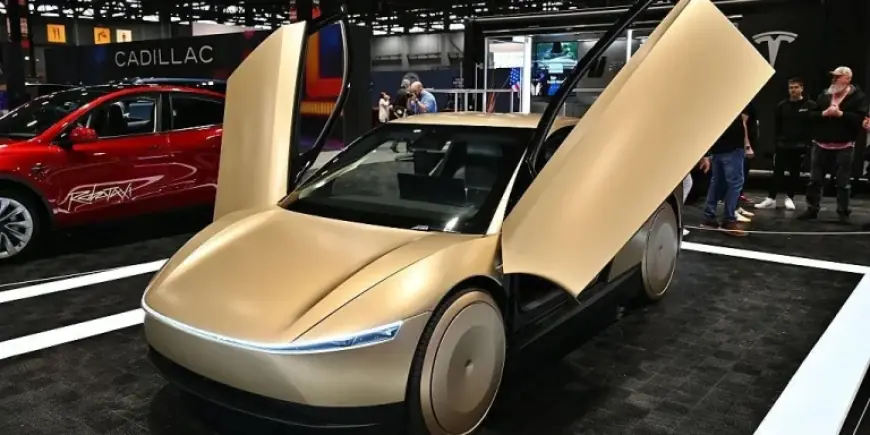
Wednesday at 11: 00 a. m. ET, tesla stock price moved higher after Bank of America resumed coverage of Tesla with a buy rating and new research that helped push shares up more than 3%, the stock’s biggest gain in a month. Still, the durability of that move depends on whether robotaxi expectations translate into observable results, including spending levels and fleet rollout targets that remain forecasts rather than confirmed outcomes.
Bank of America resumes Tesla coverage and frames robotaxis as valuation driver
Bank of America’s research note on Wednesday marked a reset in how the firm frames Tesla’s value, tying its view primarily to optimism around robotaxis. The immediate confirmed market reaction was a rise of more than 3% in Tesla shares, described in the provided context as the biggest gain in a month.
That research arrived after a choppy start to 2026 for the stock: Tesla was down 13% year-to-date through Tuesday, after more than doubling between April and December of last year. The context also says investor attention has shifted toward self-driving and robotaxis as car sales have “plummeted worldwide, ” with skepticism building around AI and a sharp rotation out of market-leading tech names affecting sentiment early in 2026.
What remains unresolved is not the rating action itself, which is confirmed, but whether the assumptions embedded in the robotaxi-focused thesis can be validated by future company disclosures and measurable progress in deployment.
Tesla Stock Price thesis hinges on five robotaxi numbers that investors will track
The context identifies five numbers that are central to how Wall Street analysts are modeling Tesla’s robotaxi business. Some of these are explicit estimates or targets, and they are not confirmed outcomes.
Confirmed estimate: Bank of America issued a new 12-month forward price target on Tesla stock implying 13% upside. The context also notes the firm is more bullish than the average Wall Street forecast of $421. 60, which is also described as above current levels. The exact Bank of America price-target number is not provided in the context.
Confirmed modeling assumption: Bank of America assigns “more than half” of Tesla’s overall valuation to robotaxis, and more than double the 21% contribution it assigns to Tesla’s core car business. That allocation is a key pillar of the revised narrative and, if it changes, the framework for valuing the company could shift quickly.
Unconfirmed as of 11: 00 a. m. ET Wednesday (future outcomes, not established facts): multiple forward-looking projections in the context depend on execution over years. They include forecasts about the share of the global robotaxi market Tesla could capture and the scale of any robotaxi fleet over time. Those projections are described as views held by analysts and investors, not verified performance.
- Cathie Wood’s Ark Invest sees Tesla earning 50% of the global robotaxi market by 2030.
- Wolfe Research also views 50% as attainable, but not until 2035.
- Morgan Stanley analyst Andrew Percoco sees Tesla reaching a certain number of robotaxis by 2035, rising from 1, 000 expected on roads by the end of 2026; the context does not provide the 2035 robotaxi number.
Those estimates matter for tesla stock price because they function as the scoreboard for the robotaxi thesis: if future disclosures align with these timelines and magnitudes, analyst models may hold; if they don’t, valuation frameworks could change even if near-term trading remains volatile.
Tesla’s 2026 capex guidance is a near-term trigger for the robotaxi narrative
One near-term data point in the context is Tesla’s stated expectation for capital expenditures in 2026: more than double the $9 billion spent the year before. That spending plan is presented as what Tesla has said it expects, which means it is not confirmed actual spending yet.
The context also says investors have started “punishing companies for big AI spending, ” making this a particularly sensitive variable for the market. In the same context, RBC Capital Markets is described as having a buy rating and a $500 price target, and it views the expected 2026 capex level as “the right amount to facilitate necessary innovation. ”
Even with bullish ratings in the mix, the unresolved question for investors is whether Tesla’s 2026 capex will match what it has said it expects—and, if it does, whether the market will continue to tolerate that level of spending in the current sentiment environment described in the context.
The next confirmed catalyst that would clarify the gap between thesis and execution is Tesla’s future disclosure of its 2026 capital spending and progress tied to robotaxis, when available. If Tesla’s actual 2026 capex ultimately comes in at more than double the prior year’s $9 billion, further analyst recalibrations of valuation weightings toward robotaxis are expected.