Directions for Iran’s diplomacy shift as Russia and China keep distance

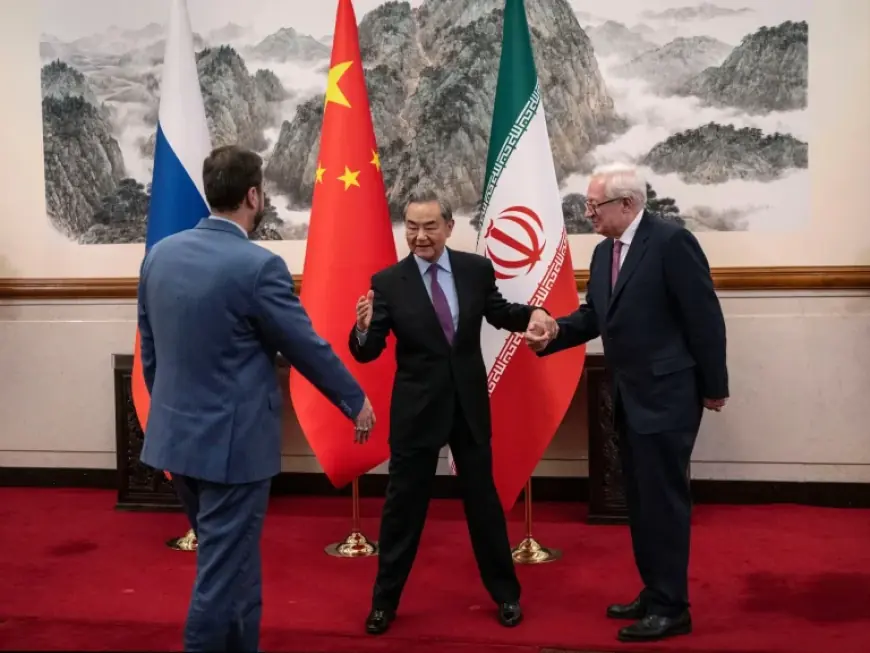
Iranians facing a war that has killed more than 1, 000 people are confronting a second reality: their strongest diplomatic partners are offering words and United Nations action, not troops. As of Monday at 9: 00 a. m. ET, Russia and China had condemned the US-Israeli attack on Iran while stopping short of military support, leaving Tehran to navigate new directions for its wartime diplomacy.
Directions for Tehran as support stays diplomatic, not military
The most immediate impact is strategic and psychological for Iran’s leadership and public: despite years of deals and visible coordination with Moscow and Beijing, neither has indicated a willingness to intervene militarily. That gap between rhetorical backing and battlefield assistance has also surfaced as frustration inside Tehran, where some contacts cited by Russian analyst Andrey Kortunov described an expectation that Russia would do more than pursue diplomatic moves at the UN Security Council or other multilateral forums.
For now, the tangible help described in the available record is diplomatic. Russia and China jointly requested an emergency meeting of the United Nations Security Council, and both countries have issued sharp condemnations framing the attack as a violation of international law. Yet the line they have not crossed—military intervention—defines the constraints Iran faces as it weighs its options.
Vladimir Putin and Wang Yi condemn the US-Israeli attack, seek UN action
Russia and China have publicly criticised the US-Israeli war on Iran, including language that highlights international law and escalation risks. President Vladimir Putin, addressing events after Saturday’s assassination of Iranian Supreme Leader Ali Khamenei, called the killing a “cynical violation of all norms of human morals. ”
In Beijing’s diplomacy, China’s Foreign Affairs Minister Wang Yi told Israeli counterpart Gideon Saar that “force cannot truly solve problems, ” while urging all sides to avoid further escalation. Alongside Moscow, China joined the request for an emergency UN Security Council meeting, signalling that the forum of choice for both capitals is multilateral pressure rather than direct military involvement.
Those stances preserve political alignment with Tehran while limiting exposure to a wider confrontation. The posture also underscores what Iran can realistically expect from its partners in the near term: condemnation, calls for restraint, and UN activity—not security guarantees.
Russia-Iran treaty terms and joint drills show partnership limits
The distance is striking because the relationship between Iran, Russia and China has included bilateral deals and expanded coordination, including joint naval drills that have projected what the three describe as a united front against a US-led international order that, in their view, seeks to isolate them. Russia and Iran also signed a comprehensive strategic partnership treaty in January 2025 covering trade, military cooperation, science, culture and education, and it deepened defence and intelligence coordination while supporting projects such as transport corridors linking Russia to the Gulf through Iran.
Russia and Iran carried out joint military drills in the Indian Ocean as recently as late February, the week before the United States and Israel attacked Iran. Still, Kortunov—former director general of the Russian International Affairs Council and a member of the Valdai Discussion Club—said Moscow was not obliged to respond when the war began because the treaty does not include a mutual defence clause. In his description, the agreement stops short of a formal military alliance and instead says both sides would abstain from hostile actions if the other is engaged in conflict.
Kortunov argued Russia is unlikely to take direct military action in support of Iran because the risks would be too high, adding that Moscow appears to be prioritising United States mediation in its conflict with Ukraine. He also pointed to Russia’s prior approach of criticising US actions in Venezuela after a US military attack and the arrest of President Nicolas Maduro in January as an example of condemnation without direct intervention.
China’s ties with Iran also rest on long-term cooperation rather than an explicit defence commitment. In 2021, China and Iran signed a 25-year cooperation agreement aimed at expanding ties in areas such as energy and drawing Iran into China’s Belt and Road Initiative. With both Moscow and Beijing now stopping short of military support, Iran’s next directions are likely to hinge on diplomatic forums and the limits written into its partnerships.
If the emergency United Nations Security Council meeting proceeds as requested, Iran’s most immediate avenue for changing the outcome will be any Council action that follows, with timing dependent on when the UN schedules the session in ET.