Rasheer Fleming’s rotation role grows as Suns lean on depth

For the Phoenix Suns, rasheer fleming is no longer a developmental afterthought — his minutes are turning into a real rotation role as the team leans harder on depth during a stretch of injuries. As of Friday at 8: 57 a. m. ET, Grayson Allen’s comments about Rasheer Fleming’s growing confidence and comfortability put a clearer label on what that shift means: Phoenix is increasingly trusting its rookie in meaningful situations.
Rasheer Fleming’s comfort level is changing Phoenix’s minute-to-minute plan
Rasheer Fleming’s opportunity has moved quickly from spot appearances to a steadier role, and the immediate consequence is simple: the Suns have another playable option they can “plug in” without the lineup collapsing. Allen described Fleming as “defensively disruptive” and “versatile, ” pointing to the kind of plug-and-play value Phoenix needed when injuries hit its stars.
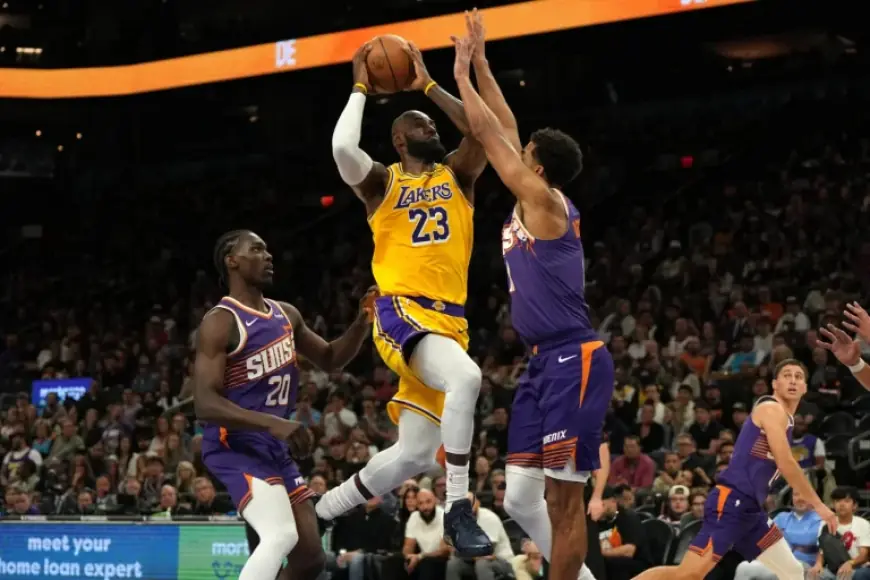
That trust is being supported by recent on-court production. In each of Phoenix’s last two games in its current two-game winning streak, Fleming scored eight points — tied for his career high — and grabbed six rebounds, a career high. He also added a steal against the Los Angeles Lakers and an assist against the Sacramento Kings. For a team that recently had to survive a midseason rut, that level of consistent contribution matters even when it isn’t leading the box score.
Still, the shift isn’t only about points. Allen emphasized that Fleming’s confidence shooting the ball has improved, along with “making those extra plays, ” offensive rebounding for extra possessions, and defensive rebounding that lets him “get up and go get it. ” Those details describe the practical way a coaching staff can stretch its rotation without changing its identity.
Grayson Allen and Jordan Ott point to defensive versatility the Suns can use
Allen’s praise placed Rasheer Fleming in the same broader category as Oso Ighodaro — young players who have helped lift a “gritty” Suns team beyond its stars. In Allen’s view, the common thread is defensive utility that doesn’t always show up cleanly in traditional stat lines. That’s the consequence Phoenix is banking on: defensive pressure, versatility, and the ability to survive in different lineup looks.
In a separate development thread focused on Phoenix’s player development pipeline, Valley Suns head coach Paul Jesperson discussed the growth of both Khaman Maluach and Rasheer Fleming, including how their defensive versatility could translate. The thread also noted that Jordan Ott was asked postgame about Fleming’s defensive versatility — specifically the idea of guarding 5s and flipping picks into switches — reinforcing that this is an intentional usage area, not a random outcome of garbage-time minutes.
That said, the current impact is grounded in a simple reality: Fleming has been in the Suns’ main rotation “for the last week and some change, ” and the returns were described as impactful. With Phoenix searching for dependable minutes amid injuries, even small improvements in role clarity can change how aggressively the team can manage matchups and fatigue.
Injuries opened the door after a midseason rut — and Rasheer Fleming stepped in
Phoenix’s recent rotation reshuffle followed a rough stretch around the All-Star break. The Suns lost four of their last six games before the break and three of their first four games out of it, dropping seven of 10 games before the current two-game winning streak. With injuries to its stars, the team had to lean on depth and young talent, and that timing is when Fleming began to stand out.
The larger developmental arc shows how steep the change has been. Rasheer Fleming spent most of his rookie season with the Valley Suns after Phoenix traded up in the 2025 NBA Draft to take him with the first pick of the second round. In the G League, he averaged 17. 1 points on 50. 4% shooting, 37. 3% on 3-point attempts, 7. 0 rebounds and 2. 0 steals in 34. 1 minutes over nine contests. Before entering the Suns’ rotation, he was playing 6. 5 minutes per game (mostly garbage time) across 29 of 54 Suns games.
For now, the consequence for Phoenix is optionality: a rookie who can absorb real minutes, defend across roles, and contribute enough offensively to stay on the floor. The next signal of whether this rotation change sticks will come with Phoenix’s continued reliance on depth as injuries persist; if the Suns keep needing non-star minutes at the same rate, Rasheer Fleming’s role is likely to remain part of the nightly plan.