Nadal Tennis Legacy Endures As Rafael Nadal’s Post-Retirement Role Comes Into Focus

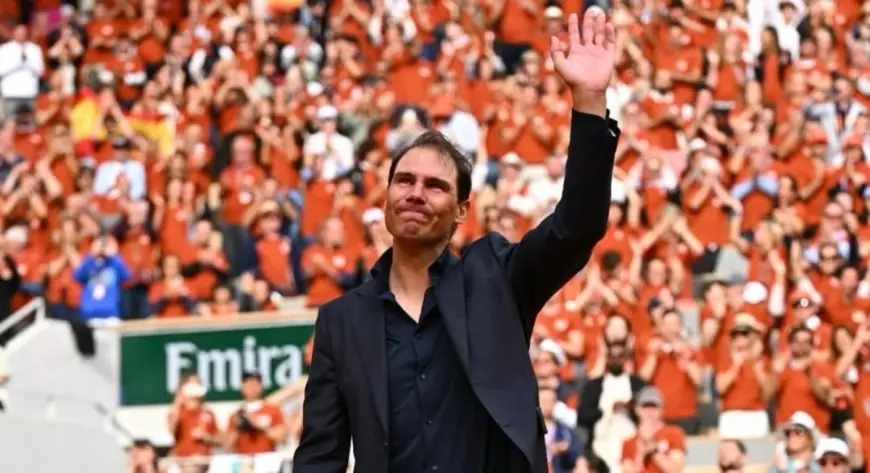
Nadal is Rafael Nadal, the retired Spanish tennis player whose name became shorthand for relentless excellence, especially on clay. For anyone searching what is Nadal or Nadal tennis, the direct answer is simple: he is one of the greatest players in the history of men’s tennis, a 22-time Grand Slam singles champion and the most dominant French Open player the sport has ever seen. In March 2026, though, the story is no longer about whether he will return to the tour. It is about how his influence is changing after retirement and why his name still moves through tennis conversation even without a racket in competition.
That shift matters because some stars disappear into tribute mode once their careers end. Nadal has not. He retired from professional tennis after the 2024 Davis Cup Finals, but his profile has stayed active through public appearances, academy work and foundation projects. That keeps him present in the sport without forcing the illusion that a comeback is coming. In fact, the clearer message around Nadal now is that the competitive chapter is over, while the cultural and institutional chapter is still expanding.
What Is Nadal In Tennis
In tennis terms, Nadal is a standard no current player can ignore. He won 14 French Open titles, a number that still feels almost impossible because it represents not just greatness but near-total ownership of one major tournament. Across his career, he built a reputation on physical endurance, topspin-heavy aggression, defensive range and a competitive intensity that could make even routine points feel like turning points.
But reducing him to clay alone misses the larger point. Nadal won majors on hard courts and grass as well, held the world No. 1 ranking, and helped define an era built around rivalries with Roger Federer and Novak Djokovic. That three-player generation reshaped the ceiling of men’s tennis, and Nadal’s role inside it was distinct. Federer was fluidity, Djokovic elasticity, and Nadal pressure — the kind that kept building until opponents felt the court shrinking.
That is why his name still surfaces in search even outside live tournament weeks. Nadal is not only a former champion. He is a reference point. When younger stars are described as mentally tough, physically punishing or capable of owning one surface, the comparison often leads back to him.
Nadal Tennis After Retirement
The more interesting development in 2026 is how carefully Nadal’s post-playing life is being structured. He has stayed visible through foundation activity and broader public appearances, but without blurring the line between presence and comeback speculation. That distinction matters. Retired icons often get pulled into endless “one more run” fantasies because fans struggle to separate memory from reality. Nadal’s current posture seems designed to avoid that trap.
Instead, he appears to be building a second act around influence rather than competition. That includes youth development, philanthropic work and the continued symbolic power of his academy model. In practical terms, this means Nadal is becoming less a weekly result and more a long-term institution. That may sound less dramatic than another title chase, but it can be more durable. Tennis remembers champions. It is changed by the ones who build pathways after they stop winning.
There is also a personal layer to this transition. Much of Nadal’s late career was shaped by pain management, injury adaptation and the constant negotiation between ambition and physical reality. Retirement has allowed a different public image to emerge: not the player surviving through damage, but the man organizing life after competition. That softens the mythology a little, but it also deepens it. Greatness looks different once the suffering stops being part of the weekly script.
Rafael Nadal Still Shapes The Men’s Game
Even without active participation, Nadal still occupies space in the modern men’s game because his absence has changed the way the era is read. The tour now belongs to younger champions and newer rivalries, but every discussion about durability, surface dominance or championship mentality still runs through names like Nadal. He remains part of the grammar of the sport.
That is especially true whenever clay season approaches. No matter how strong the field becomes, the French Open still carries his shadow because 14 titles at one major do more than set a record. They alter expectation. The event is no longer judged only by who wins it, but by how any winner measures against the standard Nadal established there.
At the same time, his retirement has opened space for a different kind of evaluation. People can now look at Nadal’s career as a finished body of work rather than a fading one. That often makes legacies look sharper. The debate is no longer about whether he has one more title left. It is about what exactly tennis lost when he left — and what parts of his influence will outlast the scorelines.
Why Nadal Still Matters Now
The reason Nadal remains such a live topic is not nostalgia alone. It is function. He still means something to the sport’s present tense. For longtime fans, he represents a level of competitive honesty that made matches feel consequential. For younger players, he is evidence that style and willpower can become identity. For the sport itself, he is one of the rare figures whose retirement does not reduce relevance.
So if the question is what is Nadal, the cleanest answer in 2026 is this: Rafael Nadal is a retired tennis legend whose career is finished but whose importance is not. He is no longer chasing titles, but tennis is still operating in the shape he helped create. That is what the biggest athletes leave behind when they are truly done. Not just memories, but a standard the sport keeps measuring itself against.