Paloma Valencia win reshapes Colombia’s presidential field ahead of May vote

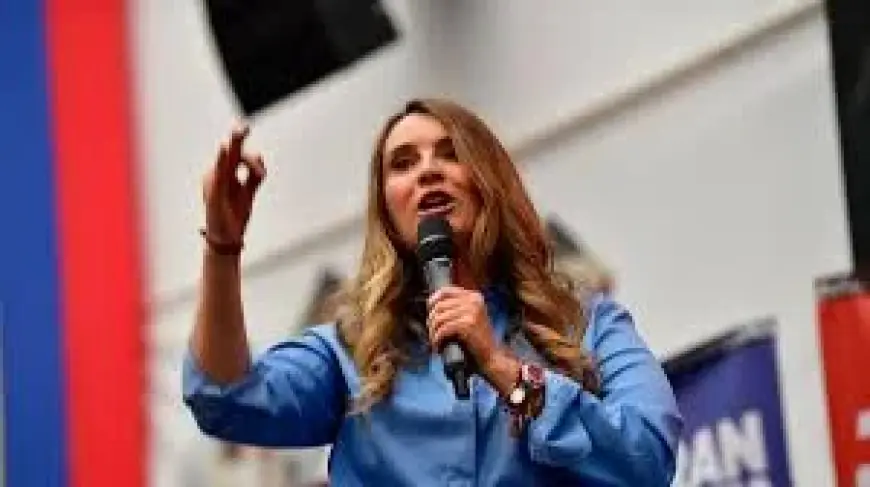
paloma valencia now moves into Colombia’s May 31 presidential first round with a newly consolidated centroderecha lane, forcing rival campaigns to recalibrate their strategy and alliances. Sunday at 4: 00 p. m. ET, early vote-counting began and subsequent tallies showed Paloma Valencia winning the Gran Consulta, a result that immediately redraws the opposition map for the next phase of the election.
Paloma Valencia advances to May 31 first round with a consolidated lane
The most immediate change is on the ballot: Paloma Valencia will compete in the first round of Colombia’s presidential election on May 31 after winning the Gran Consulta, an interparty mechanism that brought together nine aspirants from the centroderecha spectrum. With more than 2. 2 million votes tallied at 72% of votes counted, the result positions her as the candidate emerging from that bloc’s internal contest and ends the uncertainty over who would carry that coalition forward.
That vote total also reshapes how campaigns will read turnout across the consultations. Valencia captured 46% of all Colombians who voted across the three consultations held Sunday, a level of support that elevates her beyond a routine intra-bloc win and changes what opponents must plan for in the first round. Still, the count cited in the results was based on partial scrutiny, meaning the political impact is immediate even as the tabulation continues.
In major cities, the pre-count also pointed to a consistent pattern: “La gran consulta por Colombia” was the most-voted consultation in capital cities, and Valencia appeared as the leading choice within it. In Bogotá, the consultation logged 754, 705 votes—82. 23% of the total there—with Valencia at 288, 351 and Juan Daniel Oviedo close behind at 288, 135. In Medellín, with 90. 73% of votes referenced in the pre-count, “La gran consulta” registered 254, 849 and Valencia had 173, 091, described as 61. 62% of that consultation.
Juan Daniel Oviedo’s surge alters the centroderecha math inside Gran Consulta
A second consequence is that Valencia’s win does not end competition inside the broader centroderecha universe—it changes its terms. The Gran Consulta did not simply confirm the expected front-runner; it elevated Juan Daniel Oviedo as a significant force after he reached 16. 7% of all votes counted in that contest, outperforming other contenders including Juan Manuel Galán, Juan Carlos Pinzón, and Vicky Dávila.
The city-by-city pre-count figures underscored both Valencia’s strength and Oviedo’s presence. In Barranquilla, “La gran consulta por Colombia” showed 49, 000 votes, or 77. 95% of the total, and Valencia led there with 24, 310 votes to Oviedo’s 8, 734. In Cali, the same consultation led with 84, 230 votes (82. 35%), with Valencia at 50, 564 (46. 49%) and Oviedo at 19, 980 (18. 37%).
In Bucaramanga, “La gran consulta por Colombia” registered 78, 950 votes (87. 37%), and Valencia led again with 42, 187 (46. 68%) while Oviedo followed at 18, 417 (20. 38%). The closeness seen in Bogotá—where the margin between the two was only a few hundred votes in the figures provided—contrasted with larger gaps in other cities, signaling that the coalition Valencia carries into May 31 includes voters who also elevated an unexpected second-place contender.
Yet the broader storyline within the centroderecha bloc is that Valencia’s strength was described as a surprise not for winning the consultation, but for approaching nearly half the total votes across all consultations. That changes how her campaign can argue momentum heading into the first round, while also putting pressure on competitors to show they can draw voters beyond their core bases.
Claudia López and Roy Barreras wins lock in new opponents for May 31
The third consequence is a clearer set of opponents. Claudia López was also described as a winner of her consultation and will be a presidential candidate, setting up a May 31 contest in which the center arrives divided. Sergio Fajardo, meanwhile, was described as entering the first round directly rather than through a consultation, adding another distinct candidacy to the same date.
On the left, Roy Barreras was described as winning a left-wing consultation, “Frente por la Vida, ” in the partial count cited: with 77. 07% of tables scrutinized, he led with 188, 771 votes and a cited 3. 57% share, ahead of Daniel Quintero at 3. 19%. In Barranquilla, the “Frente por la Vida” consultation was the second most-voted with 9, 439 votes, where Barreras led that vote with 3, 994.
Still, the May 31 field described in the results also includes Iván Cepeda as a left-wing candidate backed by the Pacto Histórico of Gustavo Petro. The same summary of the race also pointed to Abelardo de la Espriella as a right-wing outsider who could compete for similar voters. For Valencia, the stated objective after her Sunday win is to surpass de la Espriella to reach a second round with support from traditional right-wing bases while also drawing part of the center—an ambition complicated by the presence of López and Fajardo on the same first-round ballot.
For now, the timing of the political shift is immediate: once the Gran Consulta winner is set, parties and candidates move from internal competition to direct confrontation. The next measurable milestone is the continued scrutiny of the consultation results as vote-counting progresses, while campaigns reorient toward the first-round vote on May 31. If the partial-count trend holds as scrutiny advances, Valencia will enter that date not just as the centroderecha consultation winner, but as a candidate claiming one of the largest single blocs of consultation votes cast Sunday.