Country Joe McDonald Reflects on Woodstock and the Vietnam War Legacy

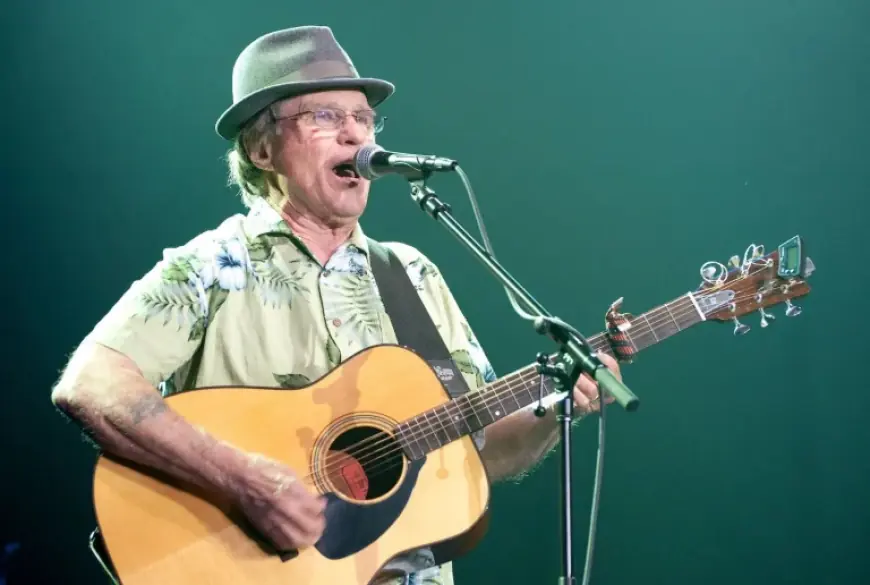
Tuesday at 9: 15 a. m. ET, Rolling Stone published Country Joe McDonald’s final interview in the wake of his death at age 84. The piece reprints a 2019 call-in conversation tied to his Woodstock set, and it appears now because his passing prompted publication; the interview repeatedly revisits his protest music and the vietnam war era.
Rolling Stone Releases McDonald’s 2019 Call-In and Woodstock Reminiscences
In that 2019 conversation, McDonald described being at Woodstock for the full run of the festival: he said he arrived on Thursday, left on Monday and watched many of the shows from stage vantage points. He singled out watching Jimi Hendrix perform the “Star Spangled Banner” and called Woodstock — along with the festival film and album — a turning point that “changed everything” in American music and culture.
Vietnam War Mentions and the ‘Fixin-to-Die Rag’ Protest Thread
McDonald framed his stage choices as responses to what he saw as real-world coercion: he noted a New York station that played his song “Fixin-to-Die Rag” every day and said people were being forced into the military and sent to die in the vietnam war. He recounted introducing the “Fuck Cheer” a year earlier at the Schaefer Beer Festival in Central Park, a moment that led to bans from that festival and from the Ed Sullivan Show, and he said the cheer became a direct statement fans already expected at Woodstock.
Country Joe and the Fish, ’69 Breakup and the Launch of a Solo Career
McDonald told Rolling Stone that by ’69 his band had released two LPs and had toured heavily, including festivals such as Monterey. He said the band was breaking up that year and that Woodstock helped launch his identity as Country Joe McDonald solo: his impromptu performance, which included the now-notoriously censored cheer, set him on a path he did not fully anticipate when he started writing rock songs as a teenager.
He described being asked to go on stage simply to fill time while Santana prepared to play, and that the brief solo set turned into a defining moment. McDonald emphasized that the cheer he sang still “cannot be said on radio and television, ” and he tied that censorship to the broader cultural clash he saw between the World War II generation and the Woodstock generation.
Rolling Stone presented the 2019 conversation as McDonald’s final interview with the outlet, republishing the full audio and text now in the wake of his death at age 84; the interview had been recorded as part of a 50th-anniversary look back and was aired as a call-in to the outlet’s Music Now podcast.
More details expected 2: 00 p. m. ET.