Mojtaba Khamenei Named Iran's New Supreme Leader — Breaking Today

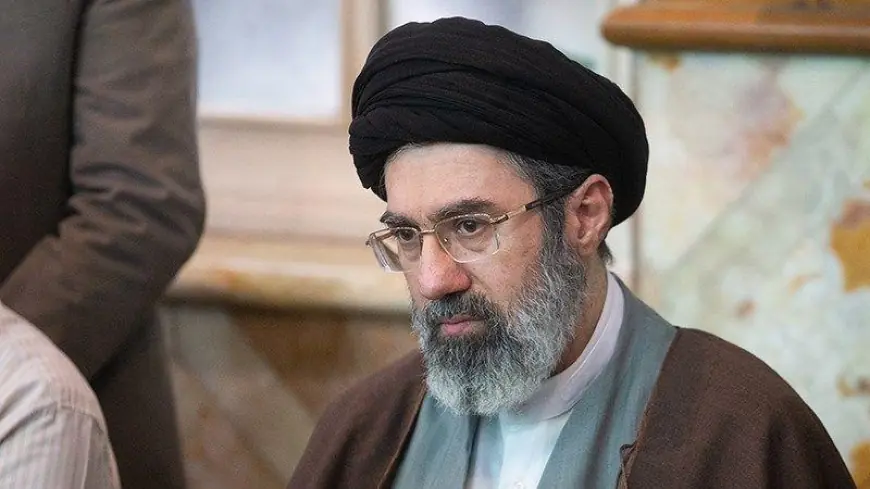
Iran has a new supreme leader. The Assembly of Experts officially named Mojtaba Khamenei — the 56-year-old son of assassinated Ayatollah Ali Khamenei — as the Islamic Republic's third supreme leader on Sunday, March 8, 2026. The announcement marks the first hereditary succession in Iran since the 1979 revolution that overthrew the Pahlavi monarchy.
How Mojtaba Khamenei Became Iran's New Supreme Leader
Iran's Assembly of Experts named Mojtaba Khamenei to replace his father, Ayatollah Ali Khamenei, as the country's new supreme leader, state media reported Sunday. Mojtaba, a mid-ranking cleric with close ties to the powerful Islamic Revolutionary Guards Corps, had long been viewed by elements of Iran's ruling establishment as a potential successor.
The process was anything but smooth. IRGC commanders pressured Assembly of Experts members to vote for Mojtaba Khamenei, with repeated contacts and psychological and political pressure beginning on March 3. Eight members announced they would boycott a second electoral session because of the heavy IRGC pressure in his favor.
The announcement was reportedly delayed over security fears that Mojtaba could be targeted by Israel or the United States once his name was made public.
Who Assassinated Ali Khamenei — and When
Ali Khamenei, who ruled Iran for 37 years, was killed in a United States-Israeli strike on Tehran on February 28, 2026, at the outset of a war which has unleashed chaos throughout the Middle East.
Several senior leaders close to Khamenei were also killed in the attack, including his top security adviser Ali Shamkhani and IRGC commander-in-chief Mohammad Pakpour, scrambling the top of the Iranian government.
Who Is Mojtaba Khamenei?
Mojtaba, Ali's second-eldest son, was born in 1969. His childhood was shaped by the 1979 Iranian Revolution and his father's rise to power. A cleric, Mojtaba studied under the late Ayatollah Mohammad Taghi Mesbah Yazdi. He joined the Revolutionary Guard at 17, serving during the Iran-Iraq War in the Habib Battalion.
Mojtaba Khamenei has never run for office or been subjected to a public vote, but has for decades been a highly influential figure in the inner circle of the previous supreme leader, cultivating deep ties to the IRGC. His ascension is a clear sign that more hardline factions in Iran's establishment retain power, and could indicate that the government has little desire to agree to a deal or negotiations in the short term.
Mojtaba is expected to be more hardline than his father, and his ascent means the Iranian regime may get more repressive. He has close ties to some of the most ideologically extremist clerics who have been at the forefront of the regime's most violent crackdowns.
Religious Legitimacy — A Major Controversy
Mojtaba Khamenei's religious credentials have been an issue of contention, since he is a hojatoleslam — a mid-level cleric — rather than the higher rank of ayatollah. But his father was not an ayatollah either when he became Iran's leader in 1989, and the law was amended to accommodate him. A similar compromise is expected for Mojtaba.
Mojtaba Khamenei is the third person to lead the Islamic Republic and the first example of hereditary succession since the overthrow of the Pahlavi monarchy in the 1979 revolution.
Trump Says New Leader Will Not "Last Long" — Israel Threatens to Target Him
United States President Donald Trump had demanded a say in the nomination, a request Islamic Republic officials rebuffed. Trump said Sunday that Iran's next leader would not "last long" without his approval. "He's going to have to get approval from us. If he doesn't get approval from us he's not going to last long," Trump told ABC News.
On March 8, the Israel Defense Forces posted a statement in Persian warning that "the hand of the State of Israel will continue to pursue every successor and every person who seeks to appoint a successor. We warn all those who intend to participate in the successor selection meeting that we will not hesitate to target you either."
The IRGC and Iran's armed forces were quick to pledge full allegiance to the new leader. Iran's Parliament Speaker Mohammad Bagher Ghalibaf welcomed the choice, saying following the new supreme leader was a "religious and national duty."