Pokemon Pokopia Nintendo Switch arrives with a cozy spin — mysteries remain

Sunday at 11: 00 a. m. ET, reviews of pokemon pokopia nintendo switch converged on one confirmed point: the game pivots away from conflict and battling toward town restoration, building, and raising Pokémon happiness. Still, major story beats remain unresolved early on, and the game’s own narrative “requests” and later zone unlocks are the observable triggers that clarify what happened to humanity and why the region fell into disrepair.
Ditto and “Professor Tangrowth” frame Pokémon Pokopia’s restoration loop
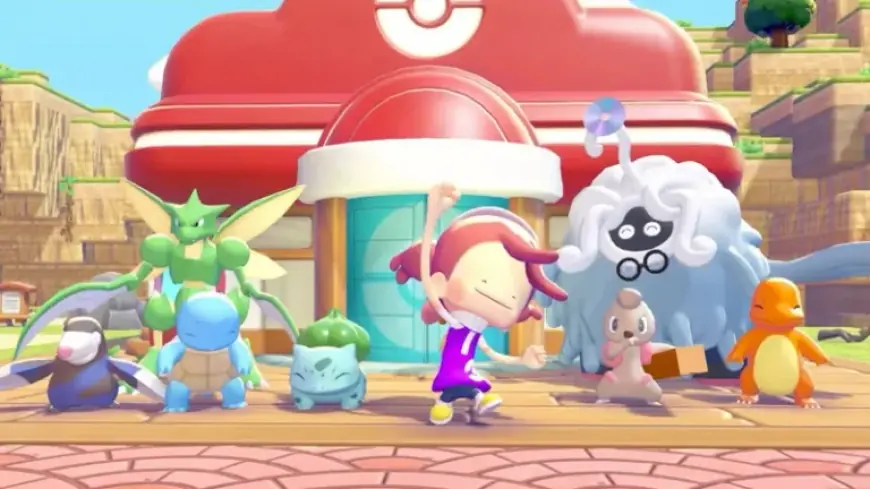
Pokémon Pokopia puts players in control of a Ditto that wakes up without its trainer and takes on a customizable, humanlike form. In the opening stretch, the setting is described as lonely, barren, and desolate—an abandoned place where humanity is gone—until restoration work begins to bring visible change. Tangrowth, adopting the name “Professor Tangrowth, ” guides the player through tasks intended to reinvigorate the area, attract more Pokémon, and potentially draw back missing humans.
Those tasks are not just cosmetic. As players rebuild, the world shifts from a brown, empty biome into a greener space populated by recognizable Pokémon, reinforcing the game’s core promise: steady improvement through work rather than combat. One review describes the result as a laid-back simulation loop that blends building and town-improvement ideas associated with games such as Dragon Quest Builders, Animal Crossing, and Minecraft.
In practical terms, the rebuilding effort includes reconstructing each town’s Pokémon Center, gathering resources, and recruiting Pokémon into roles tied to their specialties—such as bulldozing or building. Movement and logistics also matter: rail networks can be built to make traversal easier, a response to the amount of back-and-forth required to complete tasks and collect materials.
Pokémon Pokopia’s rails-versus-freedom tension is still being weighed in reviews
While the cozy, methodical pace is a confirmed throughline in the available reviews, not every design choice lands cleanly for every player. One review highlights that major “requests” in each environment function as the culmination of an area and the primary way to push the overarching story forward. Yet those tasks can demand specific Pokémon and specific resources, which can push players “on rails” more than expected for a cozy game.
That tension shows up in how progression can collide with exploration. A reviewer describes being so thorough that they sometimes completed requirements before triggering the relevant narrative events, leading to awkward moments where characters ask the player to do something that is effectively already done. For readers trying to predict how the game will feel over the long term, that friction remains an open question until more players reach later zones and encounter more of the request structure.
Another confirmed emphasis is the social charm of Pokémon interactions. The game includes sequences where Pokémon communicate with each other, personalities come through, and collective living spaces become happier as habitats improve. Still, the balance between soothing routine and unexpectedly complex systems is not fully settled early on, because the game expands as new zones open beyond the initial wasteland-like starting area.
Story mysteries hinge on later “requests” and zone unlocks
Two story questions are presented as explicit mysteries within the game’s narrative: what happened to humanity, and why the world fell into disrepair. A third thread also appears: the presence of “strange Pokémon” that look like special variants of existing creatures. As of the early portion described in reviews, those mysteries are not resolved, and the game appears to deliberately pace answers behind progression milestones.
The clearest observable triggers for resolution are the environment-specific “requests” that cap each area and open the route to the next stage of the story. The same applies to the expansion beyond the first zone: as new areas unlock, the scope grows and additional systems and narrative clues become available. That means players who want firmer answers will not get them from the opening hours alone; the game itself gates clarity behind the completion of structured tasks and subsequent zone openings.
Reviews also describe a broad cataloging and collection component persisting alongside building and decorating. Yet what remains uncertain from the early review window is how quickly the narrative threads converge, and which gameplay beats provide decisive explanations—because those specifics depend on reaching later requests and later zones rather than on the initial restoration loop.
For now, the confirmed direction is clear: pokemon pokopia nintendo switch centers on restoration, habitat crafting, and community-building among Pokémon, with Tangrowth’s guidance and Ditto’s customizable form anchoring the experience. The next concrete developments come from in-game progression: completing each area’s culminating requests and opening subsequent zones. If those later requests reveal definitive answers about humanity’s disappearance, the game’s overarching mystery is expected to feel more fully resolved by the time players reach the later stages of the narrative.