Iranian President Offer Sparks Power Struggle, Hardliners Demand New Supreme Leader

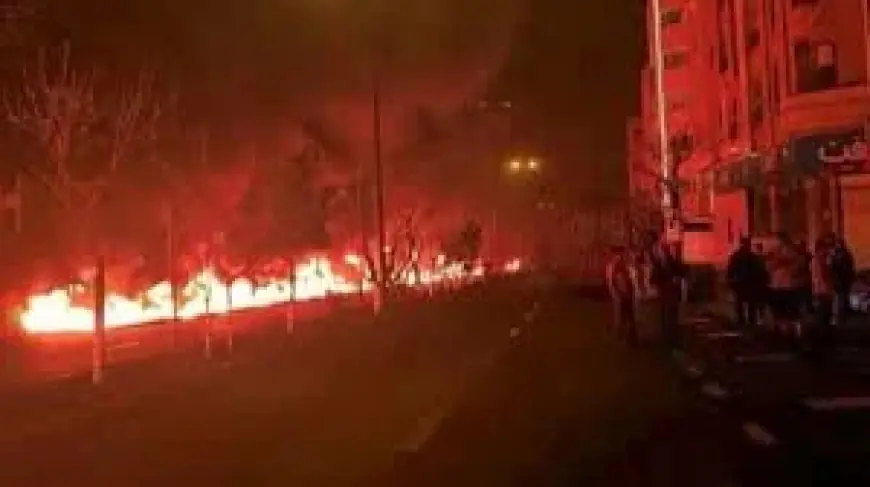
Hardliners inside Iran are now pressing to install a new supreme leader quickly, a move that would further marginalize the Iranian President and accelerate shifts in wartime command. 3: 00 p. m. ET — The pressure followed Masoud Pezeshkian’s pre‑recorded offer not to attack neighbouring countries so long as their airspace and US bases were not used to strike Iran.
Hardliners call for rapid replacement of Masoud Pezeshkian, shrinking presidential authority
The immediate consequence is a concerted push by clerics and hardline newspapers for an expedited selection of a replacement supreme leader, a step explicitly framed as a way to marginalize Masoud Pezeshkian. Ayatollah Makarem Shirazi said a choice is “essential in light of the ongoing political confusion, ” and the 88‑strong Assembly of Experts is the body tasked with electing a new leader. At least three high‑profile political prisoners have been released since the killing of Ayatollah Ali Khamenei, a sequence observers inside Iran see as connected to the changing balance of power.
Attacks on Bahrain and Gulf desalination plants continue, raising regional water fears
Attacks on facilities in Bahrain and elsewhere have continued even after Pezeshkian’s remarks, and unconfirmed reports say Bahrain may have been the first Gulf country to fire back at Iran. Abbas Araghchi, the Iranian foreign minister, focused on escalation in his comments and said the US had attacked a freshwater desalination plant on Qeshm Island, disrupting water supply in 30 villages. There are as many as 400 water desalination plants across the Gulf, and if they come to be viewed as legitimate targets, a drinking water crisis could face the region within days.
Pezeshkian’s address and military signals expose diffused wartime authority
Pezeshkian’s surprise offer not to attack neighbours was delivered in a pre‑recorded address on state TV and included an apology to the region on behalf of himself and the nation. He suggested that after the US attack on Iran’s top command, armed forces had been left rudderless and may have made targeting decisions on their own. That assertion contrasted with military actions continuing on the ground and prompted calls from some hardliners to move quickly on leadership, while President Trump characterized Pezeshkian’s offer as a surrender and has said he must approve the future leadership of Iran.
Still, the dispute highlights how wartime authority has been diffused: some officials present the president’s offer as the result of collective decision‑making by a temporary tripartite group running the country after Khamenei’s killing, while others attribute the statement to recent talks with Gulf states. The apparent delay in the Assembly of Experts electing a new leader may be the result of deadlock or an opening for moderate forces to try to gain the upper hand over war strategy.
For now, hardliners’ calls for a rapid leadership selection have already changed the political timeline inside Iran and raised the stakes for regional diplomacy and military command.
The next confirmed milestone is the Assembly of Experts’ decision on a new supreme leader; it is possible the announcement will come this weekend. If the Assembly elects a replacement this weekend, then the Iranian President’s authority over wartime decisions could be further marginalized within days.