EV Industry Challenges Labor’s Plan to Reverse Tax Breaks

The electric vehicle (EV) industry in Australia faces significant challenges as the Albanese government contemplates reversing tax breaks designed to encourage EV adoption. Advocates warn that such a move could hinder progress on environmental goals and increase costs for Australian workers.
Context of the Proposed Tax Break Changes
The Australian government is currently exploring potential changes to the EV tax incentives ahead of the upcoming budget, with discussions intensifying as budget pressures mount. Originally implemented in 2022, the tax breaks aimed to stimulate EV sales in a market where electric vehicles constituted less than 4% of total car sales.
Current Incentives and Financial Implications
- The tax break applies to vehicles priced under $91,387.
- Initial forecasts estimated the cost of these tax breaks to be $1.9 billion spanning from 2022-23 to 2026-27.
- However, due to a higher-than-expected uptake of EVs through novated leases, the cost projection has ballooned to $5.1 billion.
- EVs currently represent 13% of new car sales, showing significant growth in accessibility due to lower prices and second-hand options.
- Projected costs are expected to reach $2.8 billion by the financial year 2028-29.
Industry Response to Potential Tax Break Rollback
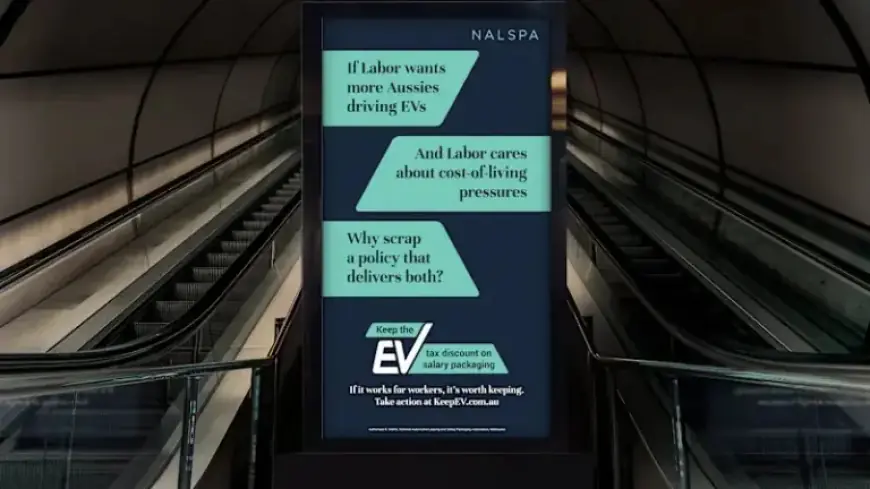
In response to the government’s considerations, the National Automotive Leasing and Salary Packaging Association (NALSPA) has launched a campaign to advocate for the retention of the EV tax discount. This campaign includes television ads and public billboard messages aimed at raising awareness of the issue.
Highlighted Concerns from Key Stakeholders
- Manufacturers such as Tesla, Polestar, and BYD support the retention of tax breaks.
- Polestar’s managing director emphasized that reducing incentives could jeopardize the goal of 50% of new vehicle sales being electric by 2035.
- Concerns highlighted that removing or scaling back incentives would stall the transition to cleaner transportation.
Critics, including Polestar’s Scott Maynard, have suggested that if the Treasury seeks to reduce expenses, it should target less impactful tax perks rather than dismantling the EV incentive program. The debate centers not only on environmental goals but also on the economic implications for everyday Australians relying on affordable transportation options.
Government Review and Recommendations
Climate Change Minister Chris Bowen and Treasurer Jim Chalmers are currently assessing the outworking of the EV tax breaks. While no final decisions have been made, the government is considering a range of options, including phasing out the current system or adjusting the price threshold for affected vehicles.
Research Findings on the Current Tax Incentives
A report from the Productivity Commission has suggested that while the EV tax incentives effectively increased uptake, they came at a high cost—between $1,000 and $20,000 per tonne of avoided greenhouse gases. Additionally, concerns have been raised regarding the equity of the benefits, as the incentives predominantly aid those with access to salary packaging.
As the Australian government deliberates on the future of EV tax breaks, stakeholders are calling for a balanced approach that aligns financial prudence with sustainable transportation goals to ensure ongoing support for both workers and environmental initiatives.